
The ‘1 Nojor’ media platform is now live in beta, inviting users to explore and provide feedback as we continue to refine the experience.
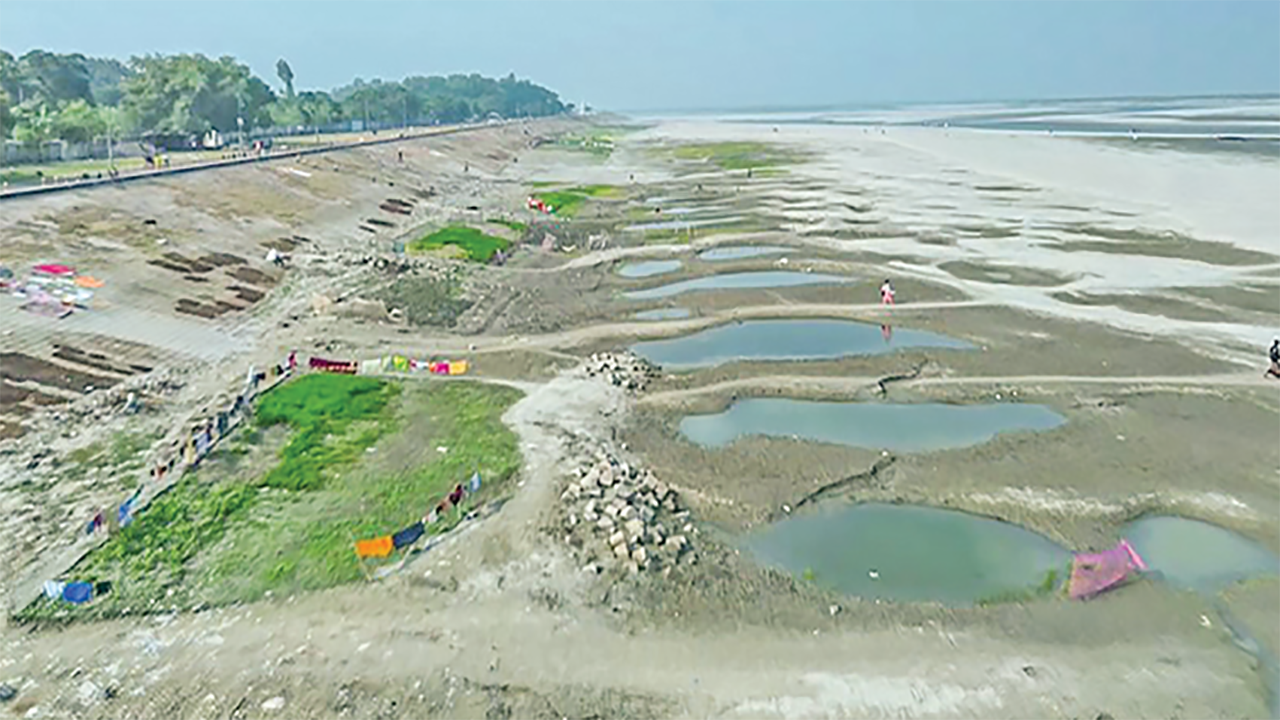
The Jamuna River in Sirajganj has turned into a vast stretch of sand, halting normal boat transport and causing severe hardship for thousands of riverside residents. With the riverbed now dominated by sandbars, horse carts have replaced boats for carrying goods. The lack of water has also led to a sharp decline in native fish species, leaving fishermen without their traditional source of income. Locals have demanded river management and dredging to restore navigability.
Once a major waterway in the 1990s supporting steamers, ferries, and ships, the Jamuna has now lost its flow, leaving districts like Kazipur, Sadar, Belkuchi, Chauhali, and Shahjadpur covered in sand. The Water Development Board reported that during the dry season, water flow drops to as low as 3,000 cusecs, compared to 130,000 cusecs in the monsoon. Heavy silt deposits from upstream have turned large areas into sandbanks.
Despite the crisis, farmers have begun cultivating crops such as maize, peanuts, mustard, onions, garlic, and tomatoes on the newly formed fertile land, bringing some economic relief to affected communities.

The ‘1 Nojor’ media platform is now live in beta, inviting users to explore and provide feedback as we continue to refine the experience.