
The ‘1 Nojor’ media platform is now live in beta, inviting users to explore and provide feedback as we continue to refine the experience.
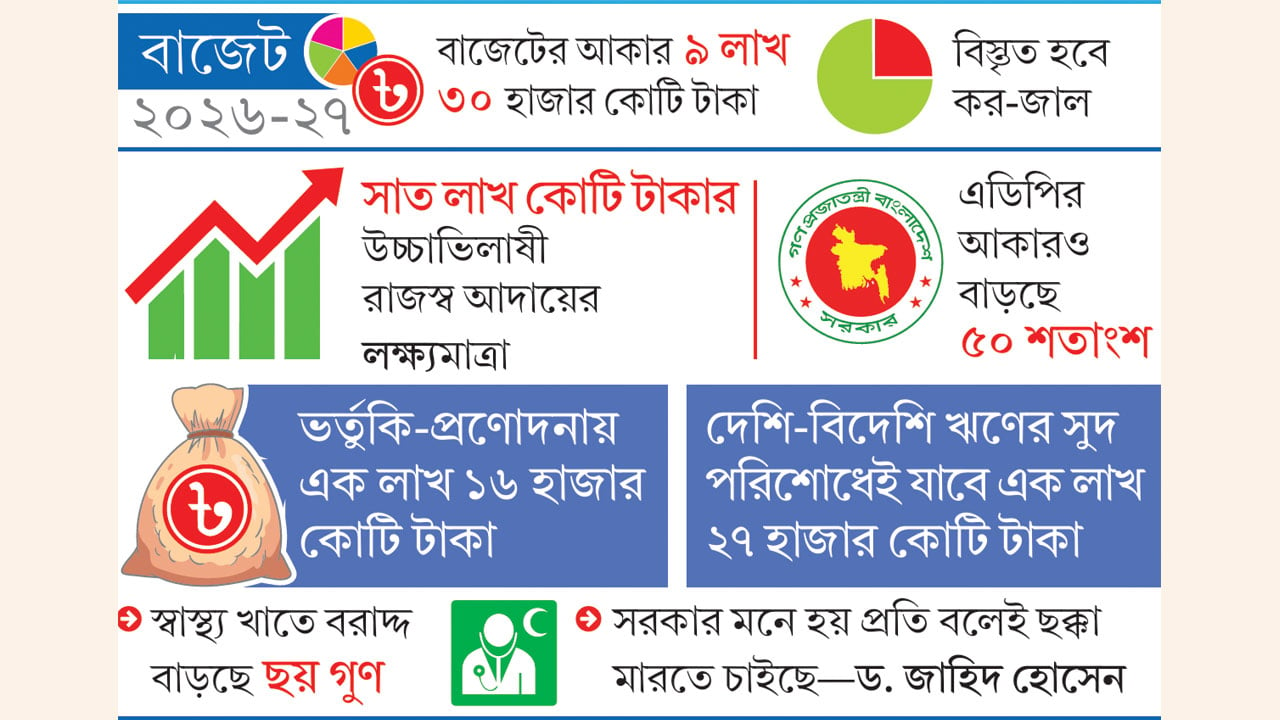
Bangladesh’s new government is facing major challenges in finalizing the 2026–27 national budget, expected to total Tk 9.3 trillion, about 25 percent higher than the previous year. Finance Minister Amir Khosru Mahmud Chowdhury is scheduled to present the budget on June 11. The plan includes Tk 3 trillion for development spending, Tk 1.16 trillion for subsidies and incentives, and ambitious revenue targets of Tk 6.95 trillion despite a current shortfall exceeding Tk 1 trillion. Key allocations include large subsidies for power, LNG, fertilizer, and food, as well as funding for mega projects like the Padma Barrage and new metro rail lines.
Officials say the budget aims to balance election pledges and economic stability by expanding social safety programs such as family and farmer cards, while offering tax relief on essentials and higher taxes on luxury goods. The Annual Development Programme will rise 50 percent to Tk 3 trillion, with 39 percent in block allocations. Economists, however, warn that the revenue goals are unrealistic and that rising government spending could worsen inflation and debt pressures.
The budget’s focus on employment, investment, and welfare reflects the new administration’s attempt to revive growth amid economic stagnation and high inflation.

The ‘1 Nojor’ media platform is now live in beta, inviting users to explore and provide feedback as we continue to refine the experience.