
The ‘1 Nojor’ media platform is now live in beta, inviting users to explore and provide feedback as we continue to refine the experience.
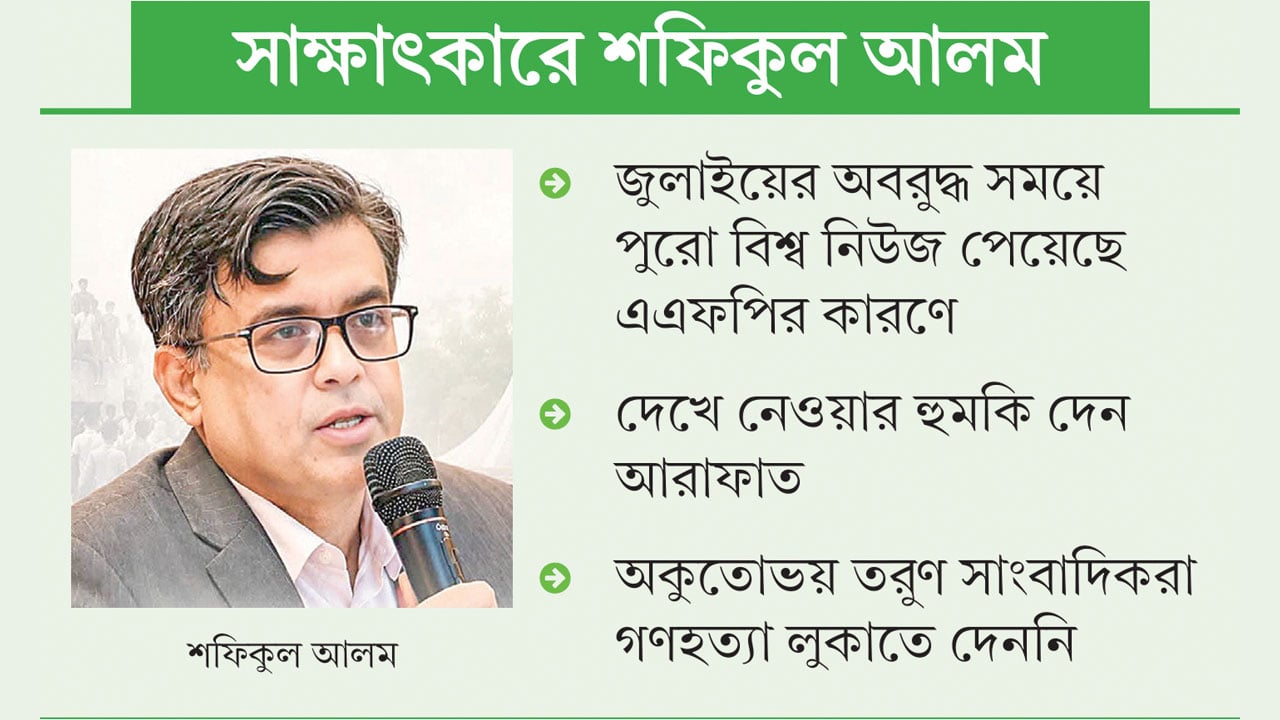
Shafiqul Alam, press secretary to the interim government’s chief adviser, described AFP’s reporting during the July movement in an interview with Amar Desh. Alam, who was AFP’s Bangladesh bureau chief at the time, said the agency anticipated renewed protests after a High Court verdict on June 5 and began covering demonstrations centred on Dhaka University around July 7 or 8. He said international media coverage expanded after July 16, while protests spread on a wider scale in Dhaka on July 18.
According to Alam, broadband and mobile internet were shut down on the night of July 18. AFP was able to send video and photographs from July 19 through an existing VSAT connection. He said the office allowed journalists, freelancers and activists working for Reuters, The New York Times, Financial Times, The Guardian, Al Jazeera, Netra News and AP, among others, to use its internet. He said an average of 50 to 60 people used the office’s five computers daily from July 19 to 24. Alam also said then state minister for information Mohammad Ali Arafat had threatened AFP over its reporting.

The ‘1 Nojor’ media platform is now live in beta, inviting users to explore and provide feedback as we continue to refine the experience.