
The ‘1 Nojor’ media platform is now live in beta, inviting users to explore and provide feedback as we continue to refine the experience.
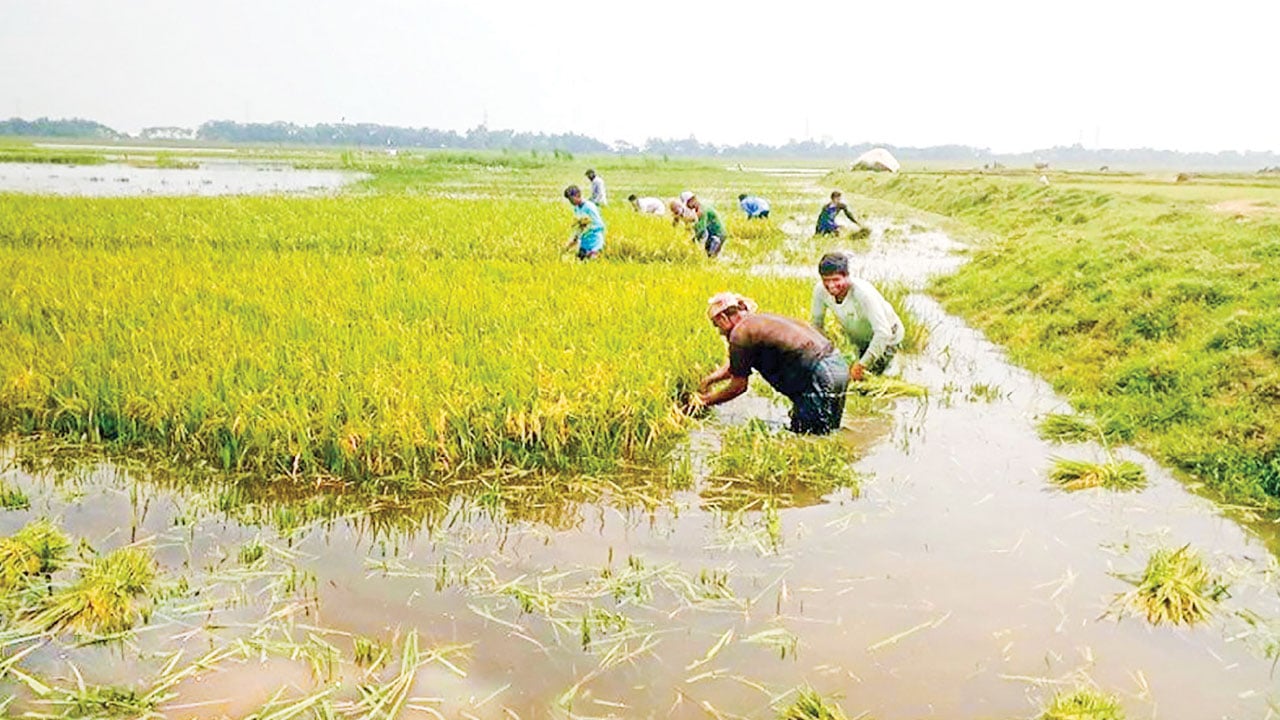
Vast haor areas across Sunamganj, Habiganj, Netrakona, and Kishoreganj have been severely affected by sudden floods and prolonged waterlogging during the boro harvest season. The flooding submerged ripe paddy fields, destroying the only annual crop for many farmers. The article questions why sustainable solutions remain elusive despite recurring disasters and highlights that the crisis extends beyond individual losses to threaten national food security.
The report explains that haor agriculture is entirely dependent on natural cycles, making it highly vulnerable to upstream water surges, untimely rains, and climate change. It stresses that the damage to boro crops could disrupt the rice market, raise prices, and increase hardship for low-income households. The author urges the government to declare the affected areas as disaster zones to enable rapid relief, debt rescheduling, and distribution of seeds, fertilizers, and cash support.
The article further calls for regional water management cooperation, institutional accountability, and a context-specific agricultural policy. It warns that without transparency and effective oversight in embankment projects, recurring failures will persist, endangering both farmers’ livelihoods and national food stability.

The ‘1 Nojor’ media platform is now live in beta, inviting users to explore and provide feedback as we continue to refine the experience.