
The ‘1 Nojor’ media platform is now live in beta, inviting users to explore and provide feedback as we continue to refine the experience.
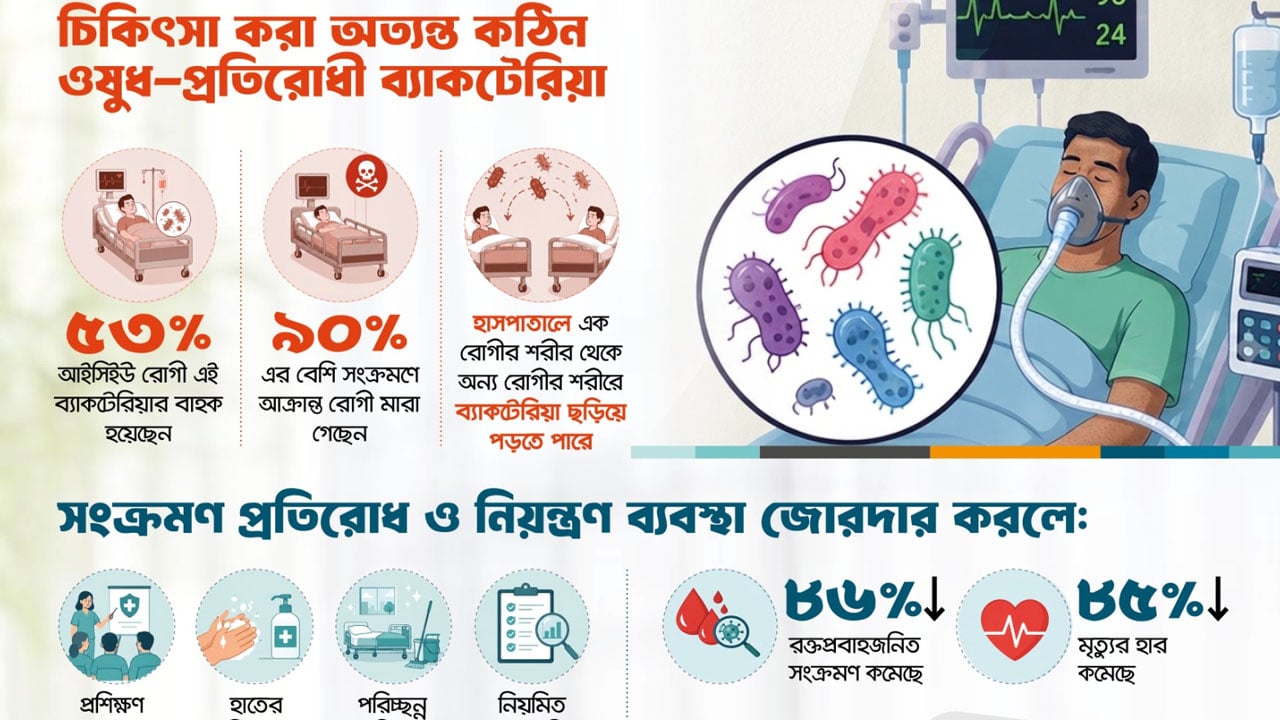
Two icddr,b studies have reported the spread of drug-resistant bacteria in hospital intensive care units and a mortality rate above 90 percent among patients whose infection was confirmed by culture tests. The findings were released in a news statement on July 25, 2026. Researchers analysed 373 critically ill adults admitted to an ICU at a specialised government hospital in Dhaka between July 2023 and February 2024.
The study found difficult-to-treat resistant gram-negative bacteria in the intestines of 48.5 percent of ICU patients. Of 198 patients who did not carry the bacteria at admission, 105, or 53 percent, became infected while in the ICU. Researchers said this indicates in-hospital spread of drug-resistant organisms. Limited ICU facilities, patient overcrowding and risks of hospital-associated infections may have contributed to the unusually high mortality.
A second study by the same team found improved results after infection-control measures were strengthened in a Dhaka neonatal ICU. Staff training, hand hygiene, environmental cleaning and waste management reduced bloodstream infections by 86 percent over seven months. Deaths per 100 admitted newborns fell from 26 to four. The researchers urged stronger infection prevention, cleanliness, surveillance and responsible antibiotic use.

The ‘1 Nojor’ media platform is now live in beta, inviting users to explore and provide feedback as we continue to refine the experience.