
The ‘1 Nojor’ media platform is now live in beta, inviting users to explore and provide feedback as we continue to refine the experience.
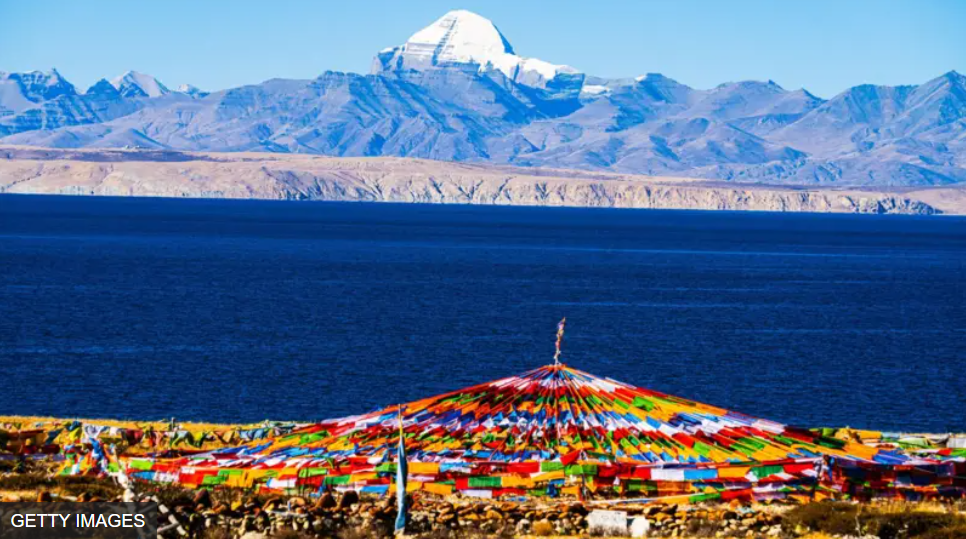
Mount Kailash and Lake Manasarovar, located in Tibet, a Chinese autonomous region near the borders of Nepal and India, remain major pilgrimage destinations for Hindus, Buddhists, Jains and followers of Tibet’s ancient Bon religion. The high-altitude region is difficult to reach because of severe cold, changing weather, rugged mountain routes and limited oxygen. Recent flash flooding during a pilgrimage left several people missing, including foreign nationals, bringing renewed attention to the site.
Kailash stands about 6,638 metres above sea level, while the freshwater Lake Manasarovar lies to its south at roughly 4,600 metres. UNESCO identifies Kailash, Manasarovar and nearby Rakshastal as part of a wider sacred mountains and lakes area, and says the headwaters of the Indus, Sutlej, Brahmaputra and Karnali rivers are in the region. Religious worship there has a history of about 3,000 years, according to UNESCO.
Pilgrims do not climb Kailash but circle it on a roughly 52-kilometre route, generally completed in three days. Hindus and Tibetan Buddhists usually travel clockwise, while Bon and Jain followers travel counterclockwise. Foreign pilgrims, including Bangladeshis, generally enter Tibet through Nepal and require Chinese visas, Tibet travel permits and approved tour operators.

The ‘1 Nojor’ media platform is now live in beta, inviting users to explore and provide feedback as we continue to refine the experience.