
The ‘1 Nojor’ media platform is now live in beta, inviting users to explore and provide feedback as we continue to refine the experience.
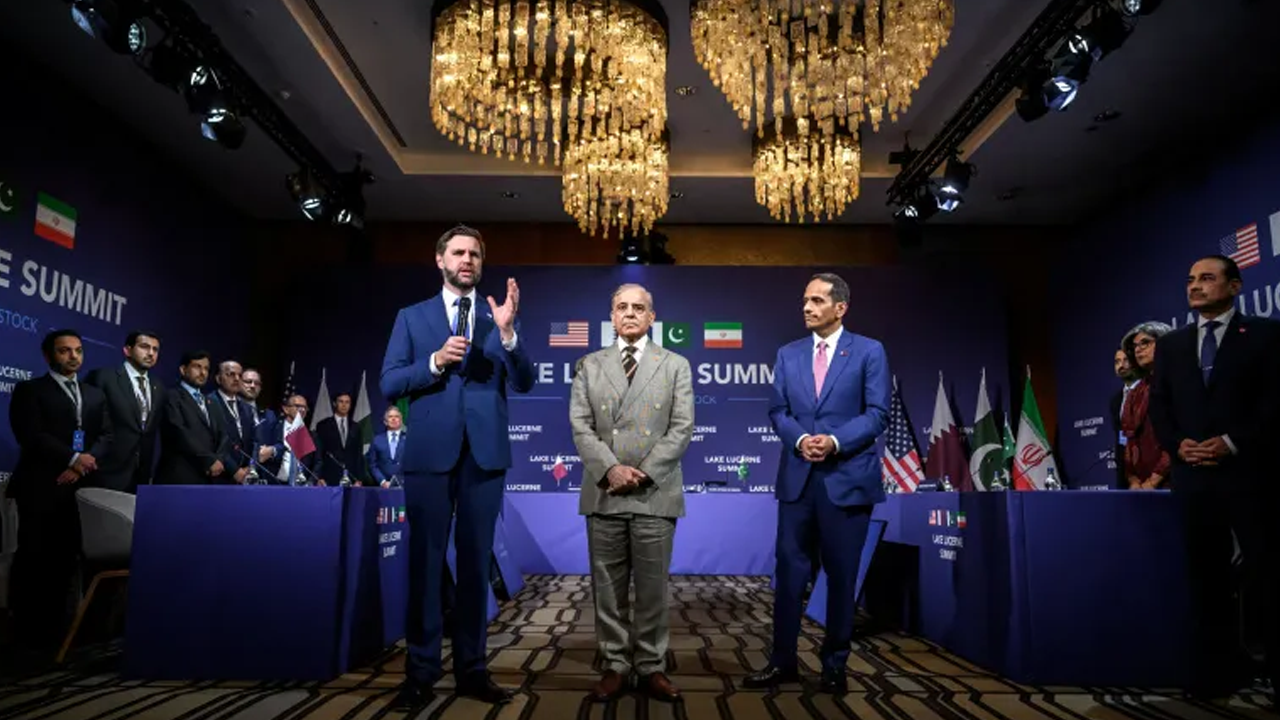
At a meeting in Switzerland’s Alpine resort of Bürgenstock, US Vice President JD Vance, Pakistan’s Prime Minister Shehbaz Sharif, and Qatar’s Prime Minister Sheikh Mohammed bin Abdulrahman Al Thani stood together, with Pakistan’s army chief Asim Munir nearby. Vance praised Munir’s leadership, crediting him for progress in recent peace efforts. Pakistan has acted as a key mediator between the US and Iran, facilitating informal contacts and hosting talks in Islamabad. The ongoing 60-day dialogue and a peace framework agreed on June 18 are seen as outcomes of these efforts.
Economically, Pakistan’s fragile recovery remains uncertain despite 3.7% GDP growth and rising remittances. Analysts warn that mediation may bring limited economic benefits, such as reduced energy import costs and potential revival of the Iran-Pakistan gas pipeline if sanctions ease. Pakistan remains under a $7 billion IMF program, its 25th since the 1950s. Experts note that diplomatic goodwill alone cannot fix structural weaknesses like low tax revenue and weak exports.
Observers say Pakistan’s military has emerged as the main institutional beneficiary of this diplomacy. Analysts caution that real progress will depend on whether economic gains reach marginalized regions like Balochistan, long affected by insurgency and poverty.

The ‘1 Nojor’ media platform is now live in beta, inviting users to explore and provide feedback as we continue to refine the experience.