
The ‘1 Nojor’ media platform is now live in beta, inviting users to explore and provide feedback as we continue to refine the experience.
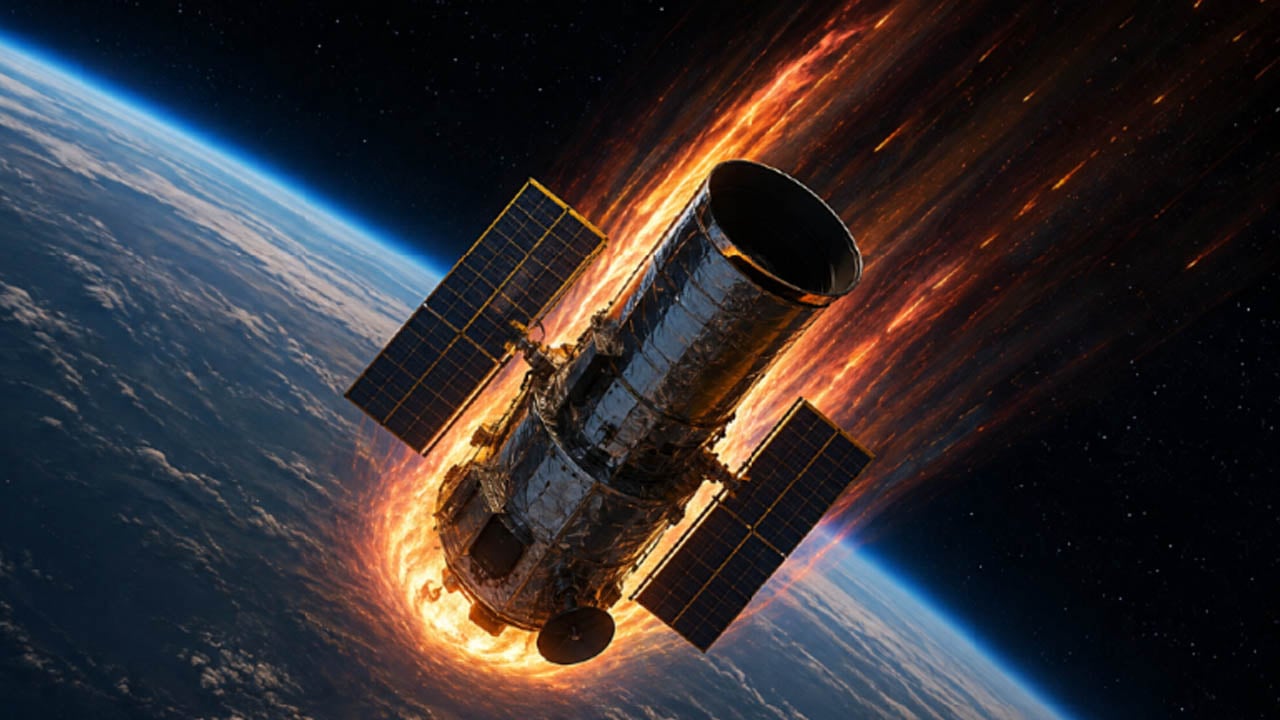
NASA’s Neil Gehrels Swift Observatory, a space telescope used to observe gamma-ray bursts and other high-energy astronomical events, is descending because of orbital decay. The report, published on August 3, 2026, says recent intense solar activity has slightly expanded Earth’s upper atmosphere, increasing atmospheric drag. NASA scientists estimate that, if the current trend continues, Swift could re-enter Earth’s atmosphere during the second half of 2026.
NASA has begun a special orbit-boost mission costing about $30 million to protect the observatory and keep its research operations running. Catalyst Space Technologies’ Link spacecraft was launched from the Marshall Islands in the Pacific Ocean on July 3 and is moving step by step toward Swift. Equipped with three robotic arms, Link is expected to reach an orbit near the telescope in about a month.
After arriving, Link will first inspect its solar panels and internal systems before beginning the sensitive rendezvous-and-capture process. Over subsequent months, it will monitor Swift’s movement, position and rotation, then attempt a safe capture using its mechanical arms. Controlled thrust will then gradually raise Swift’s orbit. Launched in 2004, Swift has observed gamma-ray bursts for two decades.

The ‘1 Nojor’ media platform is now live in beta, inviting users to explore and provide feedback as we continue to refine the experience.