
The ‘1 Nojor’ media platform is now live in beta, inviting users to explore and provide feedback as we continue to refine the experience.
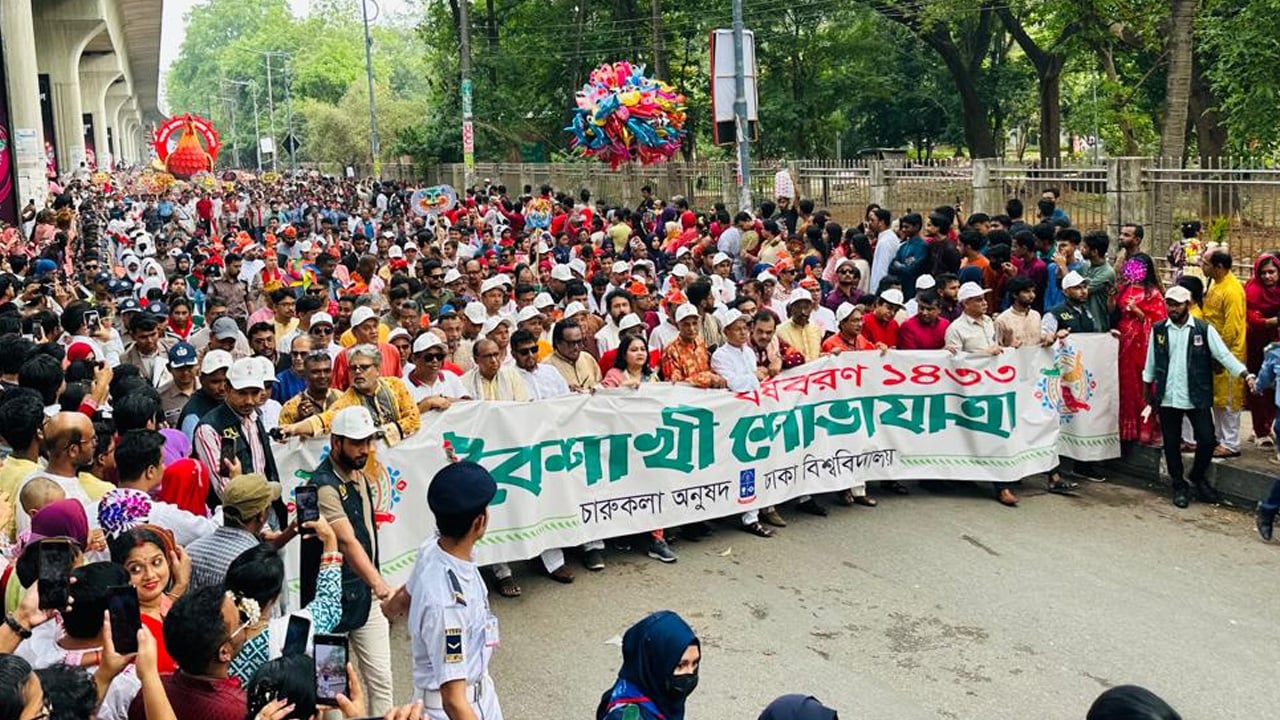
A feature article published on April 14, 2026, in Amader Desh examines the intertwined relationship between state power, culture, and festivals in Bangladesh. The author argues that national festivals often serve as instruments of state ideology, helping to construct collective identity and social cohesion. The piece discusses how governments use festivals to legitimize authority, promote specific cultural narratives, and foster a sense of unity among citizens.
The article traces the evolution of Pahela Baishakh from a rural and economic observance into a major national celebration shaped by urban middle-class participation and state sponsorship. It highlights how different regimes have infused ideological meanings into festivals, including attempts to balance religious and secular elements. The discussion references thinkers such as Durkheim, Turner, and Hobsbawm to frame festivals as both stabilizing and transformative social forces.
The essay concludes that Pahela Baishakh is expanding in scope and inclusivity, driven by economic incentives like bonuses and corporate participation. It suggests that despite ideological influences, the enduring vitality of festivals lies in their spontaneous and participatory nature, reflecting the hybrid and evolving character of Bengali culture.

The ‘1 Nojor’ media platform is now live in beta, inviting users to explore and provide feedback as we continue to refine the experience.