
The ‘1 Nojor’ media platform is now live in beta, inviting users to explore and provide feedback as we continue to refine the experience.
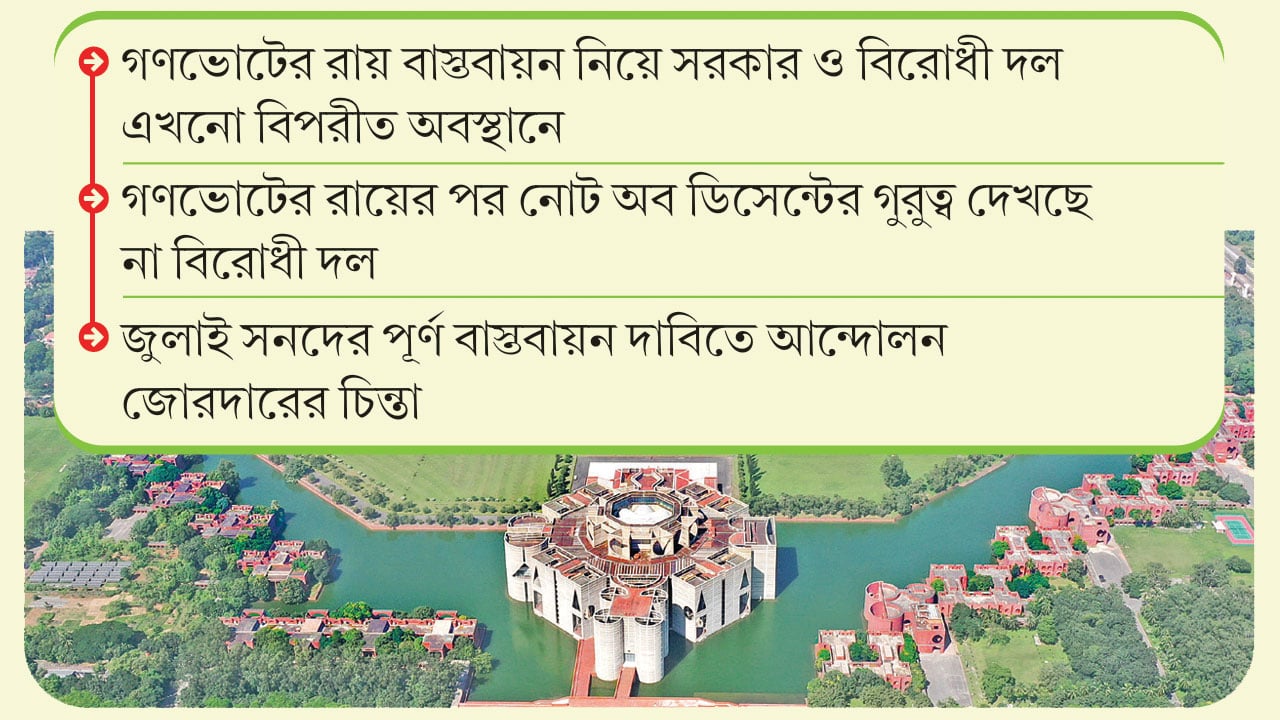
A major dispute over proportional representation (PR) has become the central obstacle in Bangladesh’s ongoing constitutional reform process. Since the start of the 13th Parliament, the ruling and opposition parties have remained sharply divided on implementing the July Charter and the referendum verdict. The disagreement intensified after the February 12 election, with opposition members accusing the government of delaying or undermining the reform agenda. The government’s position on the July Charter’s full implementation has created further uncertainty, prompting Jamaat-e-Islami and an 11-party alliance to strengthen their protest programs.
According to the July Charter’s Article 18, the proposed upper house would be formed through proportional representation based on votes received in the lower house election. While 24 parties, including Jamaat and BNP, signed the charter, seven parties expressed dissent, arguing that the upper house should reflect seat proportions instead. The ruling BNP’s refusal to take the constitutional reform council oath and its proposal for a special amendment committee have deepened mistrust. Opposition leaders accuse the government of political maneuvering and demand full implementation of the referendum’s mandate.
The dispute over PR and the July Charter’s interpretation has stalled progress, leaving the timeline and mechanism for constitutional reform uncertain.

The ‘1 Nojor’ media platform is now live in beta, inviting users to explore and provide feedback as we continue to refine the experience.