
The ‘1 Nojor’ media platform is now live in beta, inviting users to explore and provide feedback as we continue to refine the experience.
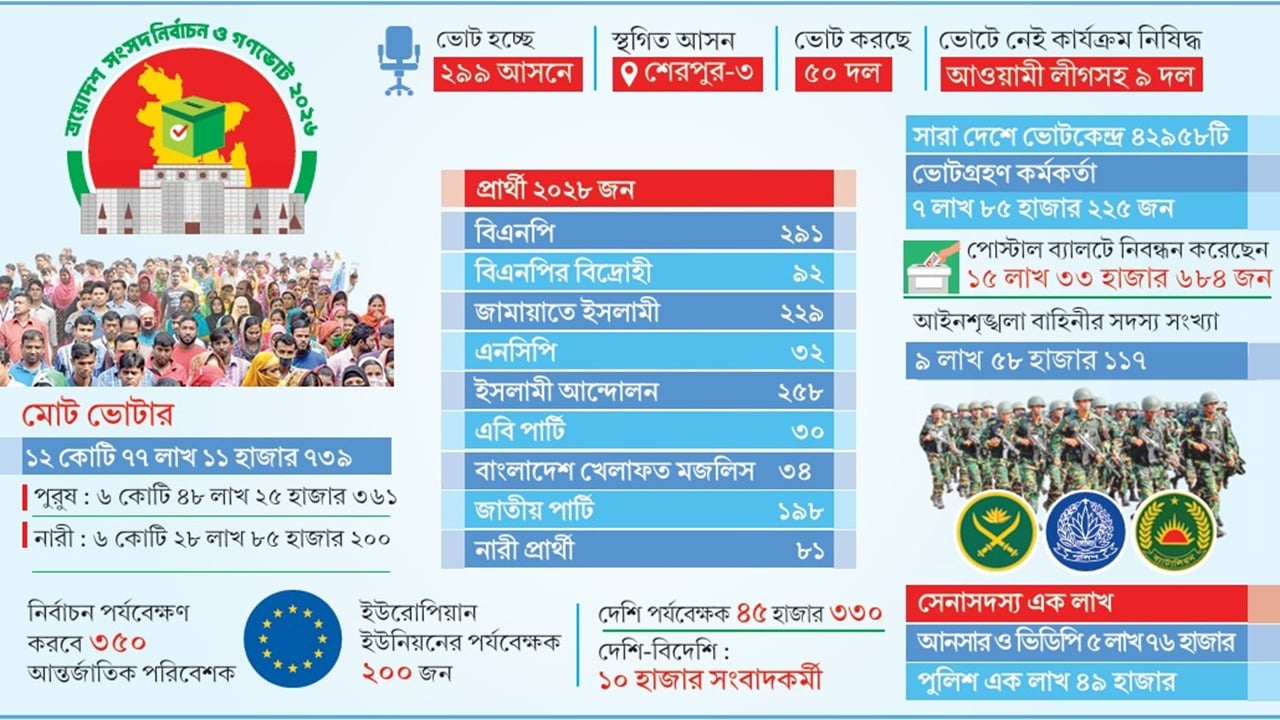
Bangladesh is set to hold its 13th National Parliamentary Election and a constitutional referendum on February 12, 2026, marking what is described as the country’s first major step toward restoring democracy after two decades of authoritarian rule. The election follows the fall of the previous government in mid-2024 and the formation of an interim administration led by Nobel laureate Dr. Muhammad Yunus, who pledged to organize a free and festive vote. Fifty-one of the country’s 59 registered political parties, including the BNP and Jamaat-e-Islami, are participating, while the Awami League remains banned.
The Election Commission has promised a free, fair, and credible process, deploying one hundred thousand soldiers and nine hundred thousand law enforcement officers to ensure security. Voters will cast two ballots—one for parliament and another for the “July Charter” constitutional reform. The campaign period has been largely peaceful and heavily digital, with social media playing a central role. Analysts note that while the election represents a symbolic democratic milestone, its success will depend on post-election stability and the new government’s commitment to transparency and accountability.
The vote is widely viewed as a historic opportunity for citizens to reclaim their electoral rights after 15 years of manipulated elections.

The ‘1 Nojor’ media platform is now live in beta, inviting users to explore and provide feedback as we continue to refine the experience.