
The ‘1 Nojor’ media platform is now live in beta, inviting users to explore and provide feedback as we continue to refine the experience.
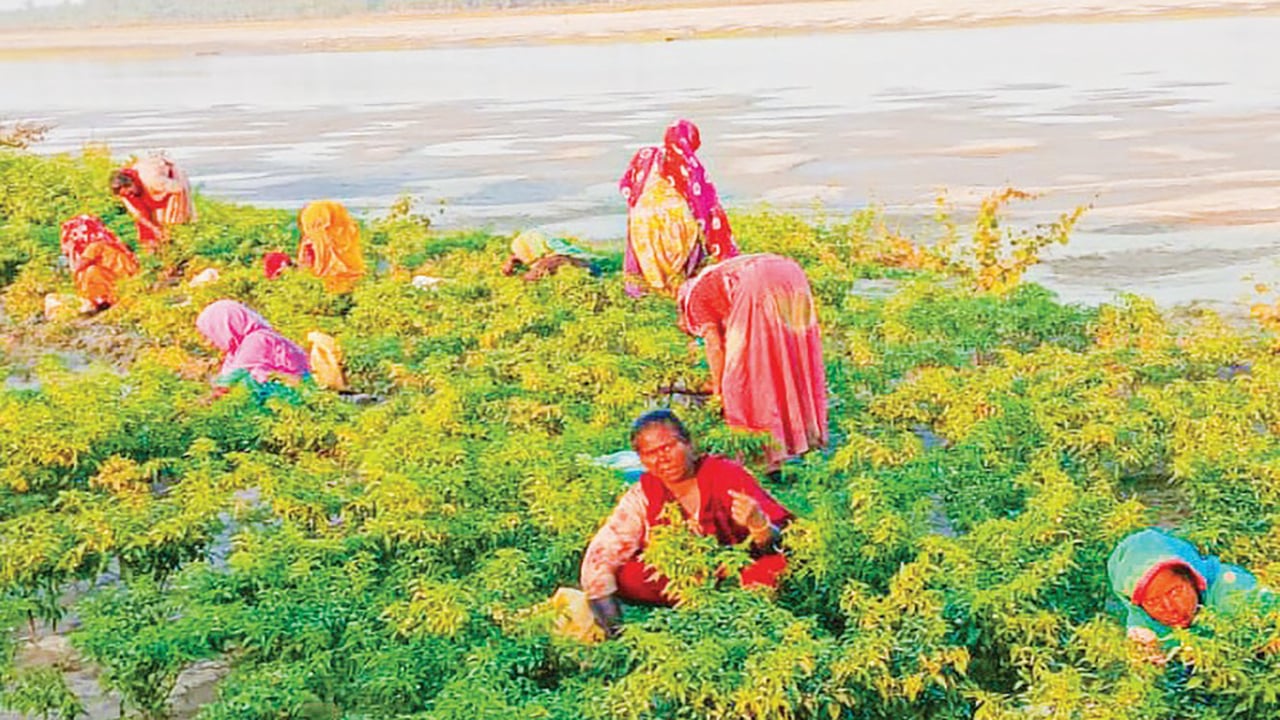
In Sariakandi upazila of Bogura, women from 117 chars along the Jamuna River are leading a quiet revolution in agriculture. They work across the sandy river islands, cultivating crops and contributing significantly to the rural economy. From seedbed preparation to harvesting and threshing, women now participate equally with men in nearly all farming activities, helping bring stability and prosperity to their families.
Despite their vital role, these women face deep-rooted wage discrimination. Female laborers report earning only 200 to 260 taka per day, while men receive 500 to 600 taka for the same work. Local sources note that both government and non-government organizations are conducting advocacy programs to raise awareness about women’s rights, but wage inequality remains unresolved. Agricultural officer Mohammad Ali Jinnah praised the women’s skill and dedication, emphasizing that ensuring fair pay could further strengthen the rural economy.
Observers believe that addressing wage disparity would not only recognize women’s true contribution but also enhance national agricultural productivity.

The ‘1 Nojor’ media platform is now live in beta, inviting users to explore and provide feedback as we continue to refine the experience.