
The ‘1 Nojor’ media platform is now live in beta, inviting users to explore and provide feedback as we continue to refine the experience.
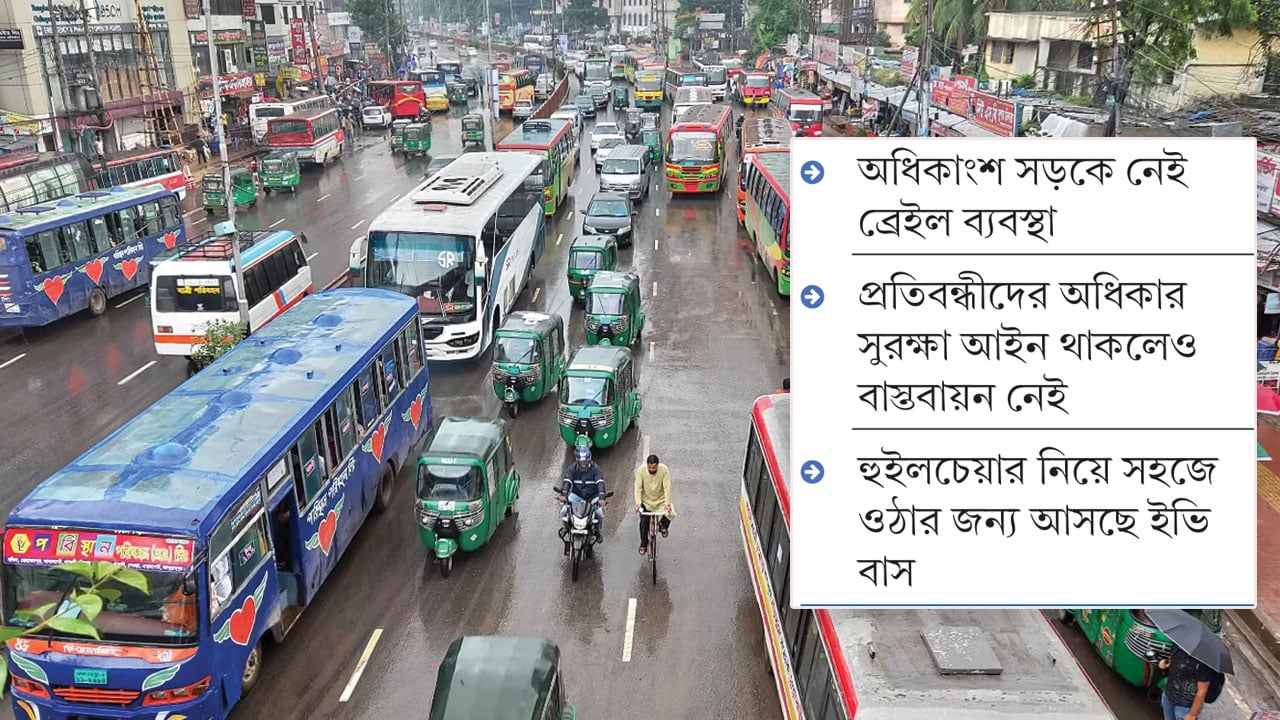
People with disabilities in Bangladesh continue to face major barriers using public transport and urban infrastructure, according to the report. Wheelchair users Rini Islam and Haider Ali described difficulties using rickshaws, buses, CNG vehicles and other services, including refusals to carry wheelchairs. Visually impaired Raha Akhtar said she often lost her way at railway stations because braille signs and audio guidance were unavailable. Although the 2013 disability rights law requires public transport to be disability-friendly and reserves 5 percent of seats, inadequate infrastructure prevents many people from using it.
The DTCA-operated MRT Line-6 offers a 25 percent special fare discount on single tickets for passengers with disabilities, but it serves only a limited route. At a July 2 government meeting, officials said 500 upazila health centres and educational institutions were being made disability-friendly. New facilities are to include ramps, lifts and at least one special toilet. Disability advocates called for broader reforms, including accessible vehicle design, maintenance and participation of people with disabilities in infrastructure planning.

The ‘1 Nojor’ media platform is now live in beta, inviting users to explore and provide feedback as we continue to refine the experience.