

Web Analytics
Bangla
Loading date...
RECENT THREADS SOCIAL PAGE LOGIN

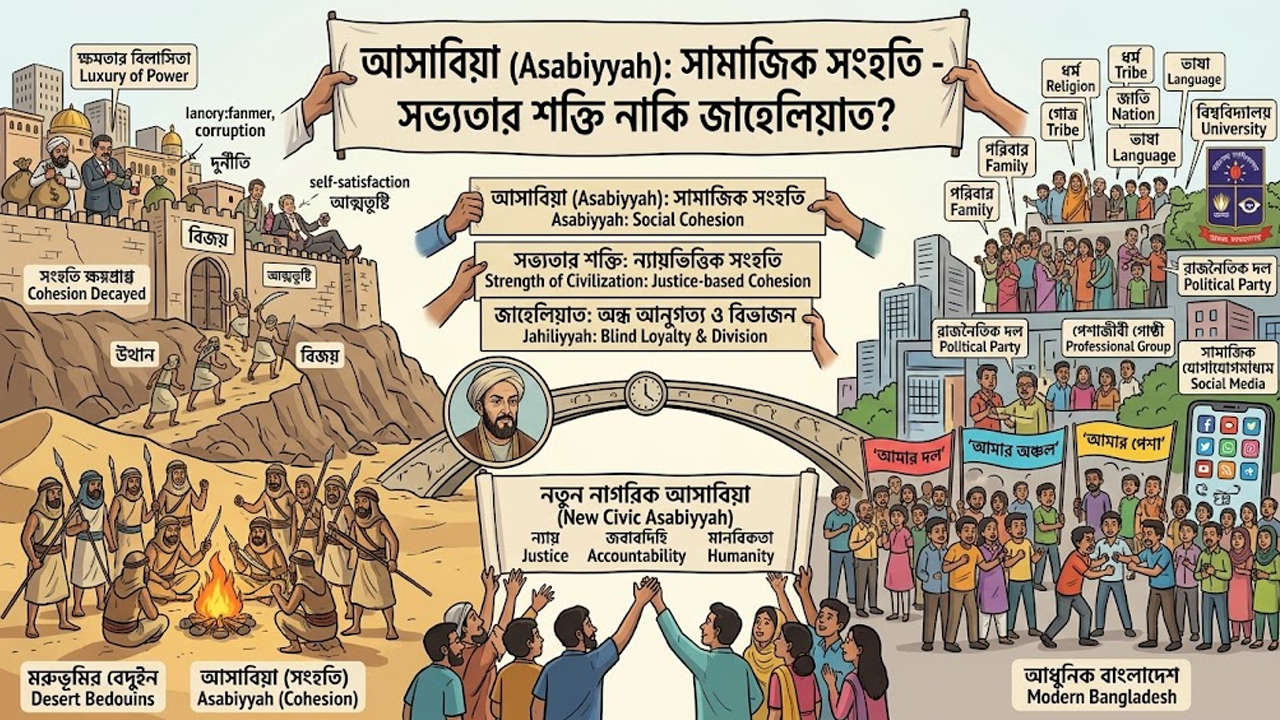
Dr. Muhammad Saidul Islam, an associate professor of sociology at Nanyang Technological University, examines group solidarity, or asabiyyah, in Bangladesh in an article published on August 18, 2026. Drawing on Ibn Khaldun, he argues that social cohesion can build states and civilizations but can also become a source of division, conflict and decline when it turns into blind loyalty.

The article identifies 1971-centered identity, political parties, universities, religious organizations, professions, regional ties and expatriate networks as modern forms of asabiyyah. Islam says such bonds can support cooperation, charity, education, professional standards and social capital. But he warns that accountability weakens when group identity or organizational loyalty becomes more important than truth, justice and criticism.

Islam describes the July Revolution as a potentially significant moment for a new civic asabiyyah. He cautions that it could reproduce older forms of factionalism if it becomes confined to a new political camp, personality cult or exclusionary approach. He calls instead for broader solidarity grounded in rule of law, accountability, human dignity, political pluralism, merit and constitutional values.

Card image

News Source

Amar Desh 18 Aug 26

সংহতি যখন উগ্রতায় বদলে যায় | আমার দেশ

ড. মুহাম্মাদ সাইদুল ইসলাম প্রকাশ : ১৮ আগস্ট ২০২৬, ০৯: ৪৭ মানুষ যেহেতু সামাজিক জীব, তাই সে একা বাঁচে না; বরং পরিবার, গোত্র, ধর্ম, জাতি, ভাষা, বিশ্ববিদ্যালয়, রাজনৈতিক দল কিংবা পেশাজীবী গোষ্ঠীর মাধ্যমে নিজের পরিচয় নির্মাণ করে। সমাজবিজ্ঞানের ভাষায়, মানুষ


The ‘1 Nojor’ media platform is now live in beta, inviting users to explore and provide feedback as we continue to refine the experience.