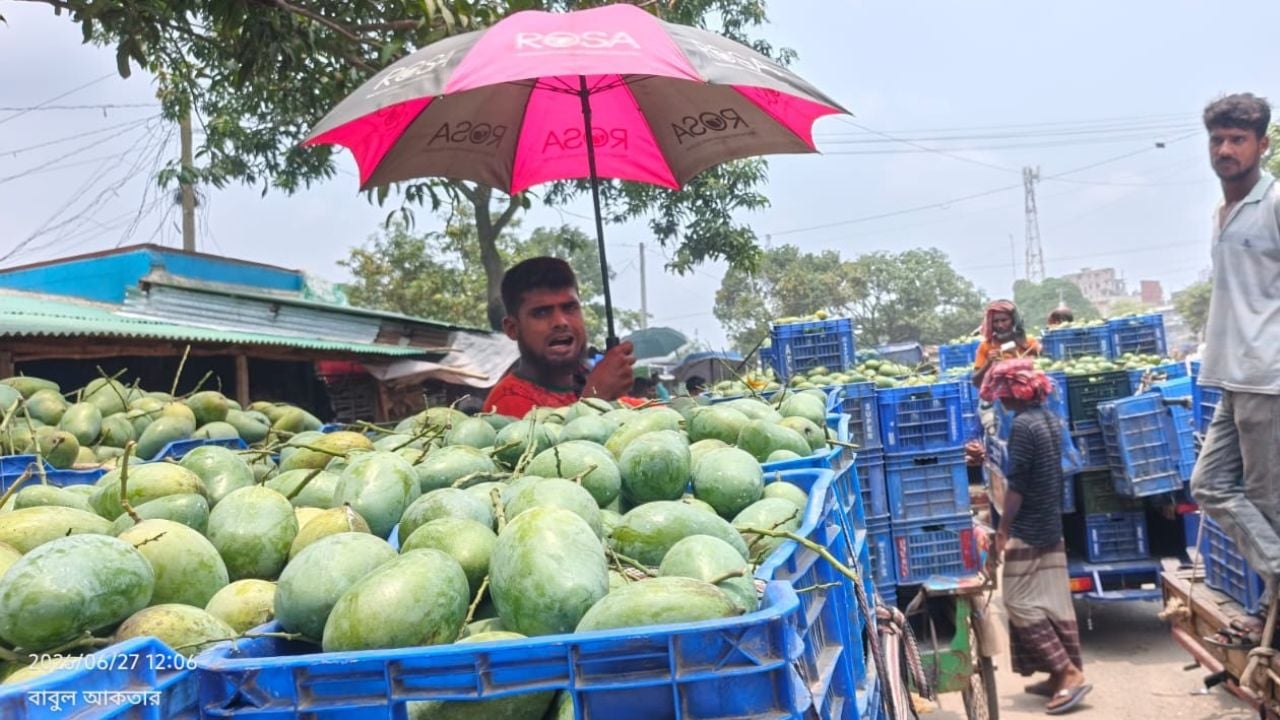
In Sapahar, Naogaon—one of Bangladesh’s largest mango-producing regions—farmers are struggling with low prices despite a busy trading season. At the midpoint of the harvest, markets across the upazila are filled with ripe mangoes, but growers report that production costs have risen sharply while market prices have dropped by Tk 1,000 to 1,500 per maund compared to last year. Many farmers are also forced to sell mangoes in heavier units of 52–55 kilograms per maund instead of the traditional 40 kilograms, deepening their financial losses.
According to the Department of Agricultural Extension, mangoes have been cultivated on 30,310 hectares across Naogaon this season, with Sapahar targeting 140,000 metric tons of production worth about Tk 2,000 crore. Farmers blame increased costs for fertilizer, pesticides, irrigation, labor, and transport, while traders argue that local pricing follows regional norms. The Upazila Nirbahi Officer said the administration is monitoring markets and will act on any complaints.
Agriculture experts warn that without fair pricing, transparent weighing, better cold storage, and stronger market oversight, farmer interest in mango cultivation could decline, affecting Naogaon’s economy.