
The ‘1 Nojor’ media platform is now live in beta, inviting users to explore and provide feedback as we continue to refine the experience.
Bangladesh’s banking sector reforms begun by the interim government after the July 2024 mass uprising are continuing under the current government, but bad loans, capital shortages, provision deficits and liquidity stress remain severe. When the interim government took office, the sector faced falling foreign-exchange reserves, an unstable dollar market, inflationary pressure and banks struggling to repay depositors. Bangladesh Bank responded with investigations, new loan-default policies, board restructuring, legal reform proposals and plans involving five weak Islamic banks.
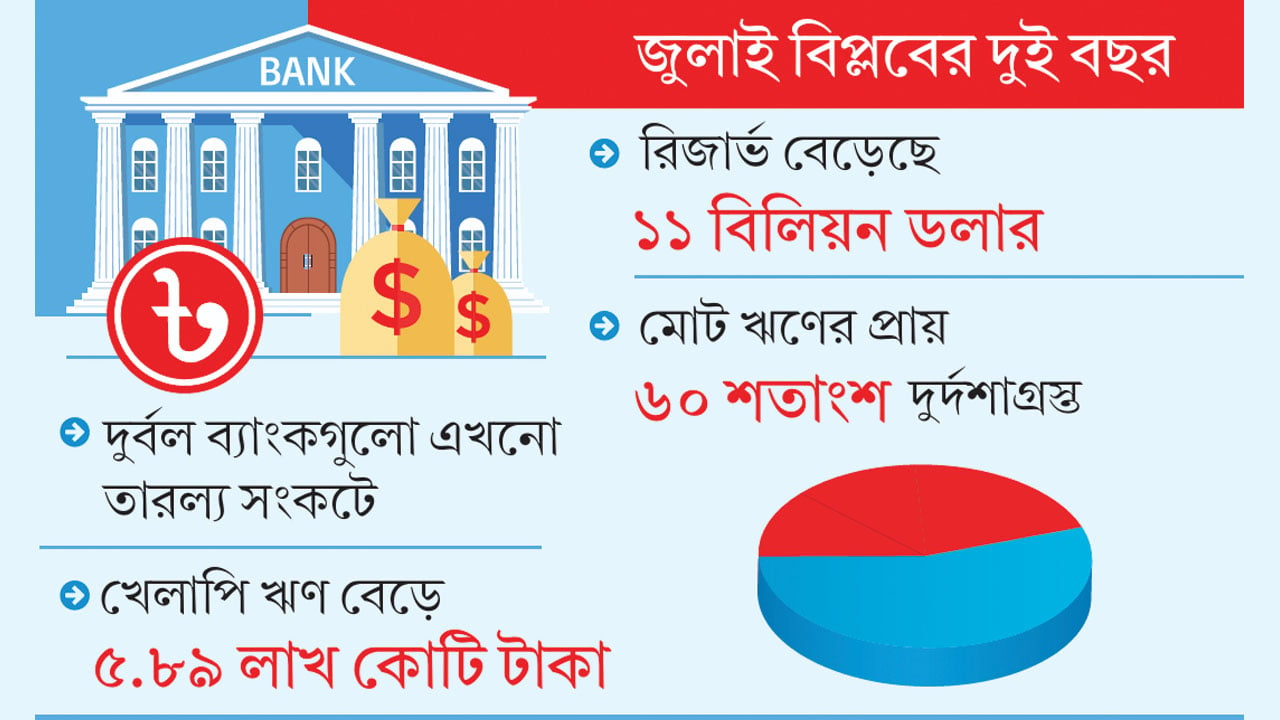
Gross foreign-exchange reserves rose from $25 billion before the Awami League government’s fall to $36 billion at the end of July, an increase of $11 billion over two years. The report says the dollar market stabilised after Bangladesh Bank introduced a market-based exchange-rate system on May 14, 2025. Remittances reached $35.56 billion in fiscal year 2025-26, up 17.30 percent year on year, while deposit growth rose to 11.5 percent.
At the end of March, classified loans stood at Tk588,704 crore and the provision shortfall at Tk205,665 crore. The banking sector’s capital adequacy ratio fell to negative 2.64 percent last year. Economists say lasting recovery requires loan recovery, return of funds allegedly laundered abroad, capital restoration and restructuring of weak banks.

The ‘1 Nojor’ media platform is now live in beta, inviting users to explore and provide feedback as we continue to refine the experience.