
The ‘1 Nojor’ media platform is now live in beta, inviting users to explore and provide feedback as we continue to refine the experience.
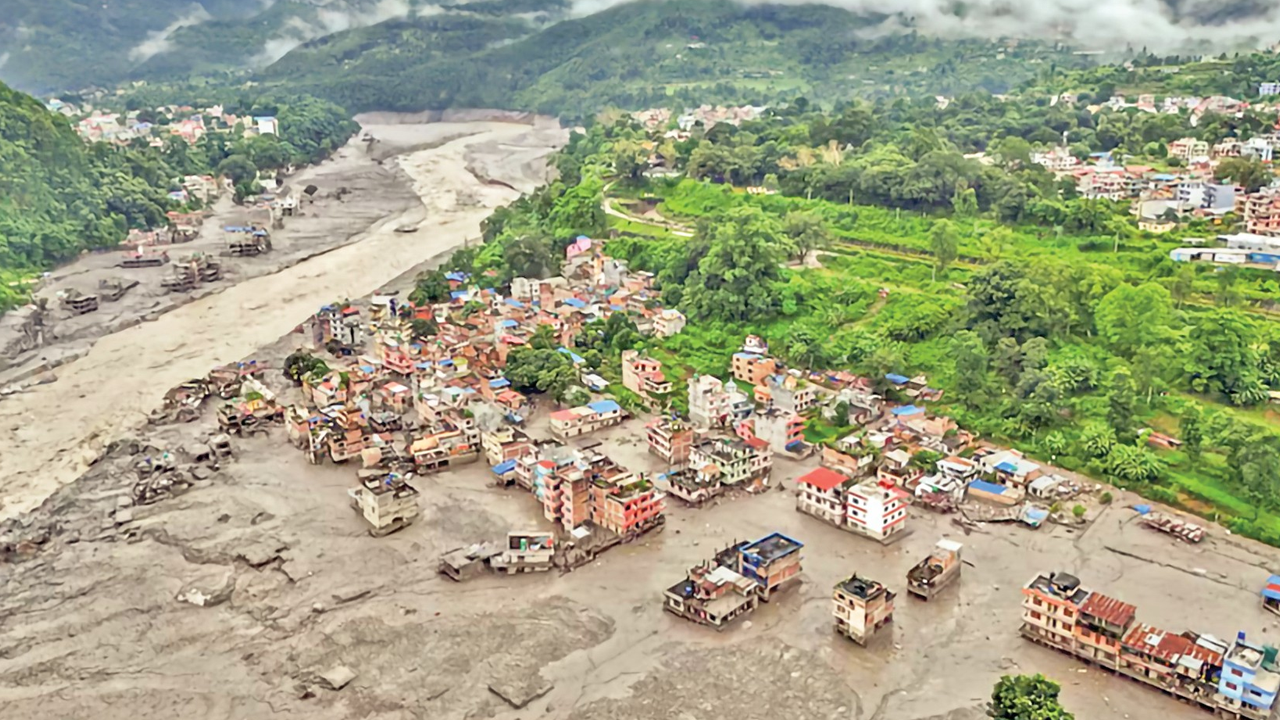
A glacier collapse near the Nepal-Tibet border on August 26, 2026 triggered a destructive flash flood and landslide, according to the source. A mass of ice and rock reportedly fell from near Langtang Lirung into the Lhende River, temporarily blocking the channel before the debris dam failed. The resulting flood swept through downstream valleys, affecting the Bhotekoshi and Trishuli river basins. The source reports 469 deaths, about 1,500 injuries and roughly 1,500 missing people.
Scientists cited in the report describe the event as a cascading geophysical disaster rather than a rainfall-driven flood. They said the collapse generated seismic signals equivalent to a magnitude 5.2 earthquake, though the US Geological Survey later determined that no natural earthquake had occurred. The debris flow reportedly travelled its first 22 kilometres at an average speed of about 193 kilometres per hour, while river levels rose about nine metres within 30 minutes.
The report links the disaster to weakened permafrost, glacier retreat, unusually high temperatures and steep Himalayan terrain. It says a heatwave struck the area two days earlier, while longer-term warming has destabilised ice and rock. Damaged roads and bridges have also hindered rescue access to remote communities.

The ‘1 Nojor’ media platform is now live in beta, inviting users to explore and provide feedback as we continue to refine the experience.