
The ‘1 Nojor’ media platform is now live in beta, inviting users to explore and provide feedback as we continue to refine the experience.
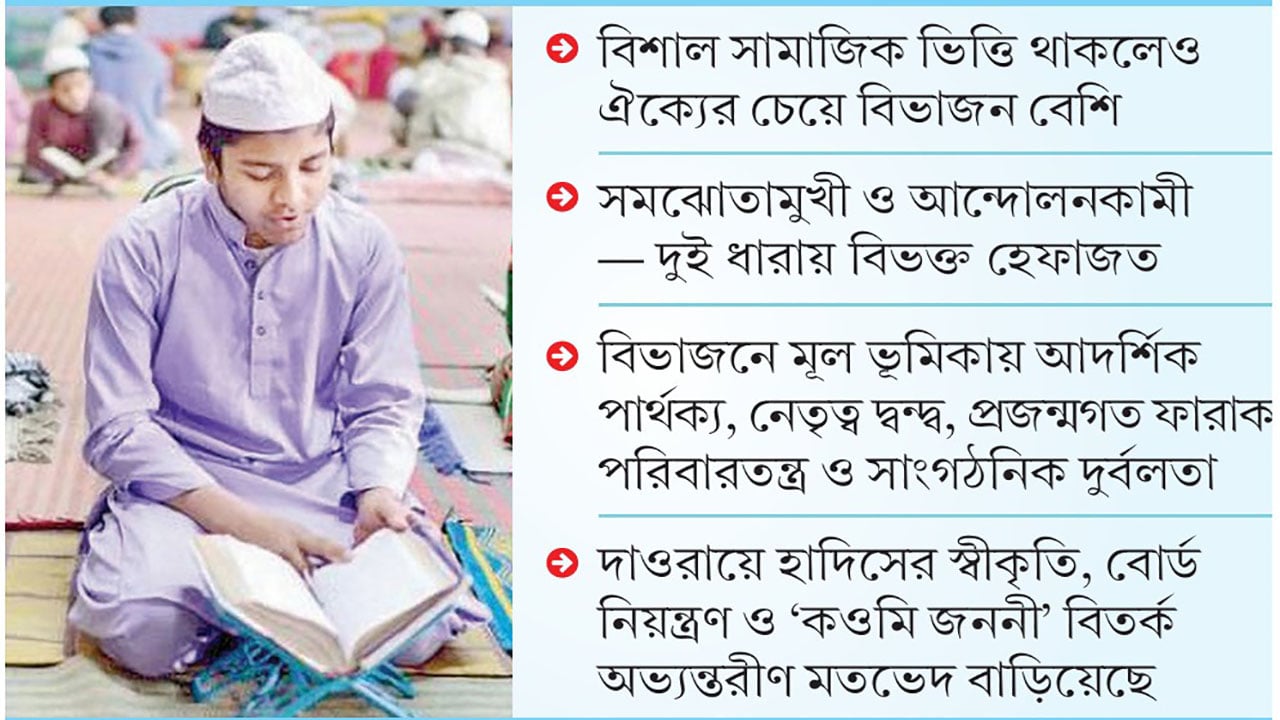
Bangladesh’s Qawmi religious network, encompassing thousands of madrasas and influential clerics, is facing intensified internal political divisions ahead of the country’s 13th parliamentary election in February 2026. Despite its vast social influence, the Qawmi leadership remains fragmented over ideological, generational, and strategic differences. The divisions have become more visible through disputes over leadership, political alliances, and the role of the state in religious education.
Historically rooted in the Deobandi tradition, the Qawmi movement has seen repeated splits since the 1980s, particularly after events such as the 2017 state recognition of Dawra-e-Hadith degrees, the death of Allama Ahmad Shafi in 2020, and subsequent leadership changes within Hefazat-e-Islam. Prominent Qawmi parties—including Hefazat-e-Islam, Islami Andolon Bangladesh, and Bangladesh Khelafat Majlis—remain divided over participation in electoral politics and relations with major political blocs. Scholars interviewed by *Amar Desh* cited organizational weakness, leadership rivalries, and power ambitions as key causes of disunity.
In the 2026 election, Qawmi-linked parties collectively secured a small share of votes and a few parliamentary seats, underscoring their inability to form a unified political front. Analysts suggest that these internal fractures will continue to shape Bangladesh’s religious and electoral landscape.

The ‘1 Nojor’ media platform is now live in beta, inviting users to explore and provide feedback as we continue to refine the experience.