
The ‘1 Nojor’ media platform is now live in beta, inviting users to explore and provide feedback as we continue to refine the experience.
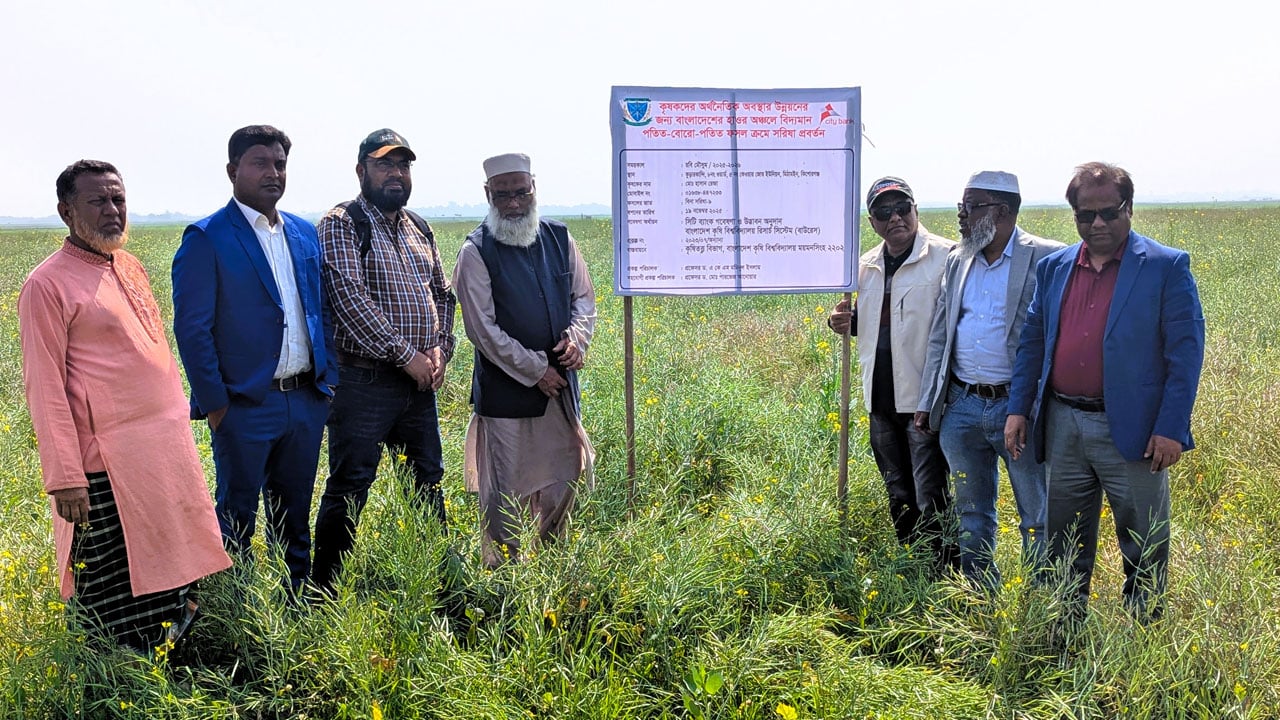
A Bangladesh Agricultural University (BAU) study has identified mustard cultivation as a promising way to reduce the economic risks faced by farmers in the haor wetlands, who rely almost entirely on boro rice. Frequent early floods often destroy the single annual crop, leaving farmers in debt and uncertainty. The research suggests that short-duration mustard can be grown on fallow land between the recession of floodwaters and the start of boro planting, allowing farmers to harvest an additional crop and lessen financial vulnerability.
The project, led by Professor A. K. M. Mominul Islam and supported by Professor Md. Parvez Anwar, has been running since 2023 under BAURES with funding from City Bank. Trials in Kishoreganj’s Mithamain area found that the BINA Sarisha-9 variety sown on November 20 produced the highest yield, while subsequent boro rice crops also performed strongly. Researchers noted that about 40% of haor land remains unused in the rabi season, and integrating mustard could make farming more profitable and resilient.
Field results and farmer feedback indicate growing interest in mustard cultivation, though challenges remain due to uneven water recession and unsuitable lowland plots.

The ‘1 Nojor’ media platform is now live in beta, inviting users to explore and provide feedback as we continue to refine the experience.