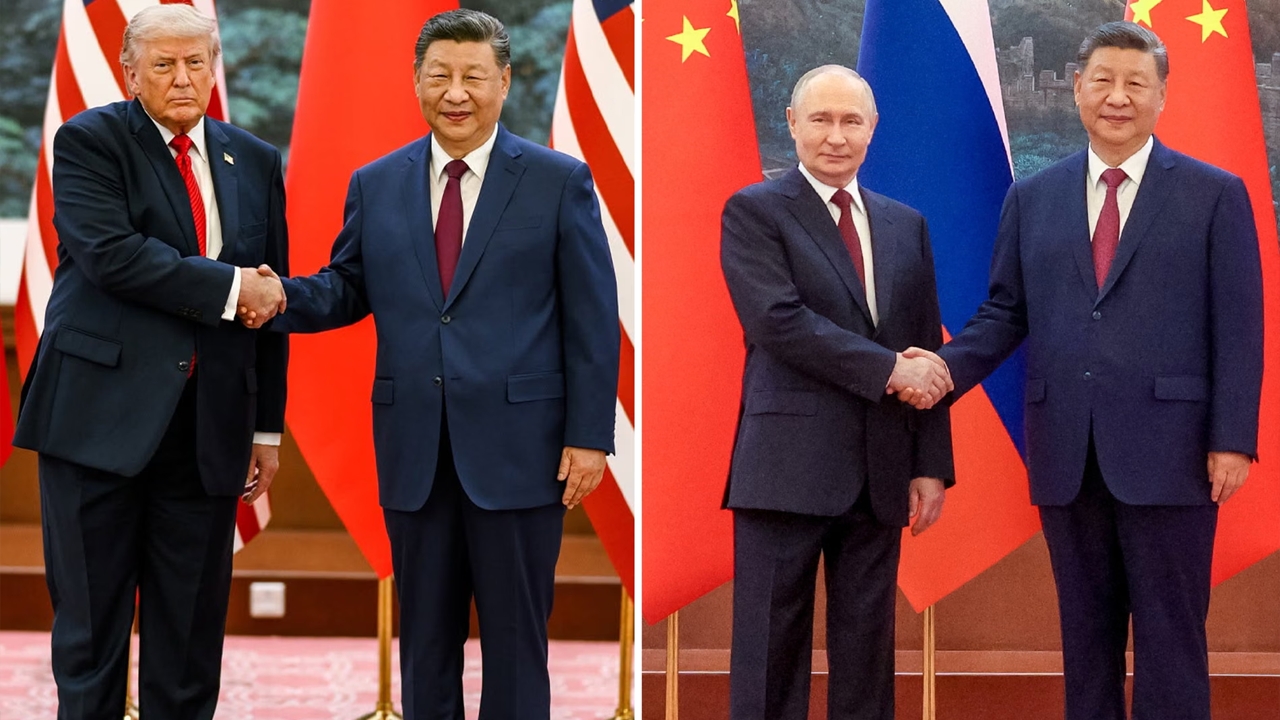
Beijing hosted U.S. President Donald Trump and Russian President Vladimir Putin in close succession, welcoming both with similar pomp and ceremony. Despite the matching grandeur, China’s approach carried subtle distinctions. Trump was greeted by China’s vice president, a largely ceremonial figure, while Putin was received by a senior Communist Party Politburo member, signaling that Beijing views Moscow as a closer partner in an emerging non-Western order.
Kremlin spokesperson Dmitry Peskov downplayed comparisons, but Russian state media framed Putin as a “trusted ally” and Trump as an “uncertain partner.” While Trump’s visit produced few tangible results on trade or technology issues, Putin’s trip held deeper strategic weight amid Russia’s economic strain and Western sanctions. Discussions included the long-delayed Power of Siberia-2 gas pipeline, though no concrete timeline was announced.
Analysts cited in the report said Chinese President Xi Jinping gained the most diplomatically, portraying himself as a global power broker by hosting both leaders within the same month. However, neither visit yielded progress on major conflicts such as the war in Ukraine or Middle East tensions.