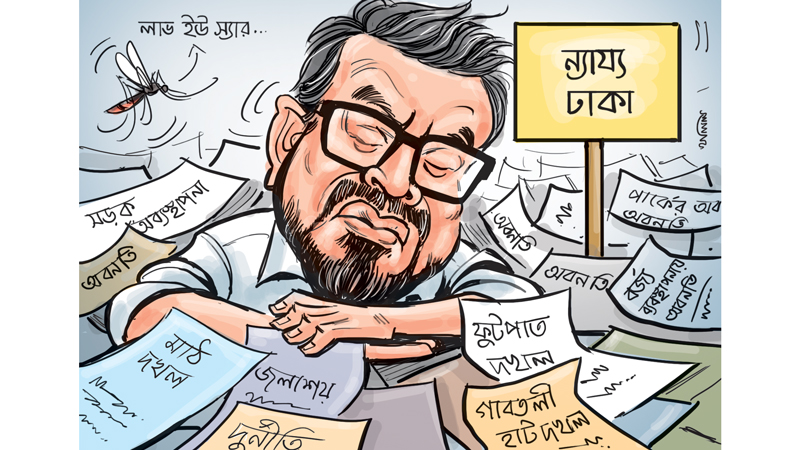
Nine months after Mohammad Ejaz took charge as administrator of Dhaka North City Corporation (DNCC), his pledge to build a 'just city' rooted in metmodern municipal ideals remains largely unfulfilled. Despite promises of equitable urban services, citizen participation, and nature-centered planning, Dhaka continues to suffer from severe traffic congestion, encroached sidewalks, poor waste management, and worsening dengue outbreaks. Experts say Ejaz, once a vocal river researcher, has failed to translate his theoretical commitments into tangible reforms. Parks and playgrounds remain under elite control, drainage systems are clogged, and infrastructure projects have created more disruption than relief. Environmentalists criticize his short-lived air purifier plan as misguided, while urban planners accuse him of catering to privileged groups. Ejaz defends his record, citing recovered playgrounds, pink toilets for women, and initiatives for marginalized communities. However, residents and specialists argue that the DNCC’s governance still reflects bureaucratic inertia rather than the participatory, equitable, and ecological principles promised under the metmodern urbanism framework.