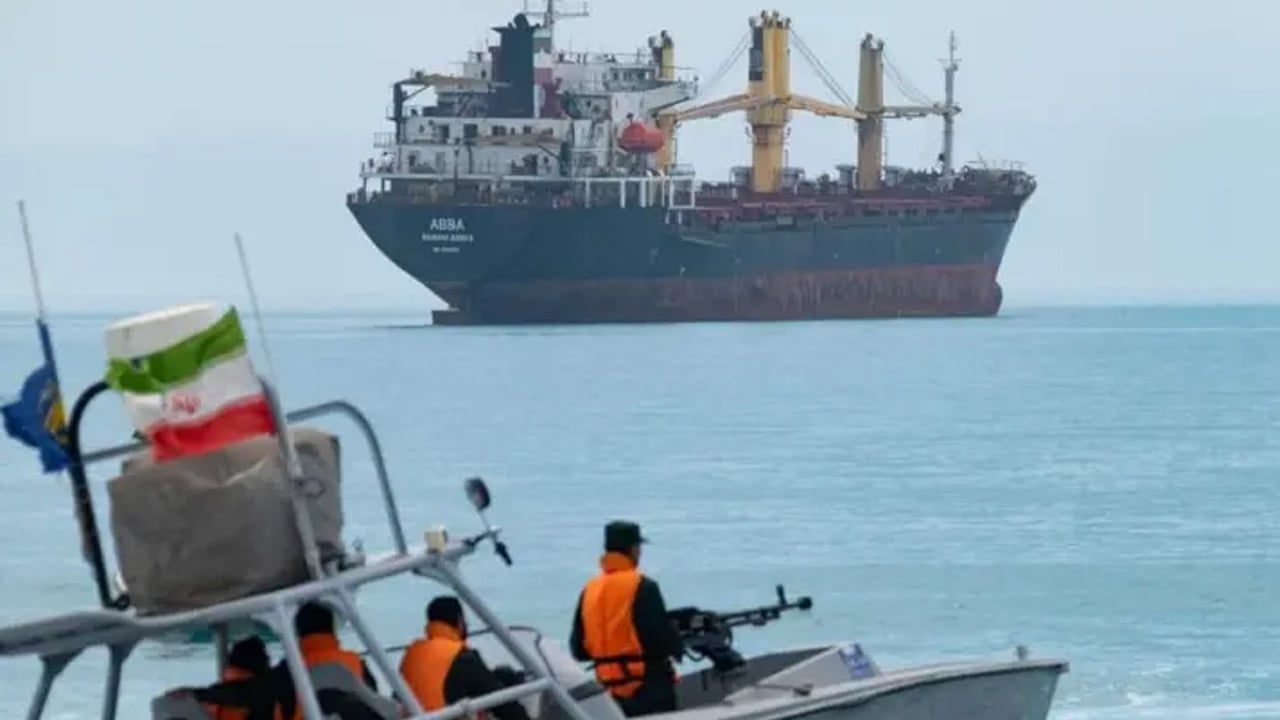
Iran’s semi-official Tasnim News Agency reported that Iranian drones attacked a US Navy vessel in the Gulf of Oman after American forces seized an Iranian-flagged container ship named Towska. According to US Central Command, the USS Spruance disabled the ship’s propulsion after repeated warnings went unanswered, and US sailors later boarded it from the USS Tripoli by helicopter. The ship had departed Malaysia’s Port Klang on April 12 and was located about 40 nautical miles from Iran’s Chabahar port. US President Donald Trump said the action followed Iran’s attempt to violate a US naval blockade on Iranian ports.
Trump stated that Iranian sailors ignored warnings, prompting US forces to pierce the ship’s engine room and halt it mid-sea. The 290-meter vessel is now under full US Navy control and was already under US Treasury sanctions for previous illegal activities. The incident has reignited global discussion over the use of naval blockades as a strategic tool, a practice historically aimed at weakening adversaries by disrupting trade and supply routes.
Historical examples cited include British blockades during World War I, Allied actions against Japan in World War II, and more recent blockades in Gaza and Yemen, illustrating both their tactical effectiveness and humanitarian consequences.