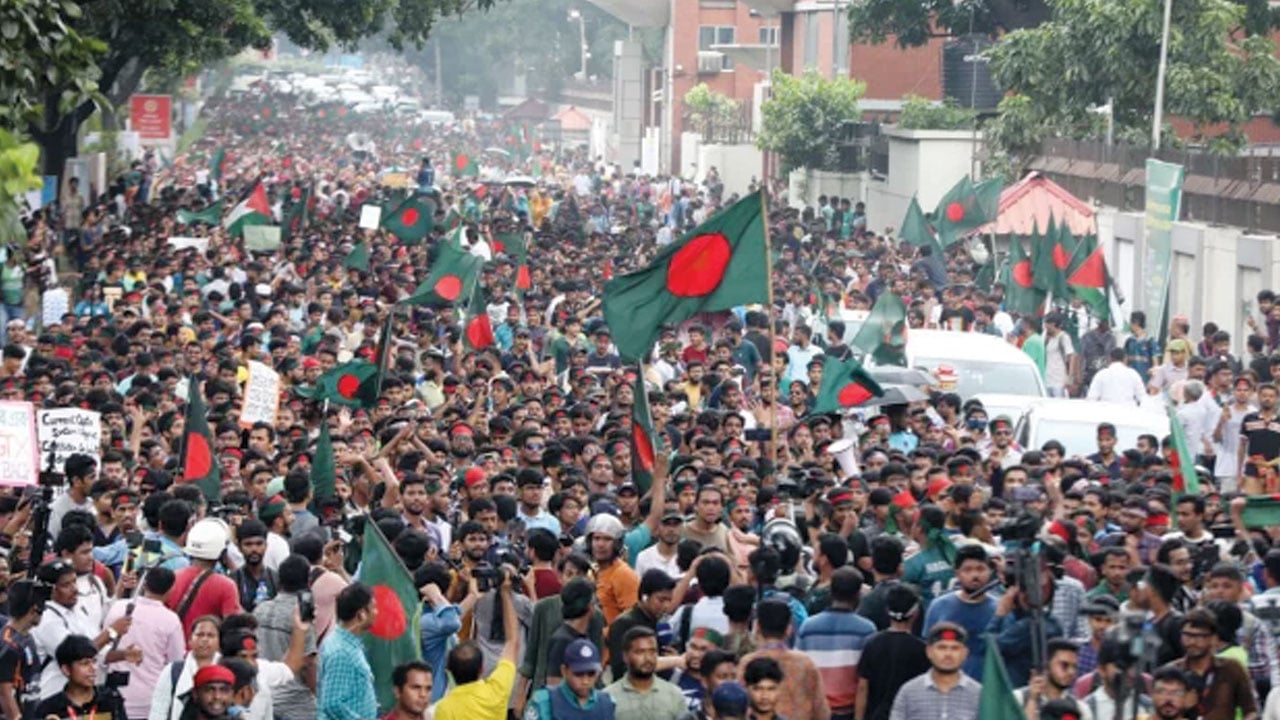
A nationwide student-led protest in Bangladesh has culminated in the resignation of Prime Minister Sheikh Hasina after five weeks of unrest. The movement began as a campaign against the 30 percent quota in government jobs reserved for descendants of freedom fighters. Abu Saeed, a 25-year-old student from a farming family, emerged as one of the key coordinators of the movement. His death from police gunfire during a demonstration sparked widespread outrage and mobilized citizens across the country.
The protests, initially focused on reforming the quota system, expanded into a broader demand for systemic change and Hasina’s resignation. Following the killing of more than two hundred demonstrators, including Saeed, the High Court revised the quota policy, reducing the allocation to 7 percent for the grandchildren of 1971 war veterans. However, the decision failed to quell public anger, leading to intensified demonstrations.
Hasina eventually left the country aboard a military aircraft, acknowledging the unstoppable momentum of the student and public uprising. The movement’s success underscored a national desire for democracy and human rights over economic progress under authoritarian rule.