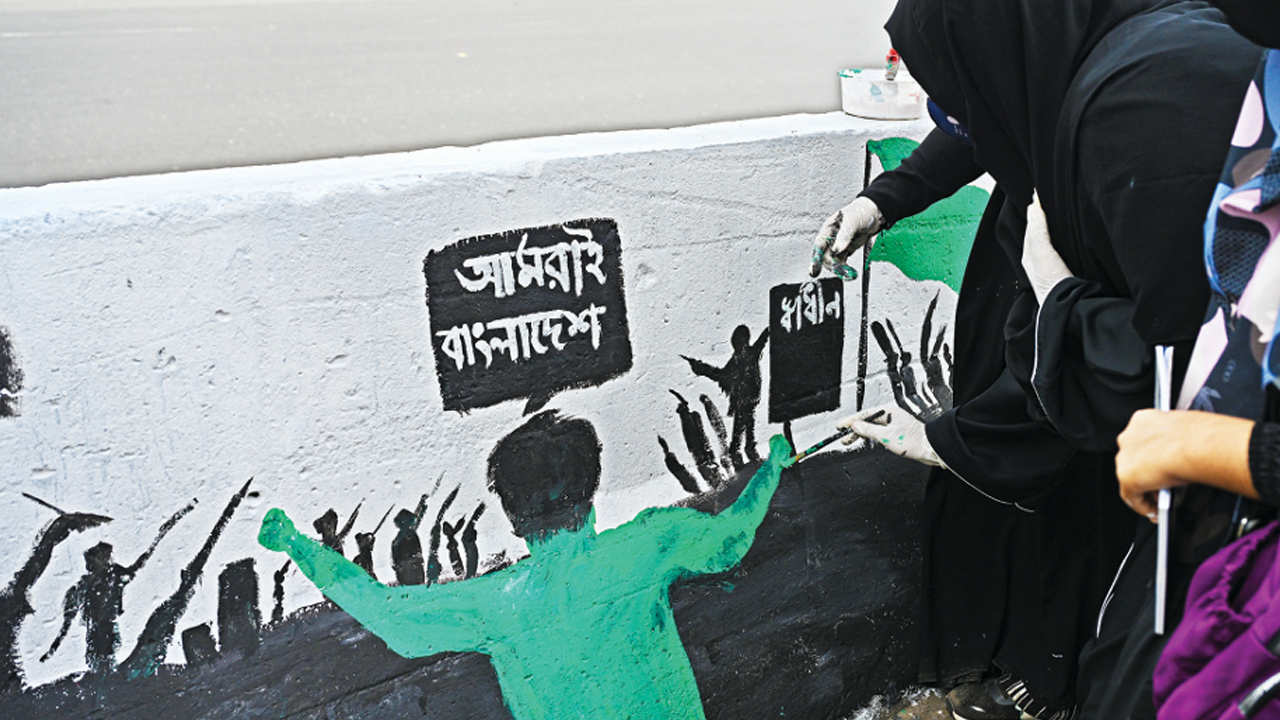
In an opinion article published by Amar Desh on August 5, 2026, journalist Khaja Main Uddin describes Bangladesh’s August 5, 2024 political transition as a revolution rather than an ordinary change of government. He argues that the July movement drew strength from mass resistance to repression, injustice and the loss of civil rights. The writer says a technology-oriented younger generation used creative tactics and brought the movement to its conclusion without a single party or all-powerful leader directing it.
The article says the movement developed from long-standing democratic aspirations and public resentment of authoritarian rule. It identifies the Bangladesh Nationalist Party as a principal opposition force that sustained hopes for democracy, Jamaat-e-Islami as working in the final phase of the anti-Hasina movement, and the Anti-Discrimination Student Movement as leading the final stage. According to the article, that student movement later became the National Citizens Party.
Main Uddin says the July Charter, prepared through political consensus, outlines democratic, institutional and constitutional reforms. Parties that signed it now face a test in implementing the July agenda, he writes. He adds that the vision of a Bangladesh free of inequality, corruption and remnants of fascism has not yet been realized, and warns that unresolved questions could return in another form if that vision is not achieved.