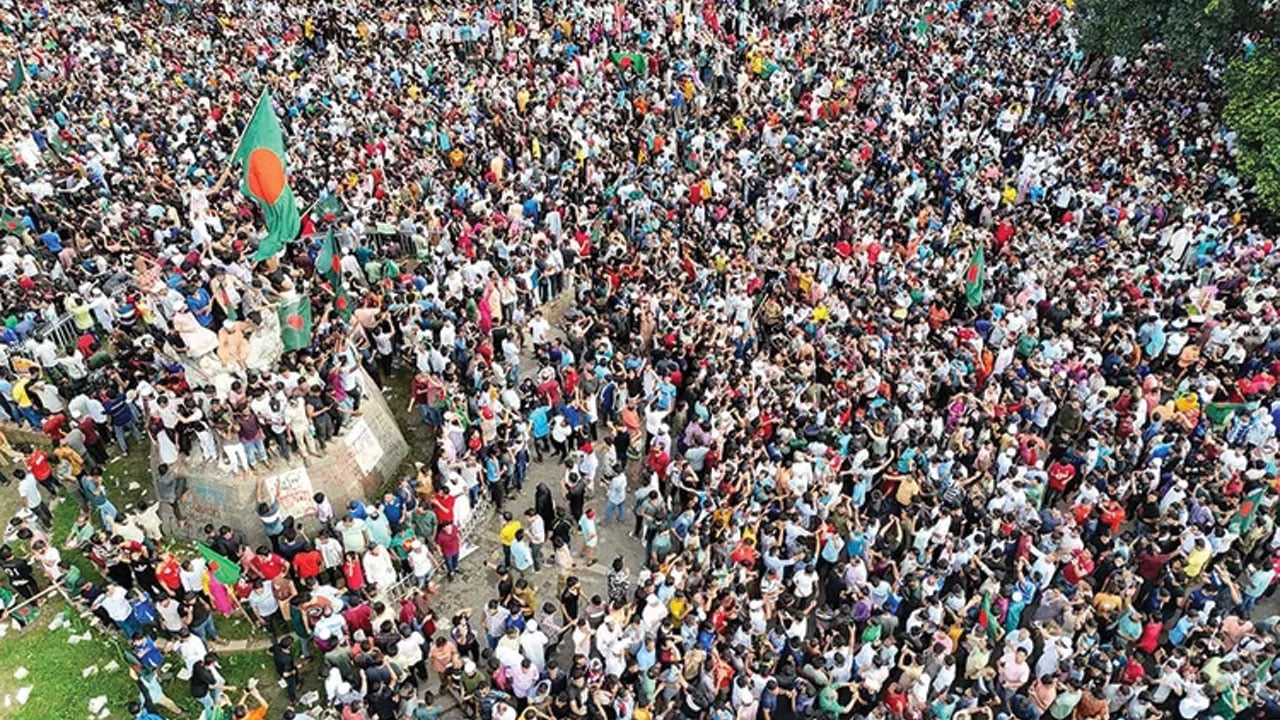
Journalist Khaja Main Uddin’s article, published on July 22, 2026, revisits the violent events of July 2024 in Bangladesh, when student protests over government job quota reforms turned deadly. The piece recalls how demonstrations demanding merit-based recruitment were met with police force and political labeling, leaving many students injured and at least one killed. The author highlights the July 16, 2024, incident in which a student from Rangpur’s Begum Rokeya University was shot dead during protests.
The article criticizes the government’s reaction, noting that ruling party leaders framed protesting students as “razakars,” deepening social divisions. It argues that the quota reform movement was a legitimate expression of youth frustration over unemployment, corruption, and inequality. The writer questions the moral stance of those who remain silent in the face of state violence and compares the suppression of dissent to historical authoritarianism.
The commentary concludes that the quota system, even if well-intentioned, has become a tool for favoritism and political control, warning that imposed narratives cannot indefinitely suppress demands for justice and democratic rights.