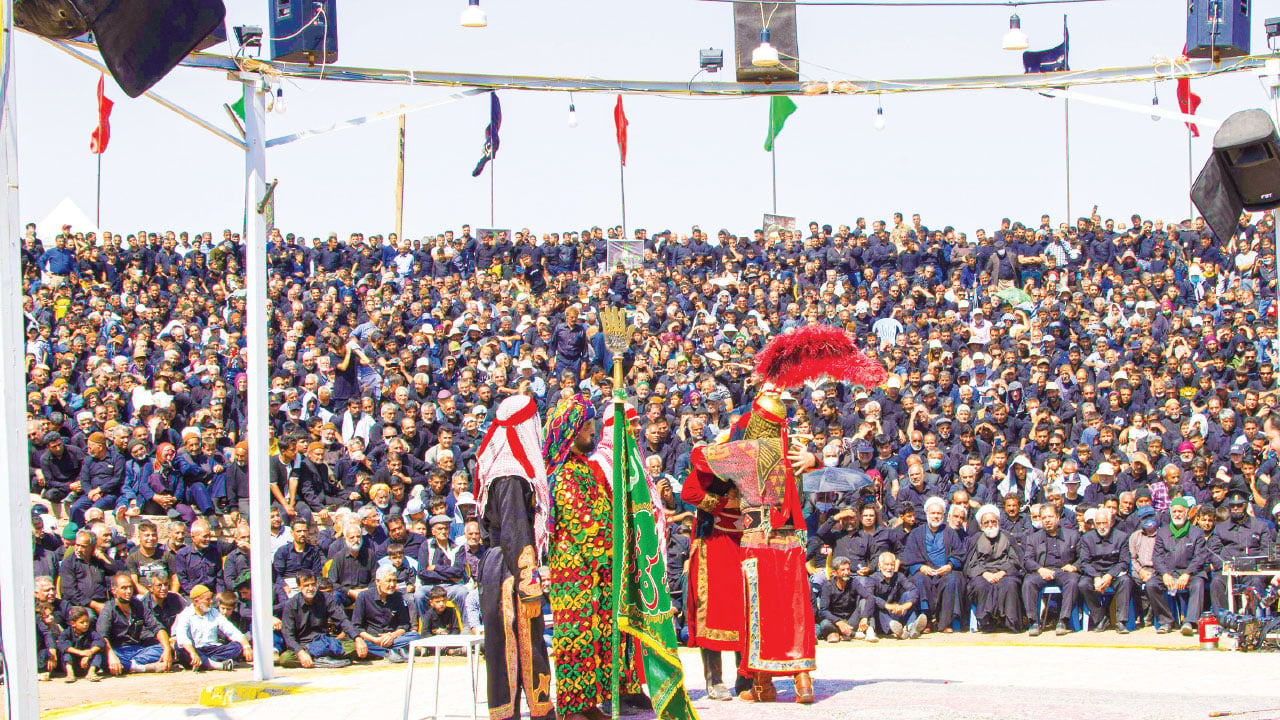
The article traces the historical evolution of the Tazia procession, a ritual of mourning rooted in the remembrance of Imam Hussain’s martyrdom at Karbala in 61 Hijri. Originating as small gatherings of grief and prayer, the practice gradually developed into elaborate public ceremonies under dynasties such as the Buyids and Safavids. Over time, diverse cultural expressions of Ashura emerged across Muslim regions, from Iraq’s mass pilgrimages to Iran’s theatrical performances and Pakistan’s grand wooden replicas.
In Bangladesh, the Tazia procession centers on Dhaka’s historic Hosaini Dalan, built in 1642 during Mughal rule. The city’s main procession features silver-covered Tazias, symbolic horses, flags, drums, and martial displays, culminating at a symbolic Karbala ground. Despite its deep cultural roots, Islamic scholars remain divided over its religious legitimacy, with some viewing the rituals as inconsistent with orthodox Islamic principles.
The article concludes that while the Tazia procession’s intensity has softened over time, it endures as a living link to centuries of Islamic history and South Asian cultural synthesis.