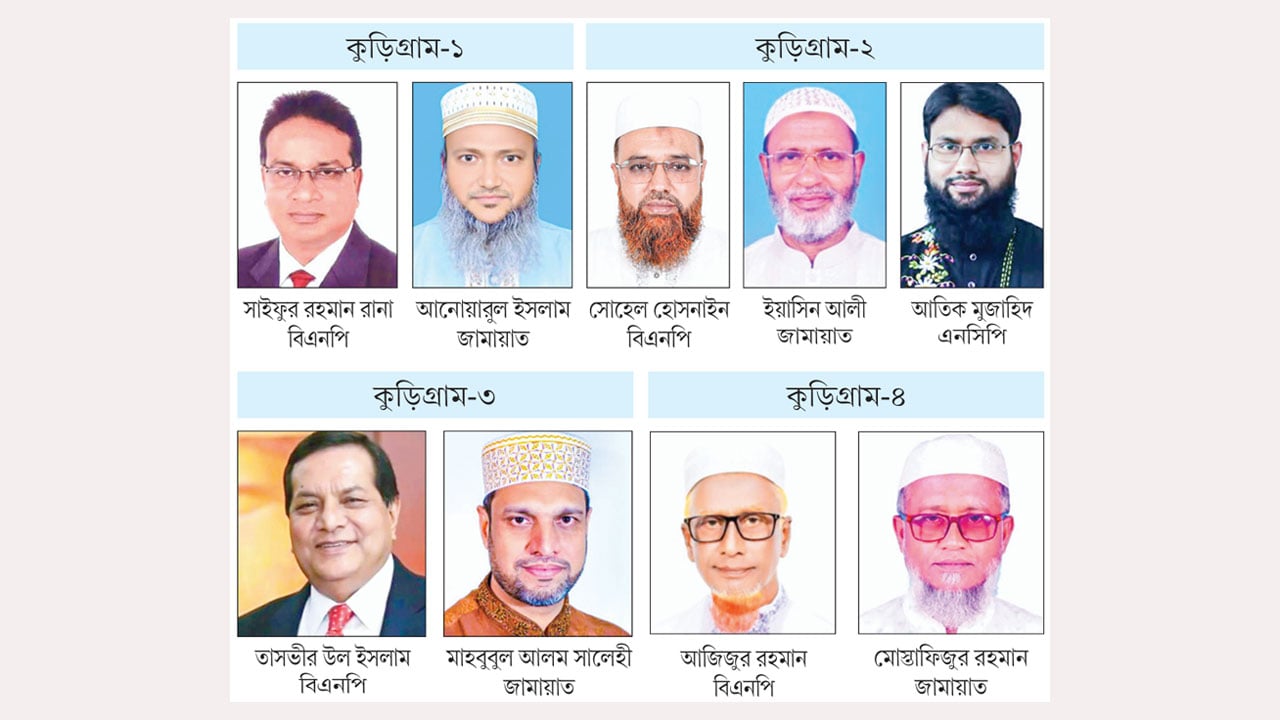
In northern Bangladesh’s Kurigram district, political tensions are rising ahead of the 13th National Election as the Bangladesh Nationalist Party (BNP) struggles with internal divisions across three of its four constituencies. Despite officially announcing its candidates, local factions within BNP remain at odds over nominations, particularly in Kurigram-1, -3, and -4, where rival groups have openly clashed. Meanwhile, Jamaat-e-Islami has launched a coordinated and disciplined campaign, positioning itself as a strong contender in several constituencies.
The fall of the Awami League-led government following the July uprising has reshaped the political landscape, leaving the once-dominant Jatiya Party weakened and unpopular. BNP’s internal disputes threaten to undermine its voter base, while Jamaat’s early organization and grassroots outreach have strengthened its prospects. Other smaller parties, including Islami Andolon, the National Citizen Party (NCP), and Gano Adhikar Parishad, are also active in the field.
Analysts suggest that Kurigram’s voters—long affected by river erosion, unemployment, and poor infrastructure—are seeking credible leadership capable of addressing local hardships. The outcome may hinge on which party can unite its ranks and present a coherent development vision.