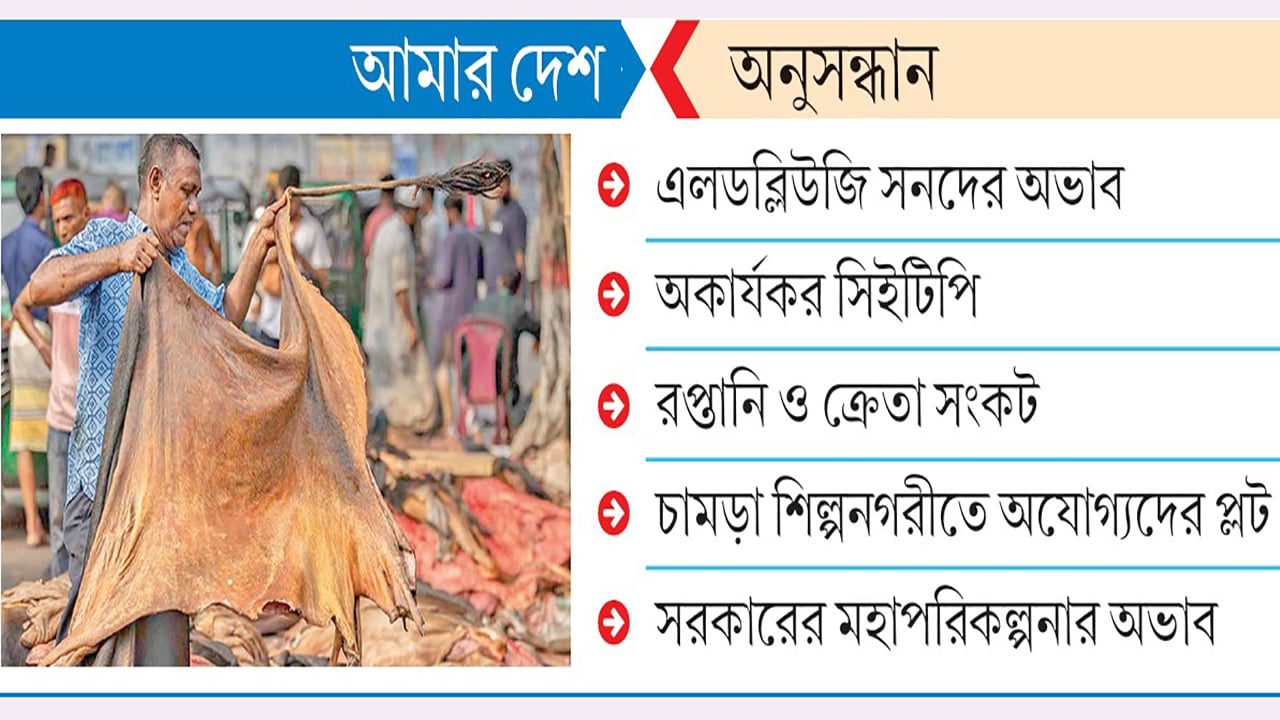
Bangladesh’s leather industry is undergoing a major downturn despite strong global demand. The sector has been hit by poor management, lack of environmental compliance, and absence of international certification such as the Leather Working Group (LWG) standard, which has discouraged major global brands from purchasing Bangladeshi leather. Production and exports have fallen sharply, forcing local businesses to rely on imported leather. Large companies like Bata and Apex have reduced direct leather purchases, while many entrepreneurs cannot export despite having government-allotted plots.
The crisis deepened after tanneries were relocated from Hazaribagh to Savar in 2017, where the central effluent treatment plant (CETP) remains only partially functional. Business leaders and officials acknowledge that mismanagement, substandard equipment, and corruption have crippled the CETP, driving away European and Korean buyers. Export earnings reached USD 1.145 billion in 2024–25, far below the sector’s potential in the USD 440 billion global market.
Industry associations urge urgent modernization of the CETP, enforcement of environmental standards, and acquisition of LWG certification. They also call for action against misuse of government plots and for joint public-private investment to restore competitiveness.