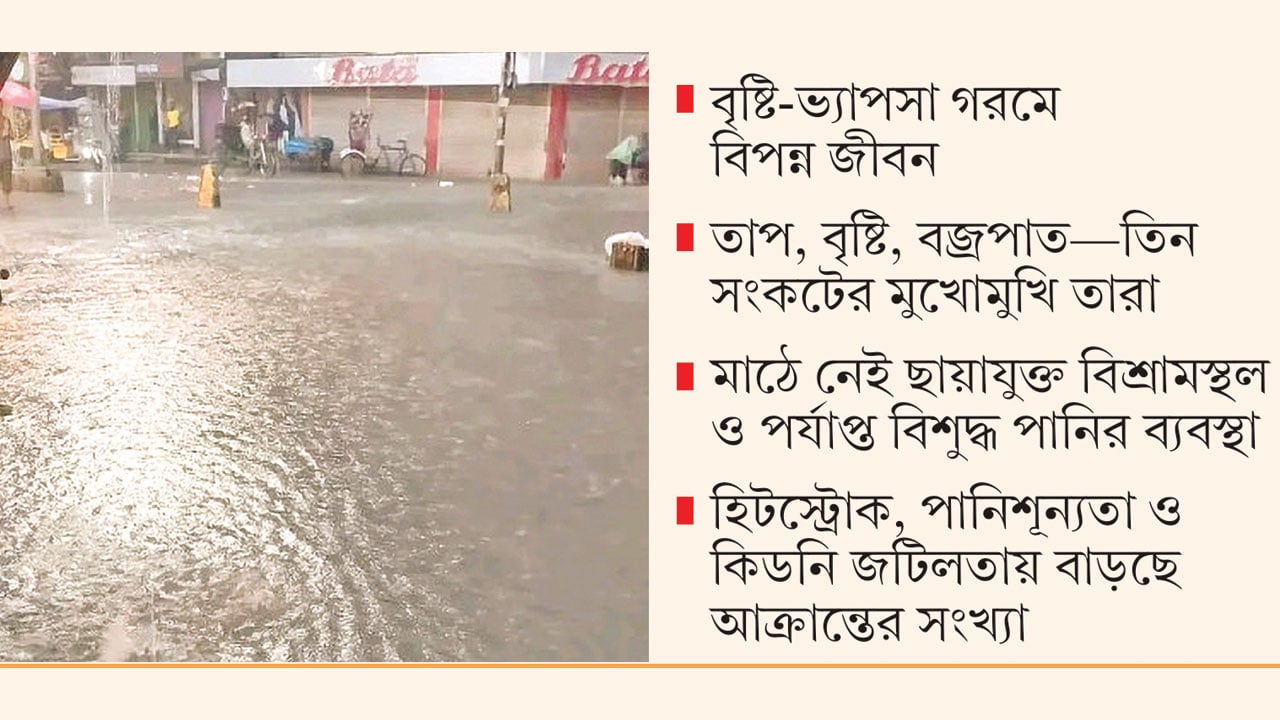
In Mymensingh, intermittent heavy rainfall and high humidity have intensified health risks for outdoor laborers such as farmers, construction workers, brick kiln laborers, and rickshaw pullers. The Bangladesh Meteorological Department recorded 174 millimeters of rainfall on Wednesday, one of the country’s highest, while weak wind flow and persistent humidity have made working conditions increasingly hazardous. Experts warn that these are not normal seasonal variations but signs of a shifting climate pattern marked by hot days, humid nights, and erratic rain.
Health officials report a rise in heat-related illnesses including dehydration, heat exhaustion, and kidney complications. They emphasize the need for better medical training, equipment, and preparedness across hospitals. Farmers and laborers describe difficulties working in sweltering conditions without shaded rest areas or access to safe drinking water. Meteorologists note that Mymensingh’s geography makes it prone to thunderstorms, while climate scientists warn of long-term threats to productivity, agriculture, and food security.
Authorities have installed lightning protection systems in the region, but maintenance and coordination remain inadequate, limiting their effectiveness in reducing lightning-related hazards.