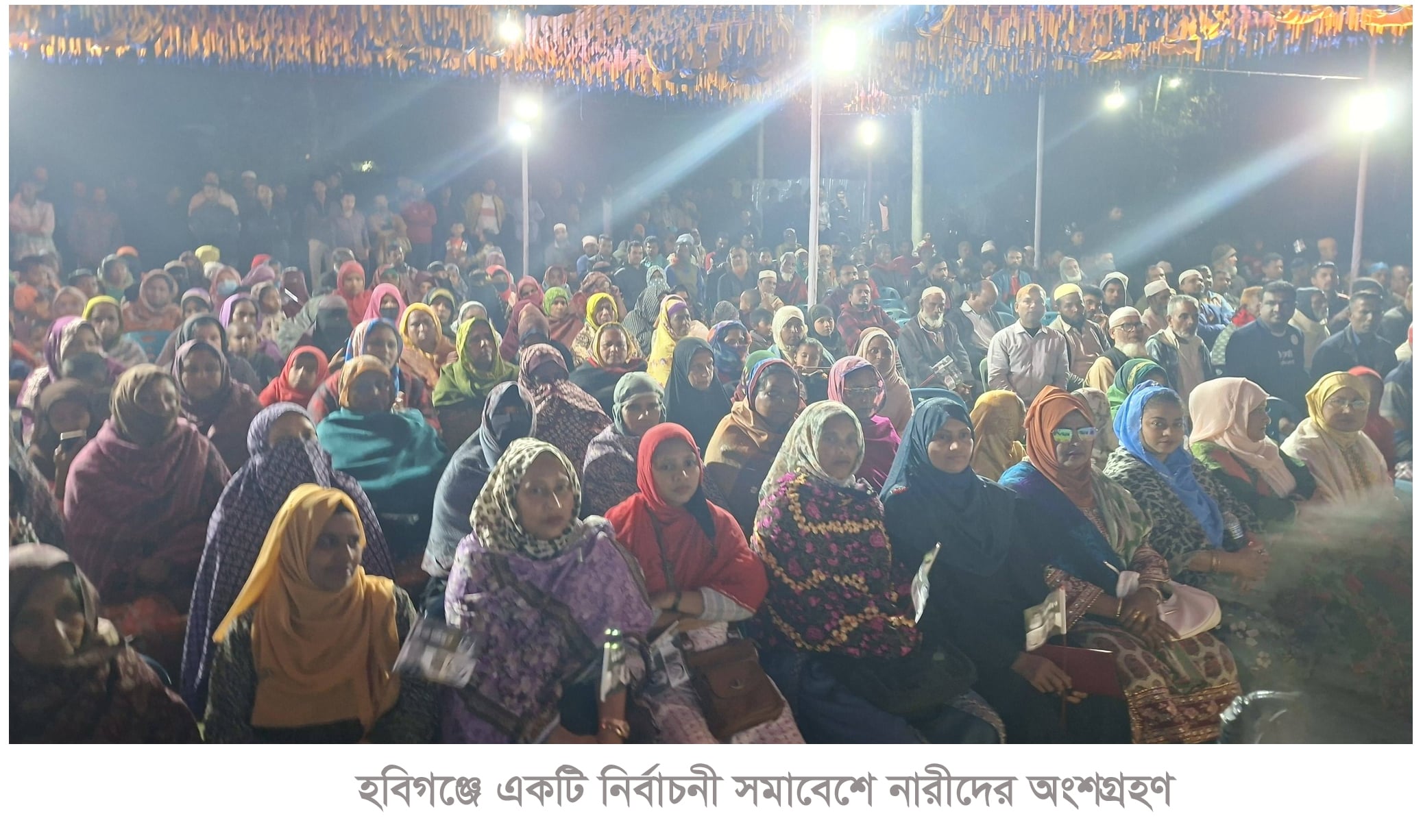
In Habiganj district, women voters have become a key electoral factor ahead of the 13th parliamentary election. Out of 1.8 million registered voters, about 49 percent are women, yet they remain disadvantaged in access to opportunities and recognition despite their significant role in the local economy. Many women, including tea workers, factory employees, entrepreneurs, and students, expressed hopes for a government that will prioritize their welfare and create a more inclusive environment.
Tea garden workers such as Basanti Bakti from Deundi Tea Estate said they want representatives who will improve the lives of marginalized laborers. Female factory workers in Shayestaganj’s Olipur area called for a women-friendly government and safer workplaces. Entrepreneur Nazma Akter urged for more support programs for women-led businesses, while students and teachers emphasized the need for fair elections, safety in public transport, and a gender-sensitive society.
Habiganj has four parliamentary constituencies with 902,853 female voters, 915,740 male voters, and 24 transgender voters. Many women believe their collective voice could influence the election outcome and shape future policies toward gender equality.