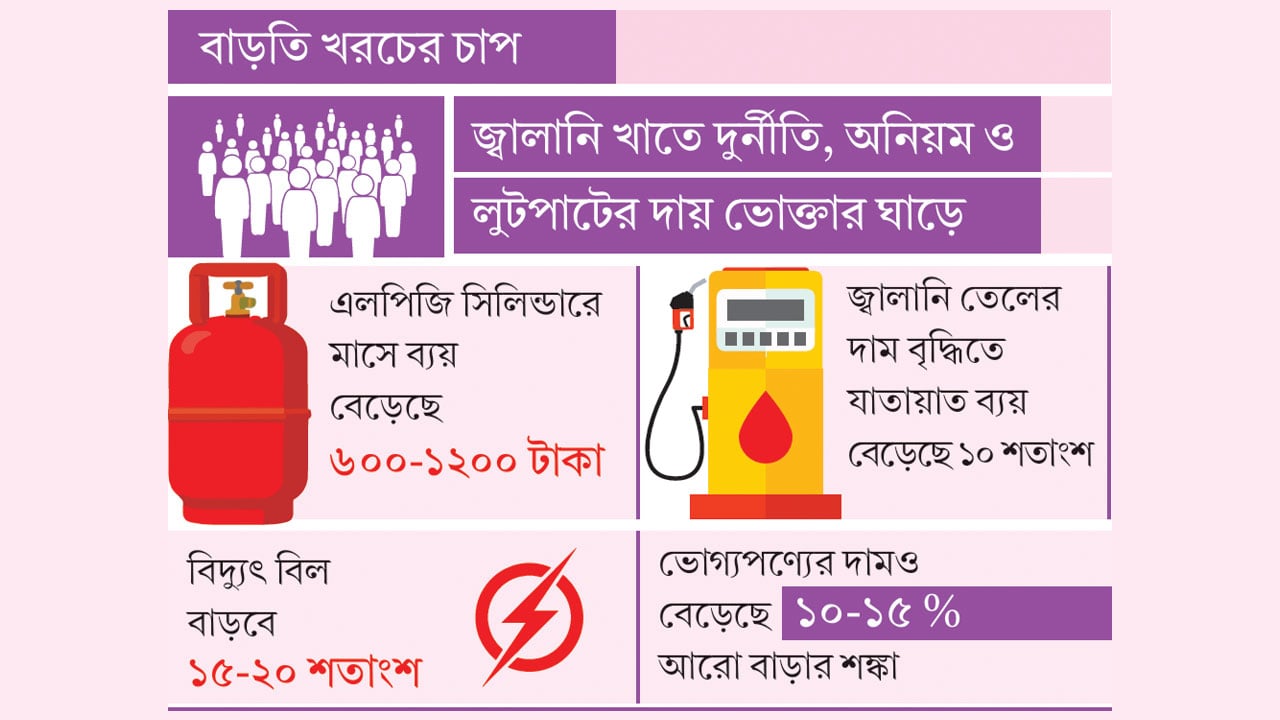
Bangladesh has seen consecutive increases in fuel and electricity prices, with fuel costs rising by up to 25 taka per liter and electricity tariffs raised by 15–20 percent. The government’s decision has triggered widespread concern as transport fares, LPG cylinder prices, and essential goods costs have surged, severely affecting low- and middle-income households. Economists warn that inflation, already at 9.04 percent in April, could rise further, undermining the government’s target of reducing it to 7.5 percent.
Experts and consumer advocates attribute the crisis to corruption and inefficiency in the power sector, alleging massive financial mismanagement and misuse of capacity charges. They argue that the Bangladesh Energy Regulatory Commission (BERC) favored vested interests instead of protecting consumers. Business leaders from the garment, steel, and CNG sectors warn that higher energy costs will raise production expenses, reduce competitiveness, and threaten employment.
With the upcoming national budget approaching, economists caution that controlling inflation, managing debt, and restoring economic momentum will be major challenges. The combined impact of energy price hikes and global market instability is expected to intensify pressure on ordinary citizens and industries alike.