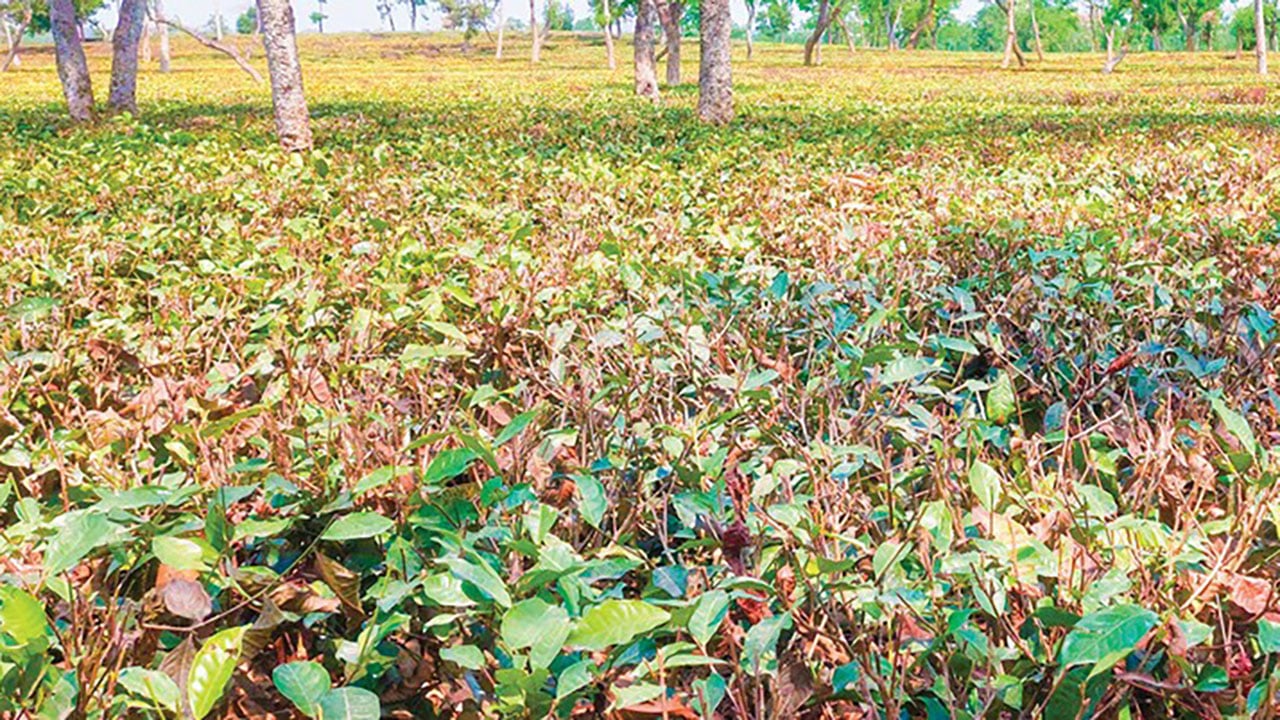
Bangladesh’s tea production has dropped by 10–12% in 2025 due to adverse weather, labor unrest, and rising production costs, raising fears of a collapse in export trade. The National Tea Company and other producers reported that prolonged droughts, heavy rains, and delayed leaf growth have disrupted yields across major tea estates, particularly in Moulvibazar, which hosts more than half of the country’s 171 gardens.
Industry stakeholders say the government’s minimum price of Tk 245 per kilogram has failed to offset higher costs for fertilizer, fuel, and pesticides. Auction sales have also declined, while illegal imports of low-quality tea from neighboring countries are undercutting domestic producers. Laborers report reduced earnings as lower yields mean fewer leaves to pluck.
Experts warn that without urgent government intervention and improved irrigation, the industry could face long-term decline. Calls are growing for stricter border controls, better quality assurance, and modernization to restore competitiveness in both domestic and export markets.