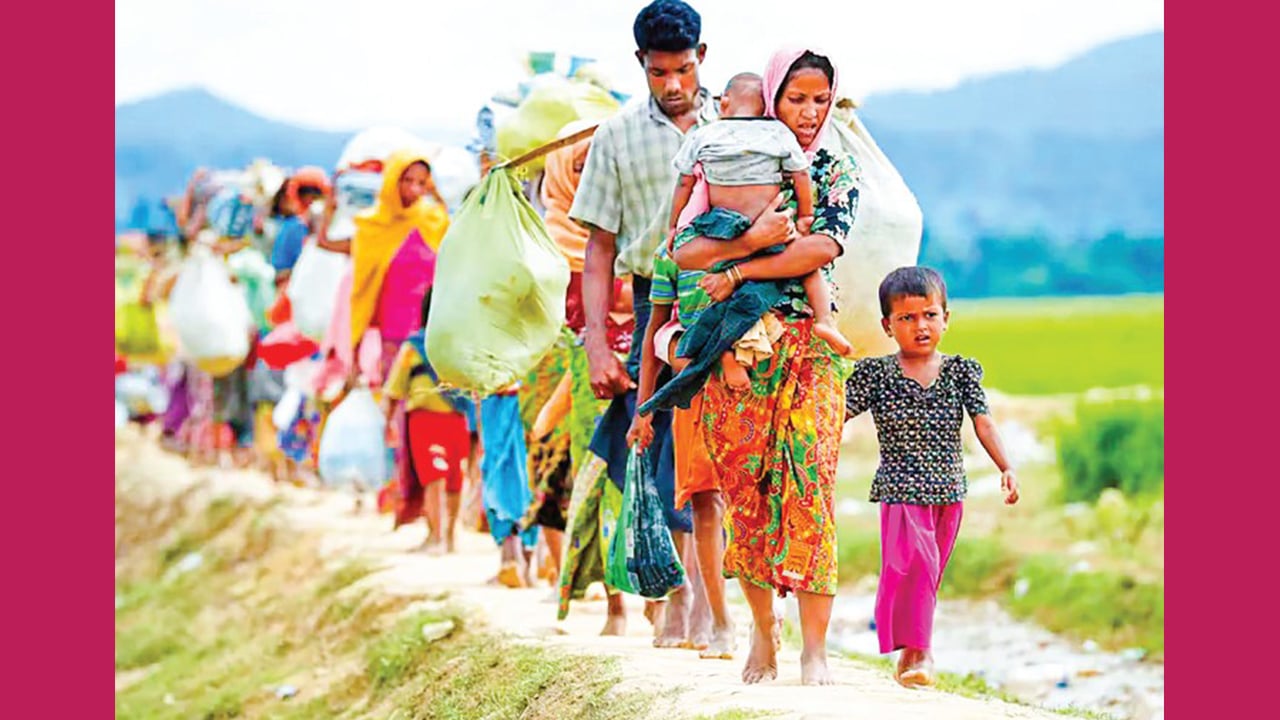
Human Rights Watch’s May 2026 report detailed the killing of at least 170 Rohingya Muslims by the Arakan Army near Hwar Siri village in northern Myanmar’s Buthidaung area on 2 May 2024. The report suggested the actual death toll could be higher and found evidence of Myanmar military involvement. Witnesses, satellite images, and videos indicated that the army made no effort to protect civilians. The Arakan Army denied the allegations, claiming compliance with international law, but Human Rights Watch found no truth in those claims.
The article traced the historical roots of the Rohingya crisis, noting their centuries-long presence in Myanmar and the loss of citizenship under the 1982 law. It reviewed repeated waves of persecution since 1978 that forced hundreds of thousands into Bangladesh, where over 1.2 million refugees now reside. The piece argued that the new BNP government faces a severe challenge amid economic strain and must pursue multi-front diplomacy involving China, India, the United States, and the OIC.
The author recommended direct engagement with Myanmar and the Arakan Army, leveraging Chinese and Indian influence, and forming a regional asylum framework to address the protracted humanitarian crisis.