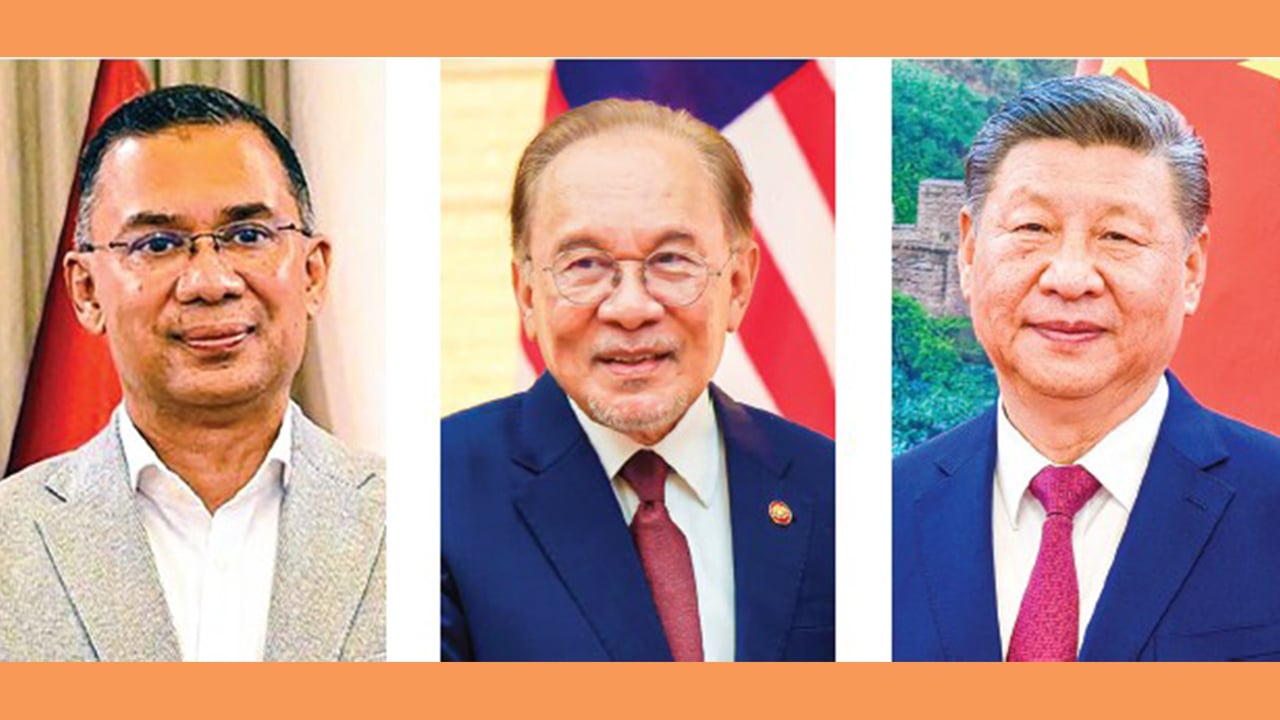
Bangladesh is signaling a return to an independent and self-respecting foreign policy under Prime Minister Tarique Rahman, following the fall of Sheikh Hasina’s Delhi-centered approach. Rahman’s first overseas visits to Malaysia and China mark efforts to strengthen ties with key Asian partners. The interim government led by Dr. Muhammad Yunus had earlier revived a sense of national dignity in foreign affairs after the political upheaval that ended Hasina’s rule.
Malaysia, a major labor market and influential Muslim nation, was chosen as Rahman’s first destination, reflecting both economic and diplomatic priorities. His subsequent trip to China aims to deepen cooperation in defense, river management, and infrastructure. The foreign secretary confirmed that two agreements, thirteen memoranda of understanding, and one action plan will be discussed, with emphasis on Chinese support for the Teesta River Comprehensive Management and Restoration Project.
Bangladesh seeks to enhance defense modernization and strategic balance through long-term collaboration with China, including potential joint production and technology transfer. The government maintains that these partnerships will prioritize national sovereignty and economic interests without aligning with any geopolitical bloc.