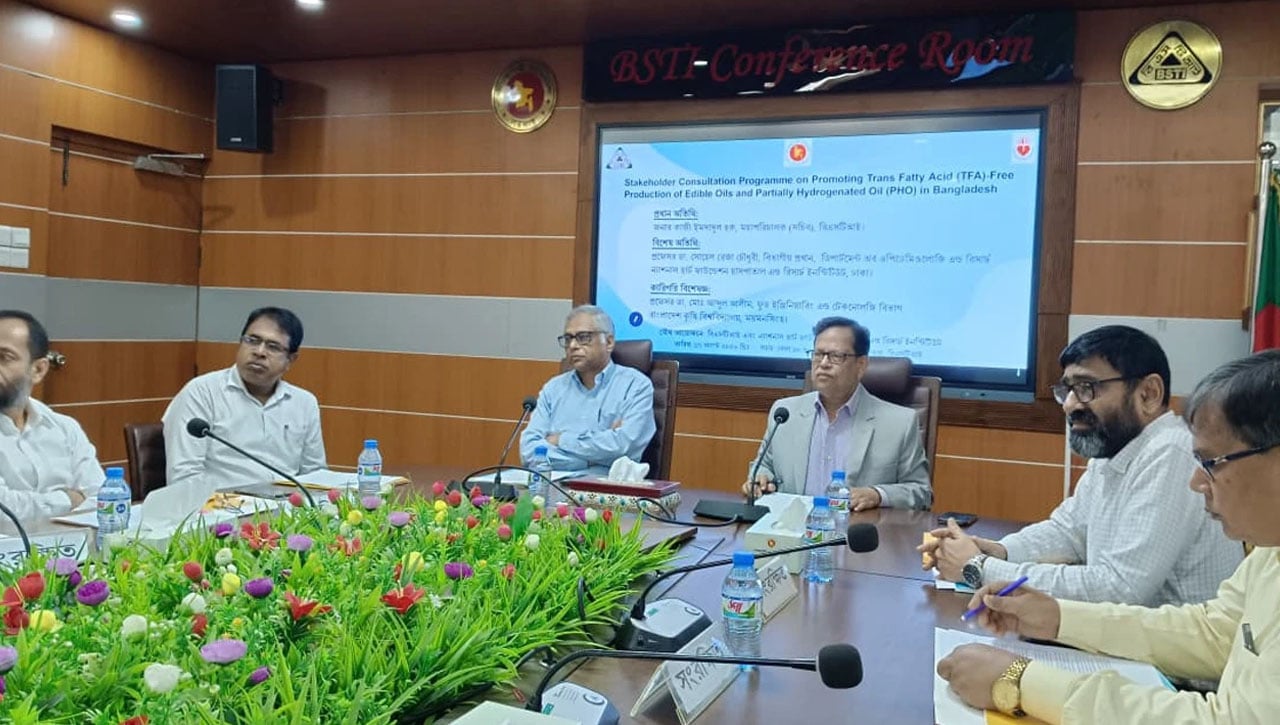
Bangladesh Standards and Testing Institution, or BSTI, has set a maximum limit of 2 percent for industrially produced trans fatty acids in food products to reduce risks from heart disease and other non-communicable diseases. The standard covers edible oil, vanaspati, laccha semai, cakes, chips and chanachur, according to information released on August 17, 2026.
The measure was discussed at a stakeholder consultation held on Monday at BSTI headquarters in Tejgaon, Dhaka, jointly organized by BSTI and the National Heart Foundation of Bangladesh. The meeting focused on encouraging production of trans-fat-free edible oil and PHO, or partially hydrogenated oil, in Bangladesh. BSTI Director General Kazi Imdadul Haque, Professor Dr. Sohel Reza Choudhury and Professor Dr. Md. Abdul Alim attended.
Senior officials from edible-oil producing and refining companies, as well as research institutions, joined the consultation. The BSTI chief said producers and businesses have an important role in ensuring safe, trans-fat-free food, with actions to be coordinated while considering industry constraints, technical capacity and production processes. As part of implementing the 2021 TFA control regulations, BSTI has revised national standards for vanaspati and non-dairy vegetable ghee.