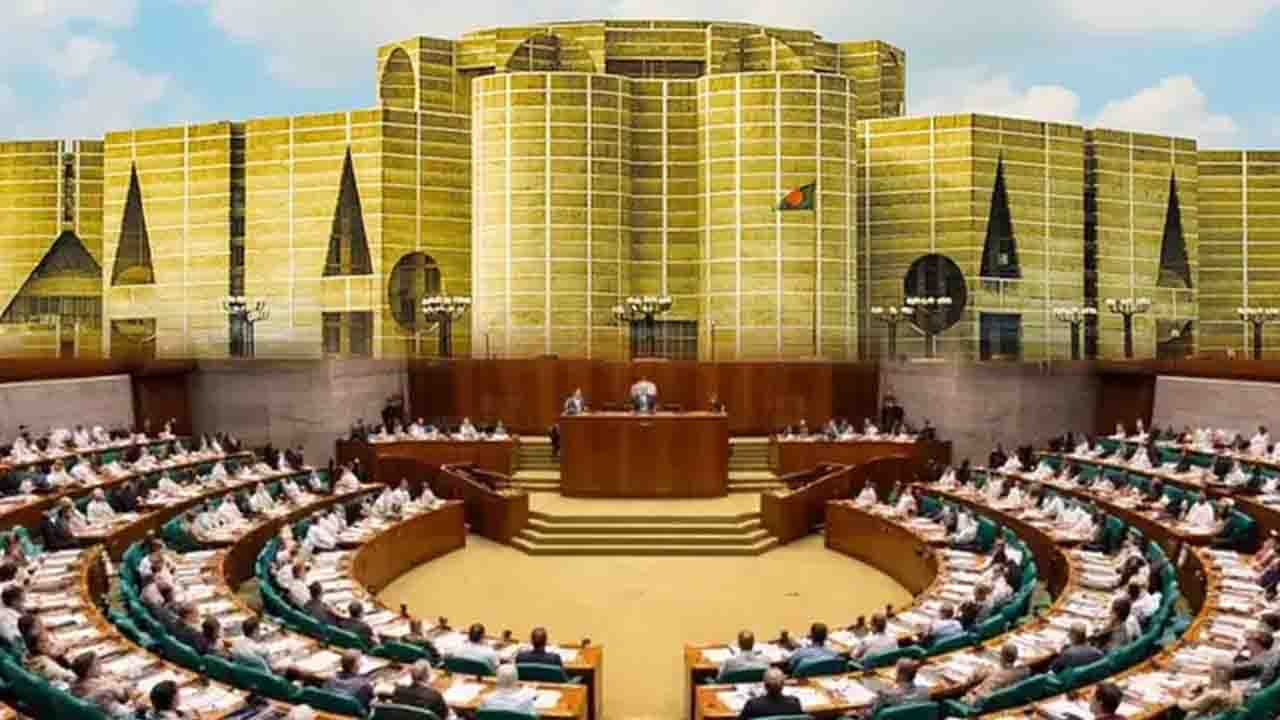
Following the thirteenth national parliamentary election in which the Bangladesh Nationalist Party (BNP) secured an absolute majority, the concept of a ‘shadow cabinet’ has become a topic of political discussion. Interest grew after comments from Bangladesh Jamaat-e-Islami leader Mohammad Shishir Monir and NCP leader Asif Mahmud. The shadow cabinet is described as a parallel structure formed by the main opposition party, where each government minister has a corresponding ‘shadow minister’ from the opposition who monitors and critiques policy areas.
The article explains that shadow cabinets are typically led by the opposition leader and composed of senior lawmakers, former ministers, and policy experts. Their roles include ensuring government accountability, proposing alternative policies, leading parliamentary debates, and preparing for potential future governance. The practice is institutionalized in Westminster-style democracies such as the United Kingdom, Australia, Canada, and New Zealand, while countries like India and Bangladesh have only informal or partial versions.
Analysts cited in the report note that a strong shadow cabinet strengthens democratic checks and balances, promotes policy continuity, and reduces the risk of one-party dominance by fostering alternative political thinking.