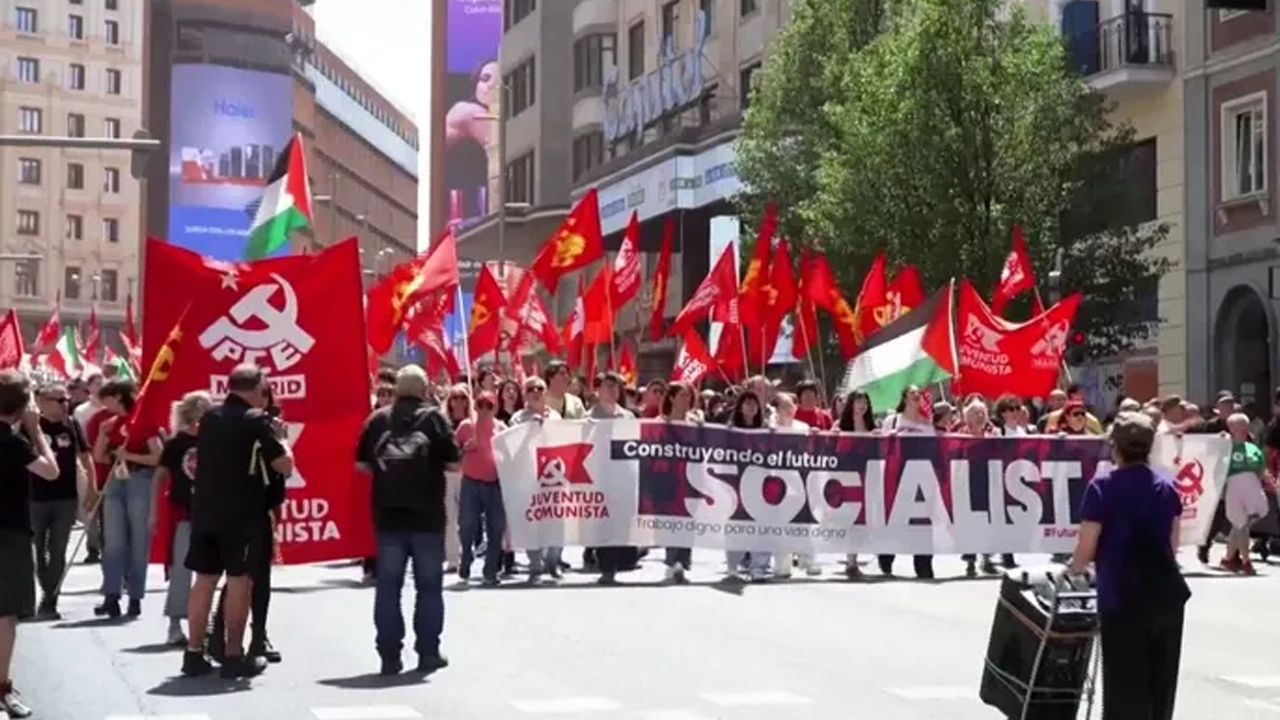
May Day rallies held on Friday across Europe and Asia shifted from traditional labor rights demands to politically charged demonstrations. Protesters combined calls for higher wages and inflation control with anti-war slogans, expressions of solidarity with Palestine, and strong criticism of the United States and Israel. From Paris to Istanbul and Madrid to Seoul, demonstrators blamed rising living costs on Middle East conflicts, U.S. foreign policy, and capitalism.
In Paris, clashes erupted between protesters and police, leading to the use of tear gas and grenades. Madrid saw thousands marching with banners condemning capitalism and criticizing U.S. President Donald Trump and Israeli Prime Minister Benjamin Netanyahu. Similar confrontations occurred in Munich and Istanbul, while in Manila, protesters near the U.S. Embassy demanded lower fuel prices and an end to Middle East wars. In Seoul, union leader Yang Kyung-su urged solidarity with workers in Iran and Palestine.
Analysts offered contrasting views: Emma Schubert described the rallies as ideological platforms reflecting anti-Western sentiment, while Nile Gardiner criticized them as moral decline for targeting the U.S. and its allies instead of authoritarian regimes.