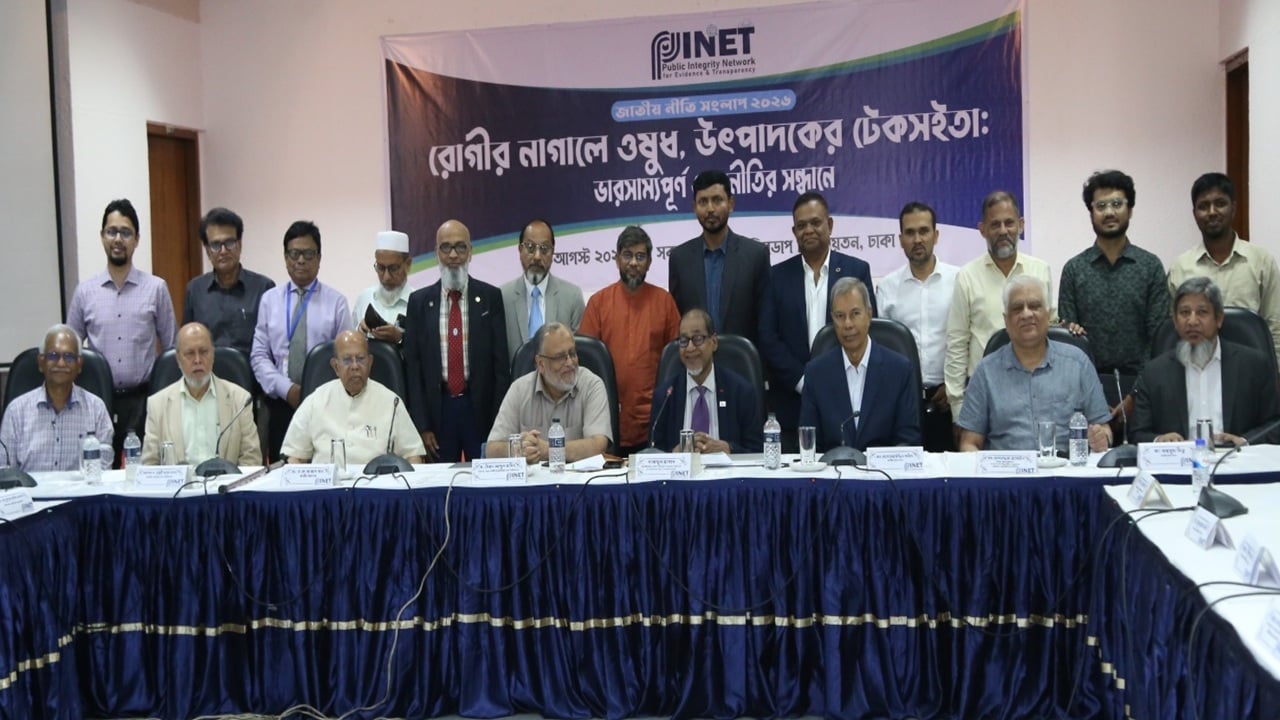
Health experts at a policy dialogue in Dhaka called for a balanced medicine policy that keeps essential drugs affordable for patients while allowing manufacturers to sustain quality production and supply. The discussion, organised by the Public Integrity Network for Evidence and Transparency at CIRDAP auditorium on Tuesday, focused on transparent, predictable pricing, regular price reviews, uninterrupted availability and financial protection for patients.
Dhaka University health economist Syed Abdul Hamid said the pricing formula for 117 medicines has remained based on 1982 conditions since 1994, despite rising production, energy, transport and research costs. He said the essential medicines list expanded from 117 to 285 in 2016 and to 295 in 2026, but newly included medicines were not brought under the earlier pricing system. Participants also cited dependence on imported active pharmaceutical ingredients and high out-of-pocket health spending.
Speakers urged regular updates to the essential medicines list, stronger medicine regulation, rational use and action against unethical marketing. Proposals included free medicines for low-income people, subsidies for middle-income patients, stronger public supply systems, more research investment and greater domestic API production.