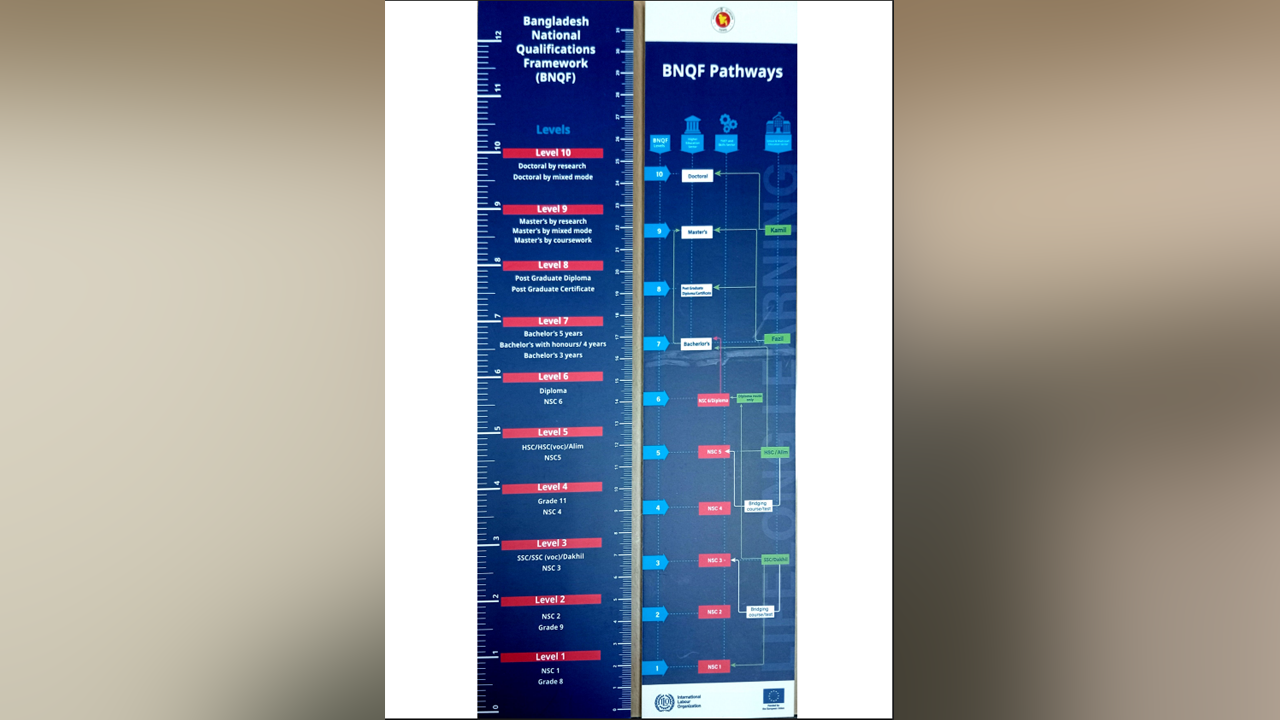
The Bangladesh National Qualifications Framework (BNQF) has received final approval from the advisory council, marking a major step toward aligning the country’s education and skills development system with international standards. Developed over eight years through research, stakeholder consultations, and policy discussions, the framework aims to standardize knowledge, skills, and learning outcomes so that Bangladeshi citizens can compete equally in domestic and global labor markets.
The BNQF integrates general, technical, madrasa, and higher education under a unified structure, facilitating credit transfer, recognition of prior learning, and international equivalence of qualifications. Since 2024, the National Skills Development Authority has begun issuing certificates under BNQF levels 1–5, while the Bangladesh Accreditation Council has adopted it as the foundation for higher education quality improvement. The framework draws on analyses of 41 national and regional models, including those from Europe, ASEAN, and several other countries, to create a system suited to Bangladesh’s context.
The BNQF is expected to enhance international recognition of Bangladeshi degrees, expand employment opportunities, and strengthen the country’s position in global education and skills competitiveness.