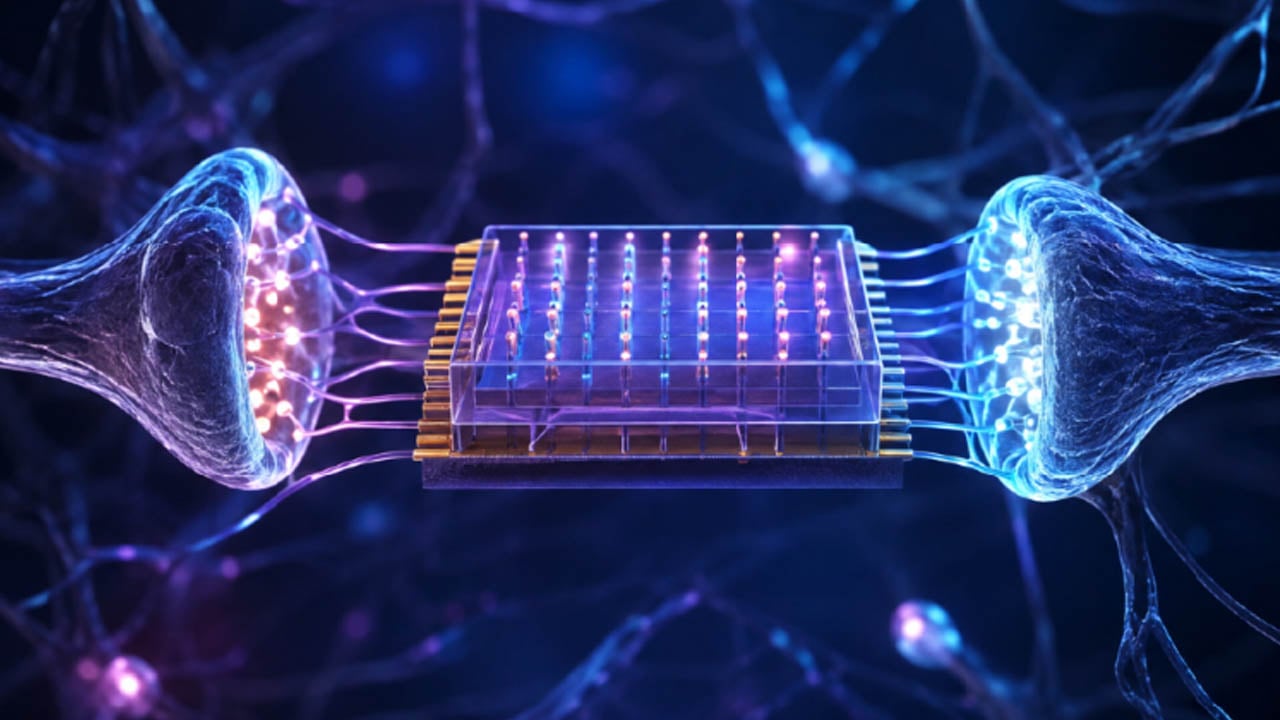
Multimodal artificial synapses are being developed to process different kinds of sensory information in a way compared with the human brain. A report published on August 3, 2026 said the devices can respond not only to electrical signals but also to light, sound, temperature, gases and other external stimuli. The technology could play an important role in future intelligent robots capable of using multiple human-like senses.
A key feature is synaptic plasticity, in which a device’s electrical properties change after stimulation and retain that effect for some time after the stimulus stops. Connecting many artificial synapses could create neuromorphic networks that store and compute information within the same structure. This could reduce repeated data transfers between memory and processors and potentially save energy.
Memristors can change resistance through ion movement, electron trapping and phase changes. An h-BN-based artificial synapse was reported to use as little as about 600 picowatts during switching, with switching times below 10 nanoseconds. A MoTe₂-based device achieved about 90 millivolts of switching voltage and about 150 attojoules of switching energy. Potential applications include autonomous vehicles, smart cameras, industrial automation, medical-assistive robots, artificial vision, advanced sensors and human-machine communication.