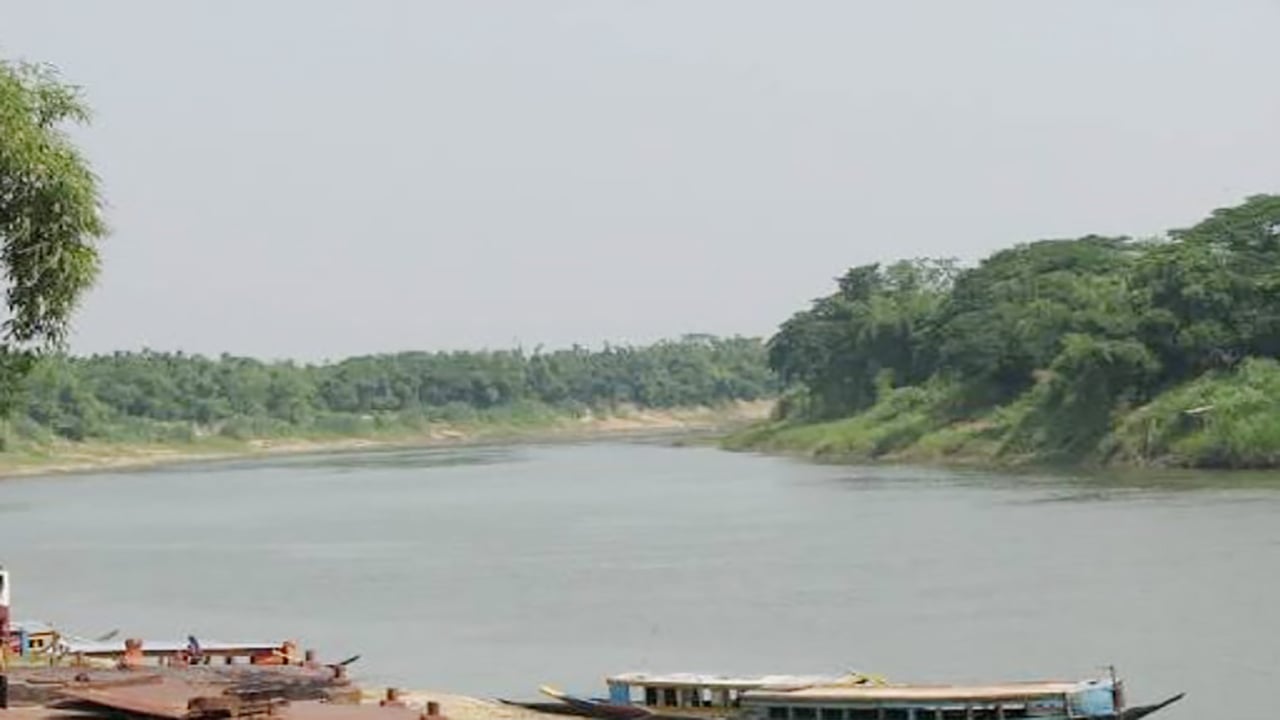
A recent study has found high levels of microplastics and toxic heavy metals in sediment from the Kushiyara River in Beanibazar, Sylhet. Reported on August 9, researchers from the Environmental Science and Technology Department collected samples down to 30 centimetres deep from nine populated points along the river. Tests found up to 4,300 microplastic particles per kilogram of sediment, with an average of 2,800 particles per kilogram.
Microplastics were detected at depths of 10 to 30 centimetres, alongside high toxicity levels of chromium, nickel, copper, lead and cadmium. The river sediment was classified as having “very high” pollution, or Class V, under the environmental risk index. The report said fish and other aquatic animals consume microplastics, allowing toxic metals to enter the human food chain and potentially contribute to cancer and other complex illnesses.
Waste from riverbank areas and connected canals is entering the Kushiyara, the report said. Fisherman Javed said catches have declined and water quality has worsened. Fisheries officer Hasibul Hasan called for scientific waste management and pollution-free river flow. Water Development Board engineer Amir Hossain Khan said reduced current has lowered the river's erosion, transport capacity and depth, urging waste removal, public awareness and an end to dumping.