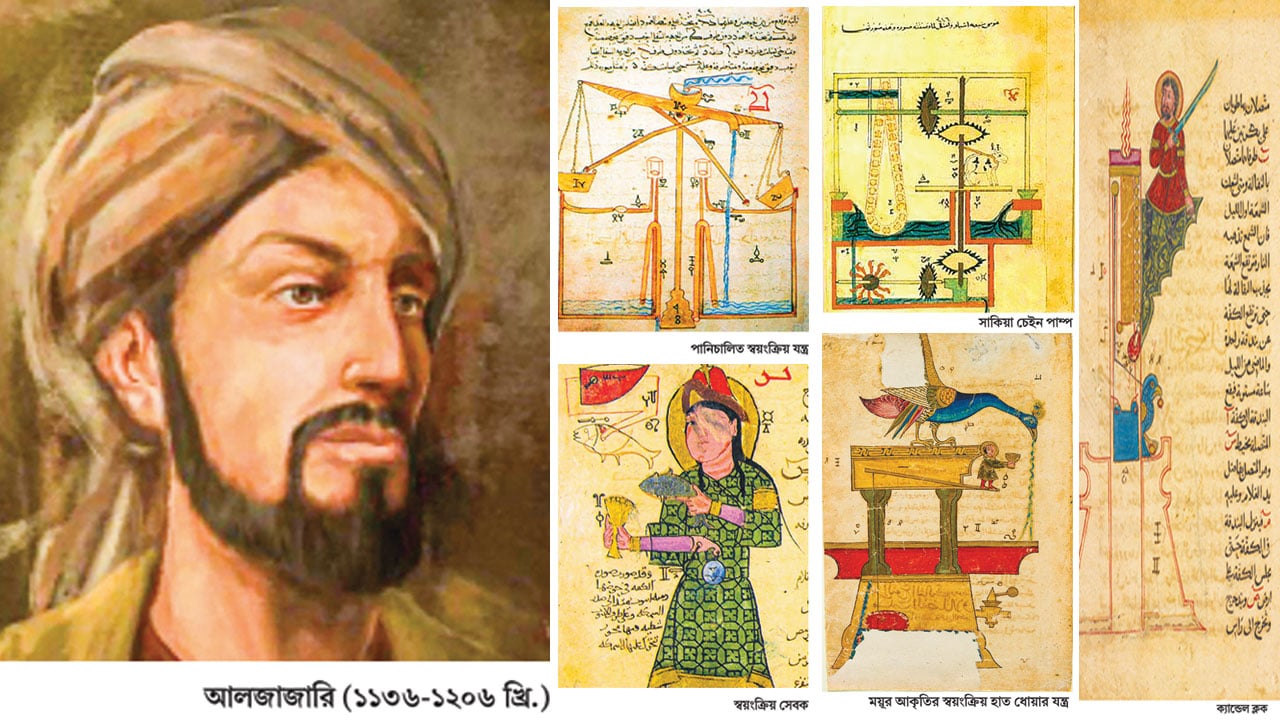
Al-Jazari, a leading mechanical engineer of the Islamic Golden Age, created groundbreaking machines nearly 800 years ago that remain relevant today. His inventions, powered by water pressure and air, included automatic mechanical devices that demonstrated early principles of robotics and cybernetics. His seminal book, 'Kitab fi Ma'rifat al-Hiyal al-Handasiyya', described around 100 mechanical devices with detailed illustrations and construction methods, serving as a practical engineering guide.
Among his notable inventions were the crankshaft, segmental gear, and double-cylinder water-lifting pumps, which introduced mechanisms later fundamental to modern engines and automation. Al-Jazari also built automata such as humanoid robots, musical boats, and water clocks, showcasing advanced control and feedback systems centuries before similar European developments.
The article emphasizes that Al-Jazari’s work established the conceptual basis for modern robotics, hydraulics, and control engineering. His integration of balance, feedback, and hydro-mechanical control in devices anticipated many ideas central to today’s cybernetics and mechanical engineering.