

The ‘1 Nojor’ media platform is now live in beta, inviting users to explore and provide feedback as we continue to refine the experience.
Paris Saint-Germain defeated Liverpool 2-0 in the first leg of the UEFA Champions League quarterfinal, played at Parc des Princes on April 9, 2026. The French side controlled the match from start to finish, leaving Arne Slot’s team struggling to find rhythm. Desire Doue opened the scoring in the 11th minute after Ousmane Dembele’s initial effort was blocked. Despite several chances, PSG could not extend their lead before halftime as Liverpool goalkeeper Giorgi Mamardashvili made key saves. The second half followed a similar pattern, with PSG maintaining attacking pressure. Khvicha Kvaratskhelia doubled the lead in the 65th minute from a precise pass by Joao Neves, dribbling past defenders and the goalkeeper to score a standout goal. PSG held 74 percent possession and took 18 shots, six on target, while Liverpool managed only three attempts without a single shot on goal. A penalty decision for PSG was overturned after VAR review. This defeat marked Liverpool’s third consecutive loss across all competitions. They now face a tough challenge in the return leg at Anfield next Tuesday.

Atletico Madrid earned a crucial 2-0 victory over Barcelona at Camp Nou in the first leg of the UEFA Champions League quarterfinals on April 9, 2026. Barcelona, reduced to ten men after defender Pau Cubarsí was sent off in the 44th minute, struggled to recover as Diego Simeone’s side capitalized on their advantage. Julián Álvarez opened the scoring with a free-kick before Alexander Sørloth doubled the lead in the 70th minute. Despite dominating possession and registering 18 shots, seven of which were on target, Barcelona failed to find the net due to poor finishing. Atletico, meanwhile, made the most of their limited chances to secure their first win at Camp Nou since 2006. The result gives the Madrid club a strong position heading into the return leg. Barcelona now face a major challenge to overturn the deficit in the second leg at Atletico’s Metropolitano Stadium, where they must win by at least two goals to stay in contention for the semifinals.

Former Speaker Shirin Sharmin was arrested by the Detective Branch (DB) police last Tuesday after remaining in hiding for nearly 20 months. Following her arrest, she was presented before a court, which rejected the DB’s remand request and ordered her to be sent to jail. Senior DB officials conducted an initial interrogation, during which she disclosed some information while withholding other details. According to the interrogation, Shirin Sharmin took refuge in military custody after the fall of the Awami League government on August 5, 2024, and later moved between four different residences to avoid arrest. She was ultimately detained from a house in Dhanmondi. She admitted to maintaining indirect contact with several mid-level Awami League leaders but denied involvement in forming a “reformed” Awami League. She also claimed that ex-ministers Hasan Mahmud and Khalid Mahmud Chowdhury had encouraged her to join such efforts, which she refused. DB officials stated they are verifying her statements and compiling a list of mid-level leaders who communicated with her. They suspect the banned Awami League faction may be involved in anti-state conspiracies and plan to seek further remand for continued investigation.

An internal audit has revealed extensive financial irregularities and corruption within Bangladesh’s disaster management sector, implicating District Relief and Rehabilitation Officers (DRROs) and Project Implementation Officers (PIOs). The audit found that unspent government funds were not returned to the treasury as required, with approximately Tk 15 crore in irregularities identified. The Ministry of Disaster Management and Relief has initiated departmental actions, including show-cause notices to 29 officials, and plans to refer cases to the Anti-Corruption Commission for further investigation. According to ministry officials, the irregularities involve funds from programs such as General Relief, Test Relief, Food for Work, Cash for Work, and housing projects for the poor. The audit recorded 3,024 objections, including 930 serious ones, totaling around Tk 16 crore. Specific areas such as Madhabpur in Habiganj showed the highest discrepancies. Officials cited administrative complexity and lack of accountability as contributing factors, while civil society leaders described the issue as institutional failure. The ministry is reportedly taking a strict stance to recover the funds and ensure compliance with financial regulations, though systemic weaknesses in monitoring and fund allocation remain unresolved.

Thirteen Western countries, including the United Kingdom, Canada, and Germany, have jointly urged Bangladeshi citizens to strictly follow official procedures when applying for visas and other consular services. The embassies of these countries in Dhaka issued a joint statement on Wednesday, which was also published on their official Facebook pages. The statement emphasized that applicants must use designated government channels and avoid using fake documents, unlicensed agents, or unauthorized intermediaries. According to the statement, irregularities in the application process can lead to delays, financial losses, denial of entry at borders, and serious legal complications. It clarified that no embassy or mission is affiliated with any agent and warned applicants not to rely on intermediaries claiming to offer special advantages in visa processing. The embassies advised applicants to complete all procedures using verified information and official channels to ensure a safe, transparent, and fair application process for all.

NATO Secretary-General Mark Rutte stated that U.S. President Donald Trump appeared clearly frustrated with many of the alliance’s partner countries. Following a closed-door meeting at the White House, Trump sharply criticized NATO, claiming that the alliance was not supportive when the United States needed it and would not be in the future either. In an interview with CNN after the meeting, Rutte declined to confirm whether Trump had mentioned leaving NATO but acknowledged that Trump’s frustration with several allies was evident and partly understandable. Rutte emphasized that most European countries were contributing in various ways, including providing bases, logistical support, and airspace access, and were fulfilling their commitments. He also noted that weakening Iran’s nuclear and ballistic missile capabilities was crucial and that, at present, only the United States had the capacity to do so effectively. Rutte described his discussion with Trump as very open and straightforward, suggesting a candid exchange between the two leaders.
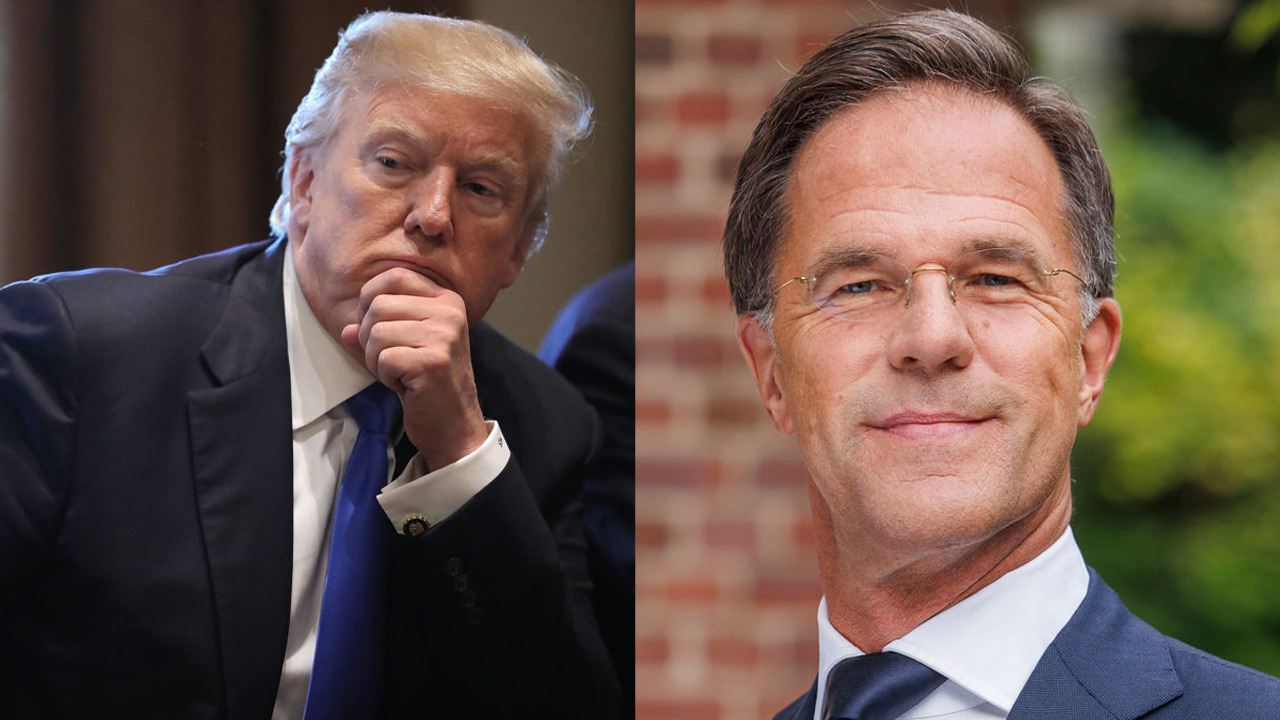
Iran has declared that advancing permanent peace talks with the United States is unjustified following Israel’s large-scale airstrikes across Lebanon that killed hundreds of people. Iranian parliament speaker and chief negotiator Mohammad Bagher Ghalibaf said both Israel and the US violated the ceasefire terms announced by US President Donald Trump. Tehran accused Washington of endangering the agreement by pressing to halt Iran’s nuclear program and supporting Israeli attacks on Hezbollah. The US and Israel have stated that the two-week ceasefire does not apply to Lebanon, while Israeli Prime Minister Benjamin Netanyahu vowed to continue operations there. US Vice President JD Vance said Iran misunderstood the ceasefire’s scope. Ghalibaf rejected Trump’s claim that Iran agreed to stop uranium enrichment, insisting Tehran retains that right. Meanwhile, French President Emmanuel Macron condemned the Israeli strikes and urged inclusion of Lebanon in the truce. The conflict has shaken global markets, with oil prices dropping 14 percent to 95 dollars per barrel. Despite five weeks of war and thousands of deaths, key issues remain unresolved, casting doubt on the peace talks scheduled for Saturday.

Officials from Bangladesh’s power sector have alleged that procurement of meters, transformers, and related equipment remains under the control of a syndicate formed during the previous Awami League government. According to the report, the network is allegedly linked to former state minister for power Nasrul Hamid and Radwan Mujib Siddiq Bobby, nephew of former prime minister Sheikh Hasina. The syndicate is said to operate through companies such as Okulin Tech BD Limited, which continues to dominate major prepaid meter projects worth thousands of crores of taka. Multiple officials claimed that despite 17 registered suppliers, only two or three firms tied to the syndicate received contracts over the past 18 years. The report details alleged irregularities in projects under DPDC, NESCO, DESCO, and REB, including pre-arranged tenders and inflated costs. Private entrepreneurs accused the group of using an “AMI technique” to restrict competition. However, Okulin Tech BD’s executive vice president denied any wrongdoing, asserting that all contracts were awarded through proper procedures and verified by investigations. A former interim government adviser previously noted that procurement controversies had led to suspension of international funding, prompting a shift toward open tendering processes.

Bangladesh Petroleum Corporation (BPC) has failed to comply with the National Energy Policy’s requirement to maintain a 60-day fuel reserve, despite having the capacity to do so since 2020. The policy, adopted in 2004, mandates strategic reserves for emergencies, but BPC has continued to operate with only 25 to 30 days of supply. The shortfall became critical after the closure of the Hormuz Strait in early March, following U.S.-Israel attacks on Iran, which disrupted global oil shipments and triggered a severe fuel shortage in Bangladesh. According to official data, BPC’s combined storage capacity across its depots, Eastern Refinery, and the Single Point Mooring project exceeds 1.58 million metric tons, enough for over 90 days of national demand. However, the corporation has not utilized this capacity fully. The shortage has led to public panic and increased fuel hoarding, while BPC attempts to calm fears by publicizing incoming shipments that carry less than full loads, raising costs and inefficiencies. Experts attribute the crisis to mismanagement and poor coordination between BPC and the government. The government is now exploring direct purchase options from new suppliers, including Kazakhstan, though supply reliability remains uncertain.

The International Committee of the Red Cross (ICRC) has expressed deep anger over the heavy loss of life and destruction caused by recent intensified military operations in Lebanon, according to Anadolu Agency. In a statement on Wednesday, the organization said it was appalled by the deadly attacks in densely populated areas, including Beirut, where heavy explosive weapons were used without adequate warning. The ICRC reported that hundreds were killed and many more injured. Agnes Dhur, head of the ICRC in Lebanon, said civilians had been hoping for a ceasefire when a new wave of deadly strikes plunged the country into fear and chaos. Many people who had begun thinking of returning home are now searching for missing loved ones or fleeing in search of safety. The ICRC called on all parties to ensure the protection of civilians and civilian infrastructure during military operations. The organization emphasized the urgent need for humanitarian assistance after more than five weeks of conflict and urged that any regional agreement prioritize the safety, protection, and dignity of Lebanese civilians.

Education Minister Dr. A N M Ehsanul Haque Milon stated that teachers must conduct online classes from their schools rather than from home. He emphasized that teachers should use smart classrooms for online teaching and can seek help from colleagues if needed. The minister made these remarks on Wednesday at a seminar held at the International Mother Language Institute on maintaining education during the global energy crisis and conserving electricity. The seminar, attended by around 400 parents, was organized to gather opinions on online classes. The minister said that considering the global energy crisis, severe traffic congestion, and the shift toward technology-based education, the government is planning to introduce a hybrid model combining online and offline classes in selected institutions. Schools such as Viqarunnisa Noon School and College, RAJUK Uttara Model College, and Residential Model School and College may be included in the pilot phase. According to the minister, the proposed model would reduce traffic congestion and energy use while keeping students engaged in regular coursework. He added that future education will be technology-driven and largely paperless.
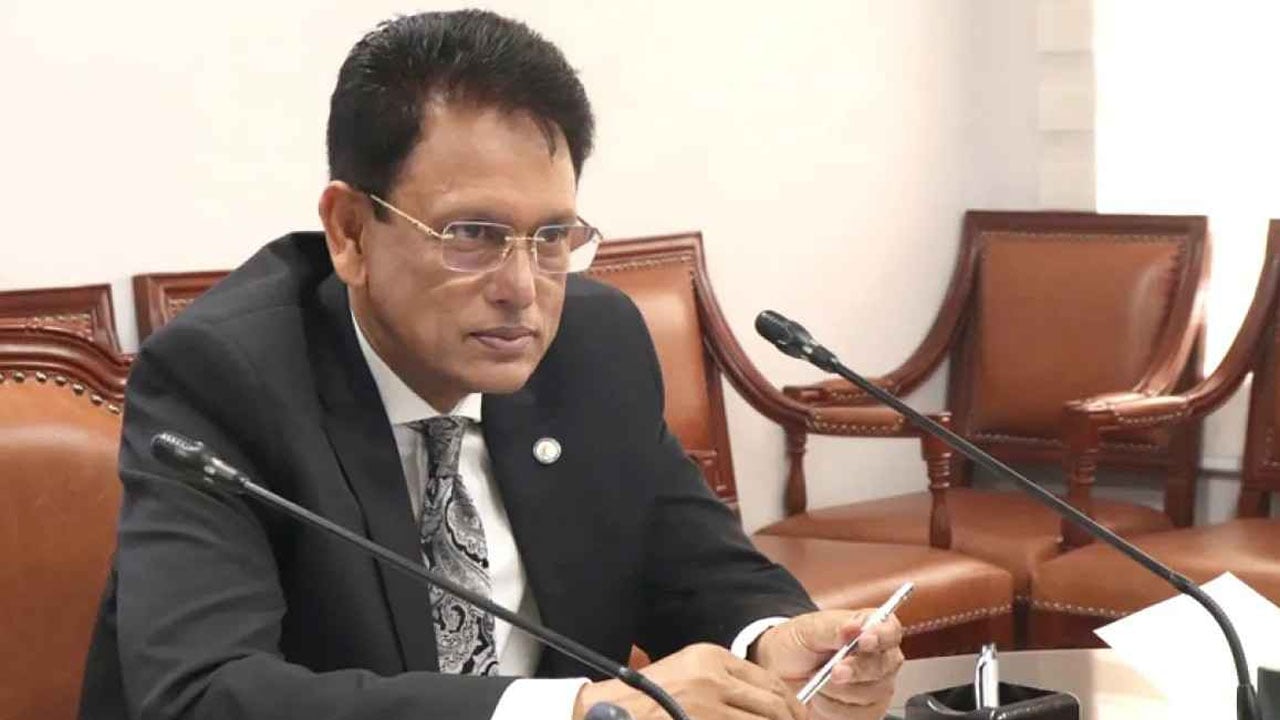
U.S. President Donald Trump has threatened to impose an immediate 50 percent tariff on all goods from any country that supplies military weapons to Iran. The warning came just hours after Washington and Tehran agreed to a two-week ceasefire, according to Al Jazeera. Trump made the announcement in a social media post, stating that there would be no exemptions or exceptions to the measure. The U.S. president did not name any specific countries in his statement. In the past, China and Russia have supported Iran’s military capabilities by providing missiles, air defense systems, and dual-use technologies that help Tehran counter pressure from the United States and Israel. However, both Beijing and Moscow have recently denied supplying weapons to Iran, though allegations against Russia have not fully subsided. The announcement signals renewed U.S. pressure on countries maintaining defense ties with Iran, potentially heightening tensions in global trade and diplomatic relations.

Factory.ai has released its new Factory desktop app, a native interface for managing Droids across software workflows. The app is available immediately on macOS and Windows and supports running multiple Droid sessions simultaneously. Each session maintains its own context, progress, and history, allowing users to manage different tasks such as feature builds or migrations without interruption. The app also introduces persistent Droid Computers that retain installed packages, repositories, and credentials between sessions. The release expands Factory’s ecosystem with support for both cloud-managed and user-provided machines. Teams can register their own hardware, including GPU-equipped systems, to run local AI models through Factory’s BYOK system, ensuring data remains within secure networks. The desktop app integrates with VS Code, supports AI-native visualizations, and provides a unified interface for monitoring logs, configurations, and system status. It also extends to mobile devices, enabling users to manage sessions remotely. Factory.ai reports that enterprise adoption of Droids increases significantly when both CLI and desktop interfaces are available, suggesting broader accessibility for non-engineering roles such as designers and product managers.

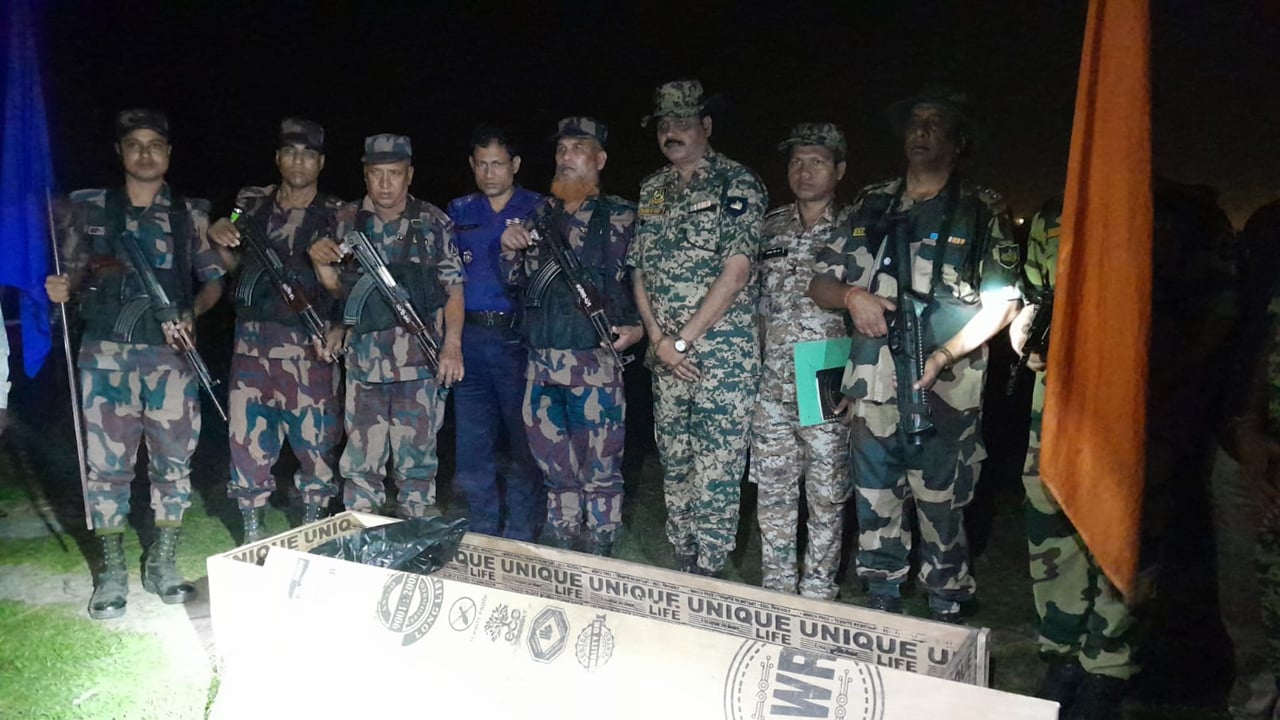
The Indian Border Security Force (BSF) returned the body of Bangladeshi citizen Ali Hossain, aged 38, nearly 17 hours after he was shot dead along the Patgram border in Lalmonirhat. The handover took place at 8:50 p.m. on Wednesday, April 8, near border pillar 868/3 in the presence of both Border Guard Bangladesh (BGB) and BSF officials. The process was confirmed by Lieutenant Colonel Syed Fazle Munim, commander of the Teesta-61 BGB battalion. Earlier, Indian police from Mathabhanga station had handed the body to Patgram police, who later delivered it to Hossain’s elder brother, Anwar Hossain. According to local sources, the incident occurred late Tuesday night when Ali Hossain reportedly crossed the zero line near the Dhabalguri border and entered about 500 yards inside Indian territory. The BSF claimed that 7–8 Bangladeshis had entered India to cut the barbed-wire fence, prompting warning shots. During a scuffle, Ali Hossain was hit by a bullet and later declared dead at an Indian hospital. The incident highlights ongoing tensions and risks faced by civilians along the Bangladesh-India border.
UN High Commissioner for Human Rights Volker Türk described Israel’s one-day assault on Lebanon on Wednesday, April 8, as 'atrocious', citing reports of at least 254 deaths and widespread destruction. His statement, reported by Al Jazeera, came just hours after Israel had reportedly agreed to a ceasefire with Iran. Türk said the killings and devastation were 'nothing short of horrific' and warned that such violence placed immense strain on a fragile peace that was vital for civilians. He emphasized that all attacks must comply with the core principles of international humanitarian law—distinction, proportionality, and precaution—to ensure civilian protection. The UN official reiterated that these principles are non-negotiable and must be upheld in all armed conflicts under any circumstances.

The ‘1 Nojor’ media platform is now live in beta, inviting users to explore and provide feedback as we continue to refine the experience.