

The ‘1 Nojor’ media platform is now live in beta, inviting users to explore and provide feedback as we continue to refine the experience.
Government party lawmaker Zainul Abedin Faruk has submitted a motion in Bangladesh’s parliament to discuss the implementation process of the July National Charter. Speaker Hafiz Uddin Ahmed accepted the motion and scheduled a two-hour debate for April 5, 2026. The Speaker noted that this marks a rare precedent in the country’s 53-year parliamentary history, as it is the first time a motion from the treasury bench has been accepted for discussion. Earlier, independent lawmaker Sheikh Mujibur Rahman Iqbal had also proposed a motion on the same issue, but no decision has been made on it yet. Opposition leader Shafiqul Rahman had previously brought another motion regarding the convening of the Constitutional Reform Council, which was discussed but left unresolved. The opposition later walked out in protest, alleging their proposal was being suppressed. Faruk described the July National Charter as a political consensus document containing proposals for constitutional amendments and legal reforms. The upcoming debate is expected to clarify the government’s approach to implementing the 2025 charter.
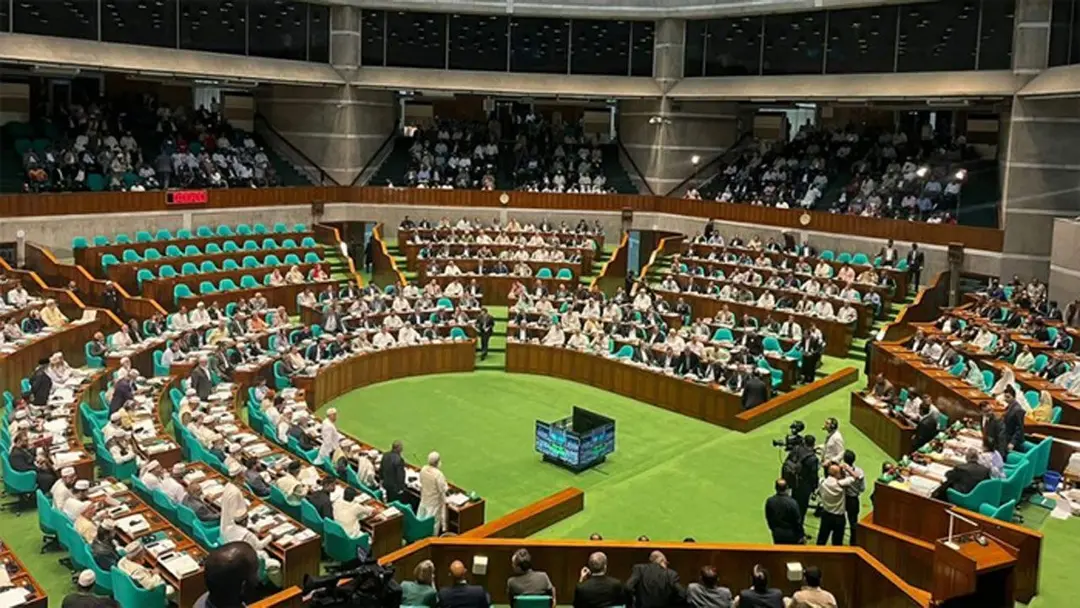
In the National Parliament on Wednesday, April 1, Comilla-4 Member of Parliament Hasnat Abdullah raised a question regarding the long delay in increasing salaries for government employees. He noted that, according to ministerial data, there are 1,450,891 government employees in the country whose last pay scale revision occurred in 2015. Over the past eleven years, inflation has reportedly risen by 50 to 55 percent, significantly increasing living costs. Hasnat asked whether the Ministry of Finance would send any proposal to raise salaries, particularly for employees in the first to fourth grades, and sought details of the government’s specific plans. In response, Abdul Bari, the State Minister for the Ministry of Public Administration and MP from Joypurhat-2, did not directly address the salary increase issue. He stated that a pay commission has already been formed and is working under the Ministry of Finance. He added that detailed information would be presented in Parliament if a separate notice is issued on the matter. The exchange highlighted ongoing concerns about stagnant public sector wages amid rising inflation, with the government indicating that further details will come through formal parliamentary procedures.

A vessel named MV MP Ultra Max 2 carrying 61,000 tons of wheat from the United States has arrived at the outer anchorage of Chattogram Port under a cash purchase agreement signed within a memorandum of understanding between the two countries, according to a Food Ministry press release issued on Wednesday. Earlier, Bangladesh received 58,457 tons and 62,150 tons of wheat in the first and second shipments under government-to-government (G2G) agreements. Sampling of the newly arrived wheat has already begun, and arrangements for quick unloading are underway. Of the total shipment, 29,450 tons will be unloaded at Chattogram Port and 31,550 tons at Mongla Port. Under the G2G-01 and G2G-02 agreements, Bangladesh has so far imported a total of 467,884 tons of wheat from the United States. The country’s annual wheat demand is around 7 million tons, while domestic production stands at about 1 million tons, with the remainder imported by both public and private sectors.

Spain and England both struggled in their final warm-up matches before the upcoming World Cup. In Barcelona, Spain were held to a goalless draw by Egypt despite dominating possession. The 2010 world champions failed to convert several chances, including efforts from Ferran Torres and Pedri. Egypt’s Omar Marmoush nearly scored in the first half, but his long-range shot hit the post. Even after Egypt went down to ten men in the 84th minute, Spain could not find a breakthrough, raising concerns about their form and ranking. In London, England suffered a 1–0 defeat to Japan at Wembley Stadium. Missing injured striker Harry Kane, coach Thomas Tuchel deployed Phil Foden as a false nine, but the tactic failed to produce results. Japan’s Kaoru Mitoma scored the only goal in the 23rd minute after a defensive error by Cole Palmer. Despite multiple substitutions and late pressure, England could not equalize and faced boos from home fans. The result marked Japan’s first-ever win over England and England’s second loss in twelve matches under Tuchel. The disappointing outcomes for both European teams have raised questions about their readiness for the World Cup.

Jamaat-e-Islami executive council member Dr. Rezaul Karim stated that 133 loan defaulters participated in Bangladesh’s previous national election despite owing thousands of crores of taka. He made the remarks on Wednesday, April 1, at a reception for new lawyers held at the Oitijjhya Convention Center in Lakshmipur. Dr. Rezaul criticized the disparity in law enforcement, saying that while minor offenders face severe punishment, major financial defaulters manage to remain in politics. He further alleged that the government is attempting to weaken several key institutions, including the Anti-Corruption Commission, and to reduce accountability for those involved in enforced disappearances and large-scale bank loan defaults. Dr. Rezaul also referenced delays in high-profile criminal cases and urged collective resistance against injustice and corruption. The event was organized by the Bangladesh Lawyers Council, Lakshmipur branch, and attended by local Jamaat leaders and several advocates. The discussion centered on legal integrity and the need for stronger action against corruption and abuse of power.

Bangladesh Prime Minister Tarique Rahman has sent a special written message to Sheikh Mohammed bin Zayed Al Nahyan, President of the United Arab Emirates. The message was formally handed over on April 1 in Abu Dhabi during a key meeting, according to the Emirates News Agency. The diplomatic communication aims to strengthen the long-standing friendship and bilateral cooperation between the two nations. During the meeting, Prime Minister’s Foreign Affairs Adviser Humayun Kabir met UAE Deputy Prime Minister and Foreign Minister Sheikh Abdullah bin Zayed Al Nahyan and delivered the letter. The message emphasized mutual interests, including maintaining the continuity of historical relations, expanding bilateral trade and investment, and cooperating toward achieving sustainable development goals for both countries. Humayun Kabir also reaffirmed Bangladesh’s full solidarity and unwavering support for the UAE’s efforts to maintain security and stability in the region, as reported by the source.

Health and Family Welfare Minister Sardar Sakhawat Hossain stated that the recent measles outbreak struck suddenly, comparing it to a lightning strike and admitting that authorities were unprepared. He made the remarks to journalists on Thursday around 11:15 a.m. The minister’s comment highlights the unexpected nature of the outbreak and the lack of prior readiness to handle it. No further details about the scale of the outbreak, affected regions, or government response measures were provided in the initial report. Further information is expected as the situation develops, according to the source.

A Bangladeshi expatriate from Cumilla’s Brahmanpara upazila was killed in a missile strike in Dubai’s Fujairah Dibba area on Wednesday morning, April 1, 2026. The attack occurred amid the ongoing conflict involving the United States, Israel, and Iran in the Middle East. The victim, identified as Shah Alam Bhuiya, 50, was the second son of Hanif Bhuiya from Jiruin village under Sahebabad Union. According to sources among expatriates in Dubai and the victim’s family, the missile struck while he was on his way to work. Witnesses reported that sirens sounded in the area as people ran for cover before the missile hit. The incident has cast a shadow of grief over the expatriate Bangladeshi community in Dubai and among residents of Shah Alam’s home village in Brahmanpara, Cumilla. Local reports described widespread mourning in the victim’s village following news of his death, as relatives and neighbors expressed shock over the tragedy.
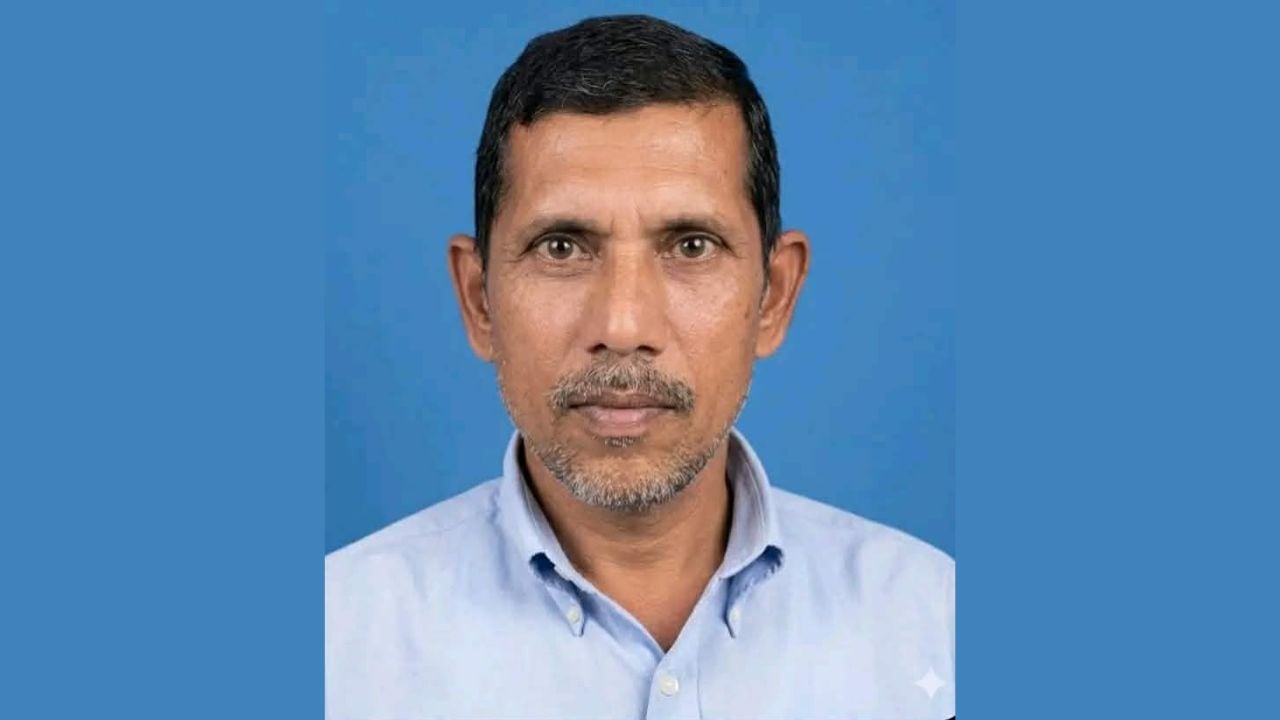
The government of Bangladesh is considering extending weekly holidays for public sector employees as part of energy-saving measures. The move comes amid fuel supply challenges caused by the ongoing conflict involving Iran, Israel, and the United States. A decision on the proposal is expected to be made at the cabinet meeting scheduled for Thursday, April 2, 2026. According to the report, the energy sector is struggling to manage the situation with limited fuel reserves as new supplies have declined. To cope with the pressure, the government is exploring cost-saving strategies, including reducing energy consumption through extended holidays. The cabinet will also decide whether to introduce three days of online classes per week in educational institutions. If approved, the measures would represent a short-term response to the energy strain, aiming to reduce fuel use across government offices and schools.

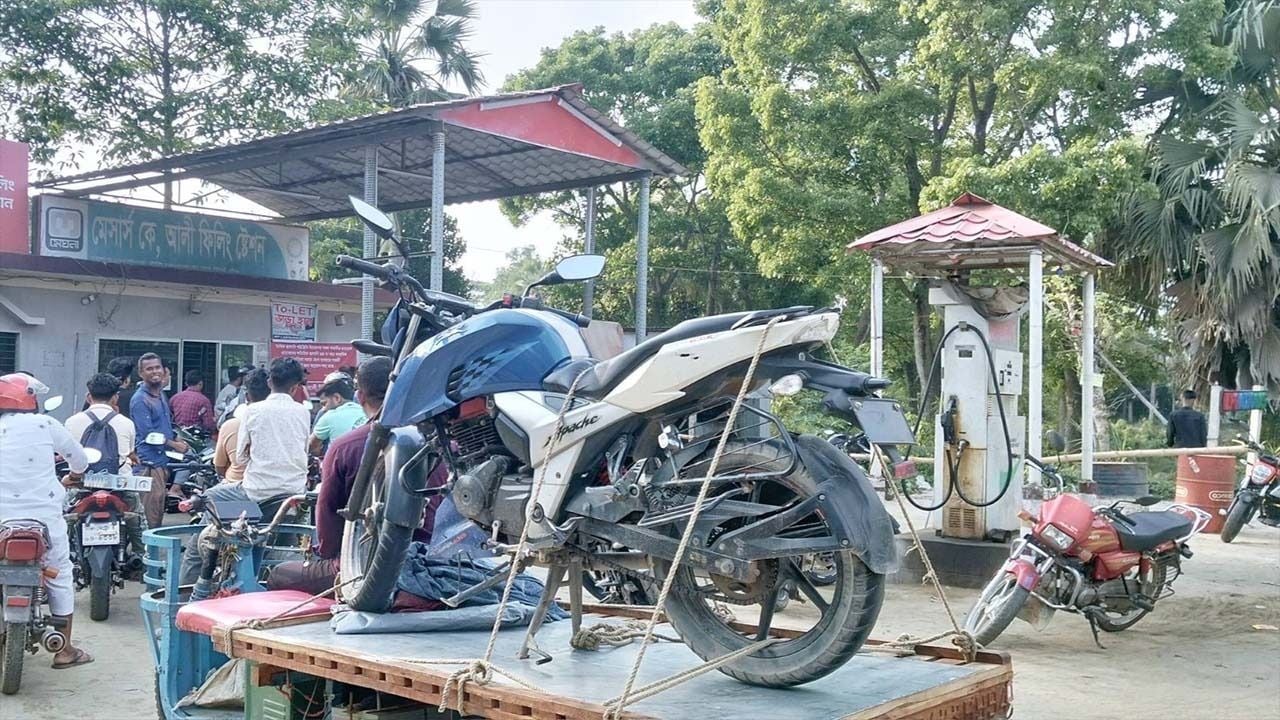
A rare scene unfolded in Munshiganj’s Tongibari upazila on April 1 when a man transported his motorcycle on a van to a filling station amid a fuel shortage. The incident occurred at Messrs K Ali Filling Station in Sonarang area, where long queues of motorcyclists were waiting for fuel. The man, identified as Imran Hossain, brought his motorcycle by van after running out of fuel on the way to Kalibari. Unfortunately, the station’s fuel ran out just as he arrived. Assistant Sub-Inspector Shafiqul Islam of Tongibari Police Station intervened after noticing the situation and arranged 200 taka worth of fuel for Imran through special consideration. The filling station owner, Shahidul Islam, said fuel supply had resumed only the previous evening after a week-long halt, leading to heavy demand and long queues. Each motorcycle was being given a maximum of 200 taka worth of fuel. The owner added that despite official claims of no fuel crisis, actual supply remained insufficient, worsening the situation for both sellers and consumers.
Spanish footballer Lamine Yamal has strongly condemned anti-Muslim chants heard during the Spain-Egypt friendly match held at Barcelona’s RCDE Stadium. The match ended in a goalless draw, but the incident in the stands drew widespread attention. Several Spanish supporters were heard chanting anti-Muslim slogans, prompting stadium authorities to issue a warning on the big screen during the first half. Despite the warning, similar chants continued in the second half. Spain’s football authorities and national team coach Luis de la Fuente have both denounced the incident and expressed firm opposition to such behavior. Yamal, who is Muslim, responded on social media, calling the chants disrespectful and labeling the use of religion as a joke an act of ignorance and racism. He emphasized that football should be a game of enjoyment, not a platform for mocking anyone’s faith or identity. Yamal concluded his message by thanking supporters and expressing hope to meet them again at the World Cup.

Rail communication between Sylhet and the rest of Bangladesh has remained suspended for 12 hours after five wagons of a fuel-carrying train derailed at Shahpur in Madhabpur upazila of Habiganj. The incident occurred around 9:45 p.m. on Wednesday, April 1, when the Chattogram–Sylhet train went off the tracks near Montola station. As of Thursday morning, April 2, train operations had not resumed, and officials could not confirm when services would return to normal. According to railway sources, two of the overturned wagons have been recovered so far, while one fell into a roadside ditch. Locals reportedly attempted to collect spilled fuel before Border Guard Bangladesh (BGB) and other law enforcement agencies intervened to control the situation. BGB personnel recovered about 1,000 liters of fuel from the site. Fire service teams and railway workers are continuing the recovery operation. Station officials said the restoration of rail traffic depends on the completion of the salvage work, which was still ongoing as of Thursday morning.

Bangladesh is facing an escalating fuel crisis despite official claims of normal supply. Long queues at fuel stations, halted river transport, and disruptions in industrial production have become widespread. The country’s only refinery, Eastern Refinery Limited (ERL), is running at reduced capacity due to a lack of crude oil, with current reserves expected to last only until mid-April. The refinery has not received new crude shipments since mid-February, as scheduled vessels from the Middle East were delayed by regional conflict. Bangladesh Petroleum Corporation (BPC) maintains that supply levels match those of the previous year and attributes visible shortages to panic buying and black-market activity. However, Customs data contradict BPC’s claims, showing a sharp decline in fuel imports since early 2026. Between March 2025 and March 2026, total imports by major state-run oil companies fell by over 65,000 tons. Most vessels arriving at Chattogram port in recent weeks carried gas-based fuels rather than liquid oil, further straining supply. Officials warn that if new crude shipments do not arrive soon, ERL may face a temporary shutdown, potentially worsening the national fuel shortage.

A bus helper named Md. Raju, aged 29, died after falling from a moving passenger bus in Noakhali’s Sadar upazila on Wednesday night. The incident occurred around 9:30 p.m. near the Income Tax Office area of Maijdi Bazar on the Maijdi to Chaumuhani regional highway. Raju, son of Md. Sakhayet Ullah from Lakhinarayanpur village in Begumganj upazila, was working on a Sugandha Paribahan bus when he suddenly fell onto the road and was critically injured. Locals rescued him and took him to the 250-bed Noakhali General Hospital, where doctors declared him dead. According to Chandraganj Highway Police Station Officer-in-Charge Mobarak Hossain Bhuiyan, police visited both the accident site and the hospital. Preliminary findings suggest that Raju may have fallen accidentally from the bus. Authorities have handed over the body to his family after completing legal formalities, and an investigation is underway to determine the exact cause of the accident. The incident has cast a shadow of grief among Raju’s colleagues and relatives, while police continue their inquiry into the circumstances of his death.

Global oil prices rose sharply following a televised address by U.S. President Donald Trump, in which he pledged to continue the war with Iran and threatened to bomb Iranian power plants. Within minutes of his remarks, the benchmark Brent crude price climbed more than 4 percent to exceed 105 dollars per barrel, while U.S. benchmark WTI rose over 3 percent to surpass 103 dollars per barrel. The conflict began more than a month ago, during which Iran effectively closed the Strait of Hormuz, a key route for about 20 percent of the world’s oil supply. This closure has triggered a global energy crisis and driven fuel prices sharply higher, with U.S. gasoline prices surpassing 4 dollars per gallon. Despite the economic impact, Trump downplayed the significance of the disruption in his speech, asserting that the United States does not need the strait and suggesting that its allies should take responsibility for securing access. The continued closure of the Strait of Hormuz and rising oil prices indicate sustained pressure on global energy markets if the conflict persists.

The ‘1 Nojor’ media platform is now live in beta, inviting users to explore and provide feedback as we continue to refine the experience.