

The ‘1 Nojor’ media platform is now live in beta, inviting users to explore and provide feedback as we continue to refine the experience.
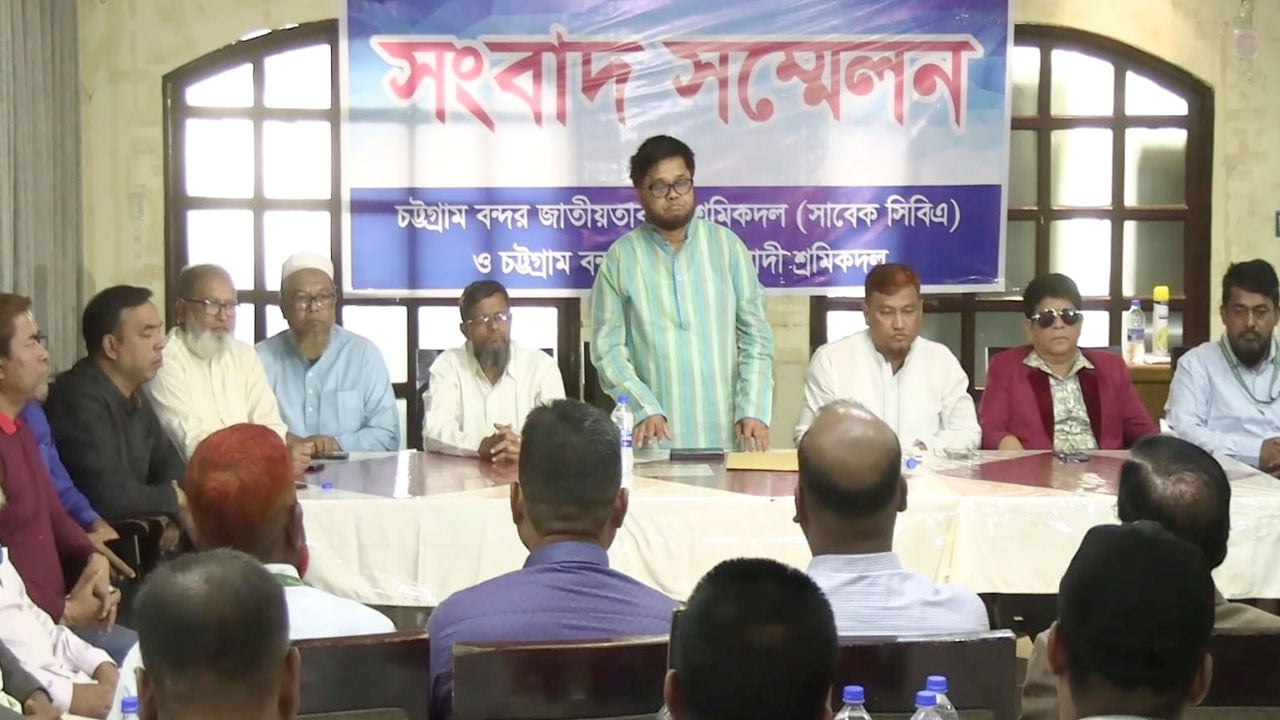
The Workers Party has announced a two-day strike protesting the lease of Chittagong port’s New Mooring Container Terminal (NCT) to a foreign company. The strike will halt all operations on Saturday and suspend administrative activities on Sunday. The announcement came Thursday through separate press conferences by the Workers Party and the Sramik Karmachari Oikya Parishad (SKOP), which expressed support for the protest. Earlier in the day, the High Court declared the process of appointing a foreign operator at the NCT terminal legal. Following the ruling, port branch leaders and activists of the Workers Party held a protest march and later a press conference in Agrabad. They warned that handing over the terminal to a foreign operator would endanger national security, cause job losses for Bangladeshi workers, and result in significant foreign currency outflow. SKOP leaders, speaking at the Chittagong Press Club, urged the interim government to withdraw from the leasing decision and warned of tougher action, including a complete shutdown of the port, if the decision is not reversed.
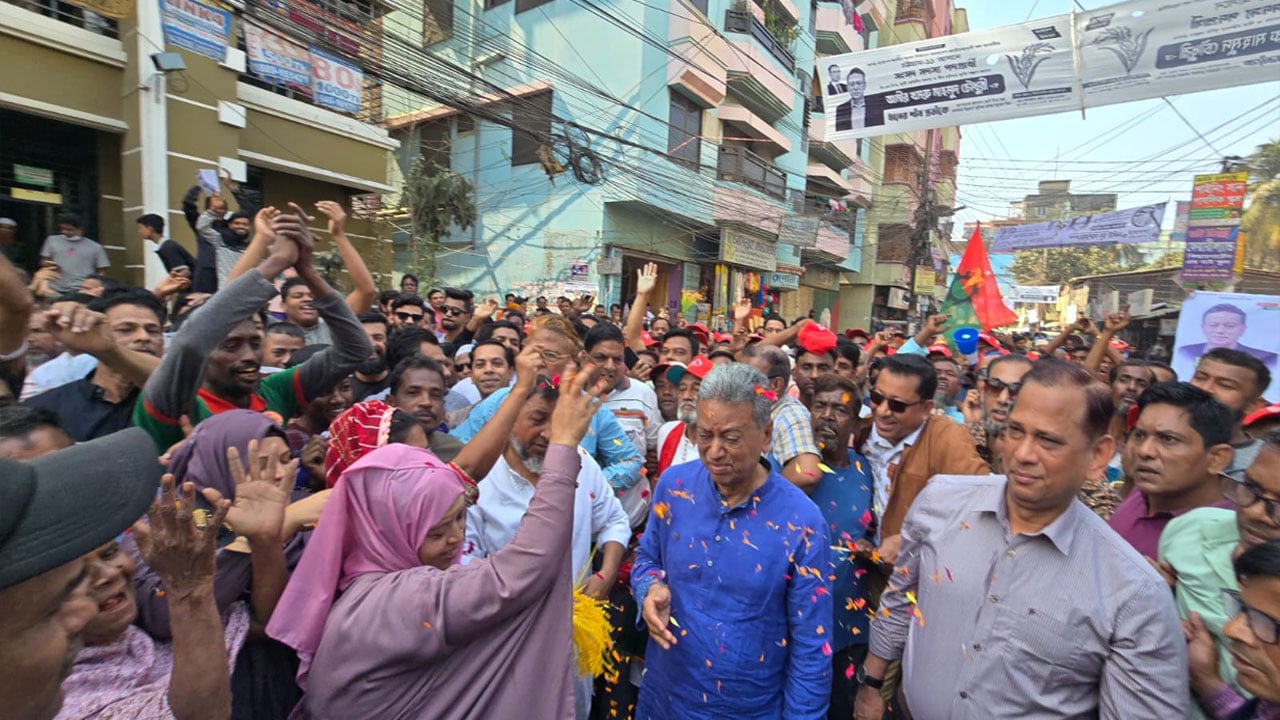
BNP Standing Committee member Amir Khosru Mahmud Chowdhury stated that individuals and groups attempting to create confusion or doubt about the election process are gradually losing connection with the public. He made the remarks on Thursday during an election campaign in South Agrabad and nearby areas of Chattogram city. Chowdhury urged citizens to vote for the BNP’s symbol, the paddy sheaf, on February 12 to build a better Bangladesh. He said the people of Bangladesh are united in favor of democracy and elections, and that pro-democracy nations around the world are cooperating with Bangladesh’s electoral process. Chowdhury claimed that the widespread enthusiasm for the BNP and its symbol reflects the people’s trust in the party. He added that the BNP aims to establish a culture of peace, tolerance, stability, and mutual respect in national politics. Local BNP leaders and activists, including Metropolitan BNP Member Secretary Nazimur Rahman, were present during the campaign event.
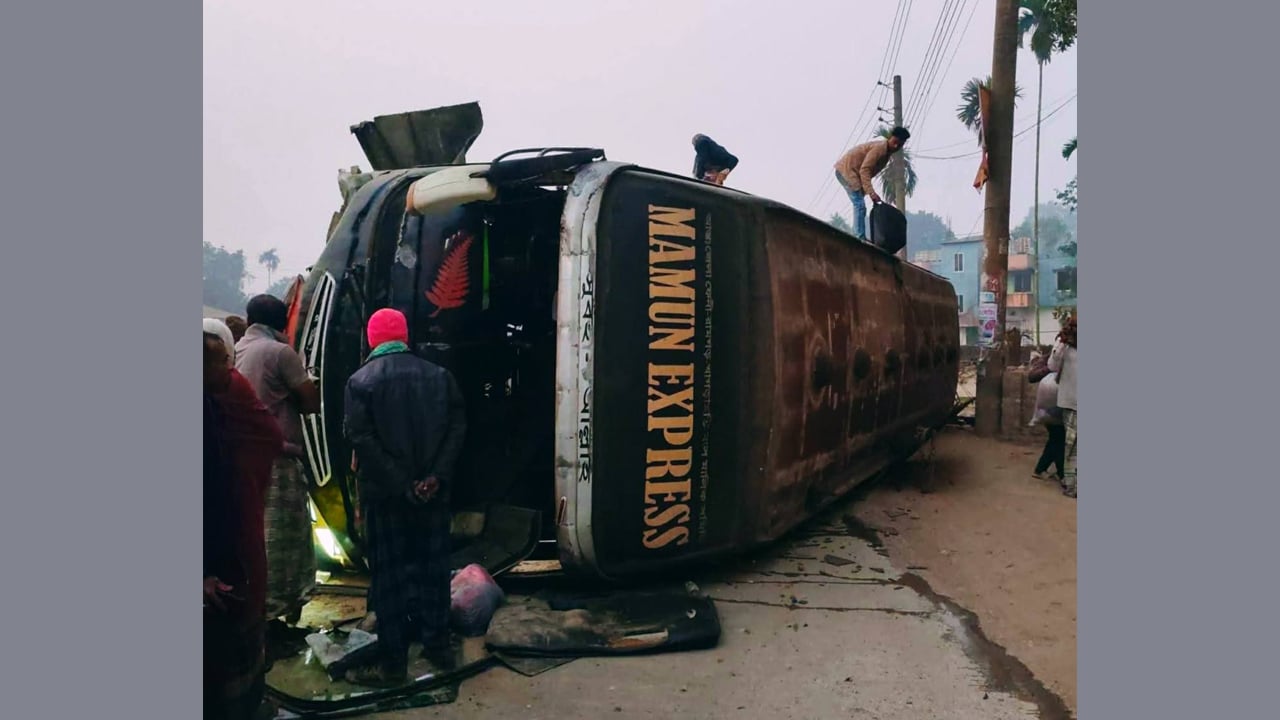
Fifteen passengers were injured when a Mamun Express bus lost control and overturned on the Dhaka-Rangpur Highway at Pantapara in Gobindaganj, Gaibandha, on Thursday morning. The accident occurred near the Hamko Battery showroom at the southern bus stand area of the municipal town. Witnesses said the Kurigram-bound bus from Chattogram lost control in front of a sand mound near Uttara Flour Mills and overturned, trapping passengers inside. Highway police and fire service personnel rushed to the scene after receiving the report and rescued the injured passengers, sending them to the Upazila Health Complex for treatment. Gobindaganj Fire Service Station Officer Masud Rana said initial observations suggest the bus may have lost control due to excessive speed or the driver falling asleep, though an investigation is underway. Gobindaganj Highway Police Officer-in-Charge Mozzafar Hossain confirmed the incident, noting that traffic on the highway was briefly disrupted but returned to normal after the rescue operation.
The government has dismissed as baseless the social media claims that the interim administration will remain in power for six more months if the upcoming February 12 referendum results in a majority of ‘yes’ votes. In a statement posted Thursday night on the verified Facebook page of the Chief Adviser’s Press Wing Facts, it said misleading information is being spread online regarding the referendum. The statement clarified that a photo card circulating on Facebook, allegedly from Independent Television, misrepresented comments by Professor Ali Riaz, vice-chairman of the National Consensus Commission. According to the government, Riaz never said the current interim government would act as a constitutional assembly for 180 days. Instead, he stated that elected members of parliament would perform dual roles—forming the government and serving as members of a constitutional reform council. Citing the July National Charter (Constitutional Reform) Implementation Order 2025, the statement explained that if the referendum passes, the next parliament will have a dual function for 180 working days to complete constitutional reforms. The government reiterated that the order contains no provision for extending the interim government’s tenure.

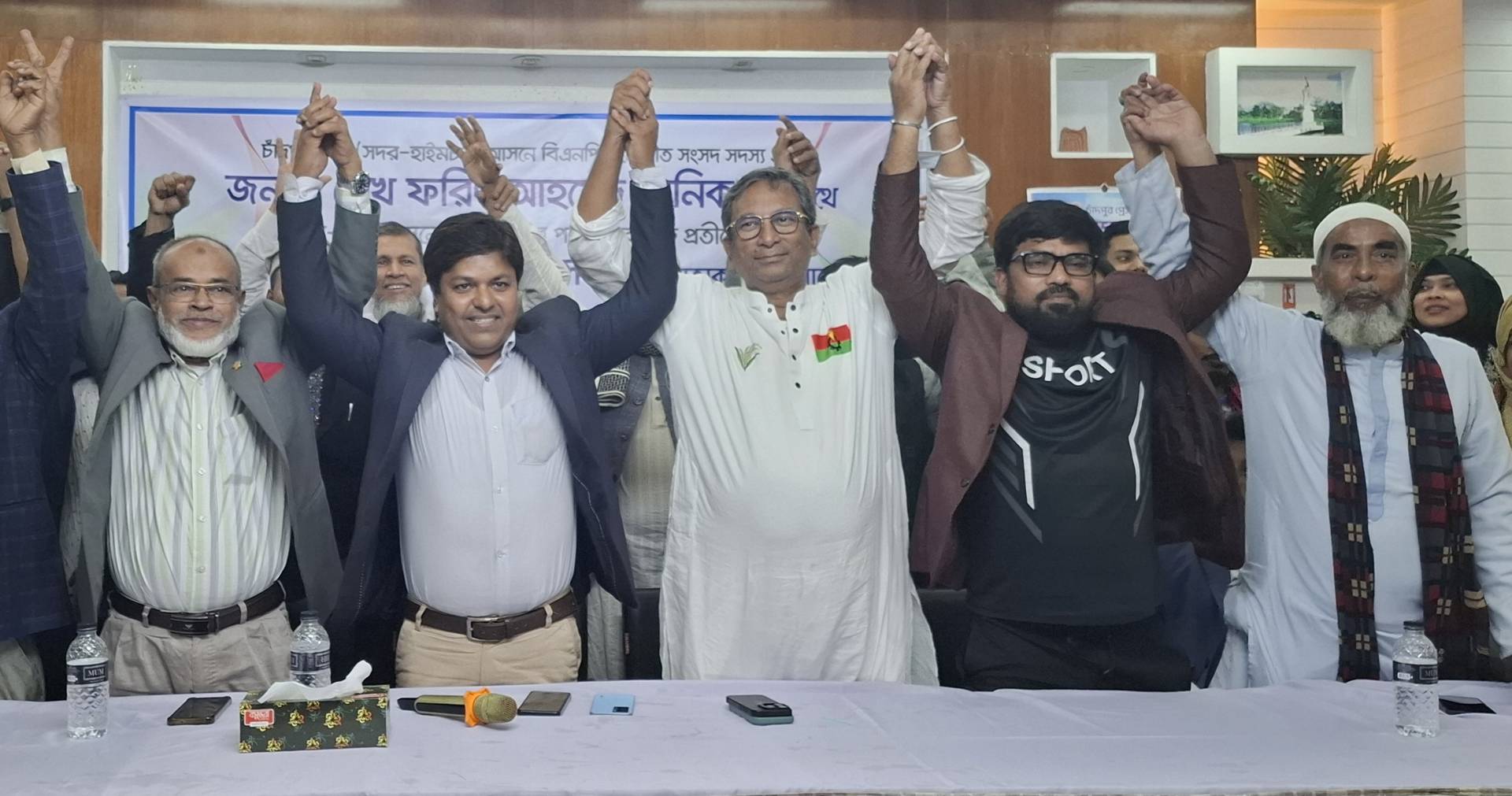
Gana Odhikar Parishad candidate Zakir Hossain has announced his withdrawal from the Chandpur-3 constituency election to support the BNP-nominated candidate Sheikh Farid Ahmed Manik. The announcement was made on Thursday night at 8:30 p.m. during a joint meeting held at the Chandpur Press Club auditorium, attended by leaders and activists from both Gana Odhikar Parishad and BNP. During the event, Zakir Hossain stated that the political ideals of their leader VP Nur and BNP leader Tarique Rahman are aligned, adding that if Tarique Rahman wins, Gana Odhikar Parishad will also succeed. He urged all party leaders and supporters in the constituency to vote for the BNP’s symbol, the paddy sheaf, and to work for its victory. The meeting was also addressed by Sheikh Farid Ahmed Manik, the BNP’s Chandpur district president and candidate for Chandpur-3, along with district BNP general secretary Salim Ullah Selim and Gana Odhikar Parishad district convener Kazi Rasel.
Political tensions surrounding Bangladesh’s upcoming parliamentary election have escalated into violence in several districts. Clashes between rival party supporters have led to injuries and at least one death, notably in Sherpur’s Jhenaigati area. Following the incident, law enforcement agencies have deployed additional forces to prevent further unrest. Police officials said they had earlier warned candidates that competition must remain peaceful and ballot-based, but recent events have raised serious concern. According to the police headquarters, reports of election-related violence have emerged from at least ten districts since campaigning began. The authorities have strengthened patrols, restricted rival gatherings at the same venues, and increased surveillance, including plainclothes monitoring. The Home Affairs Adviser and the Inspector General of Police both confirmed that all security forces have been instructed to prevent violence and maintain order. Investigations are underway to determine whether any political groups are instigating the unrest. Police have pledged strict legal action against those found responsible, as observers and analysts had previously voiced concern about potential instability during the election period.
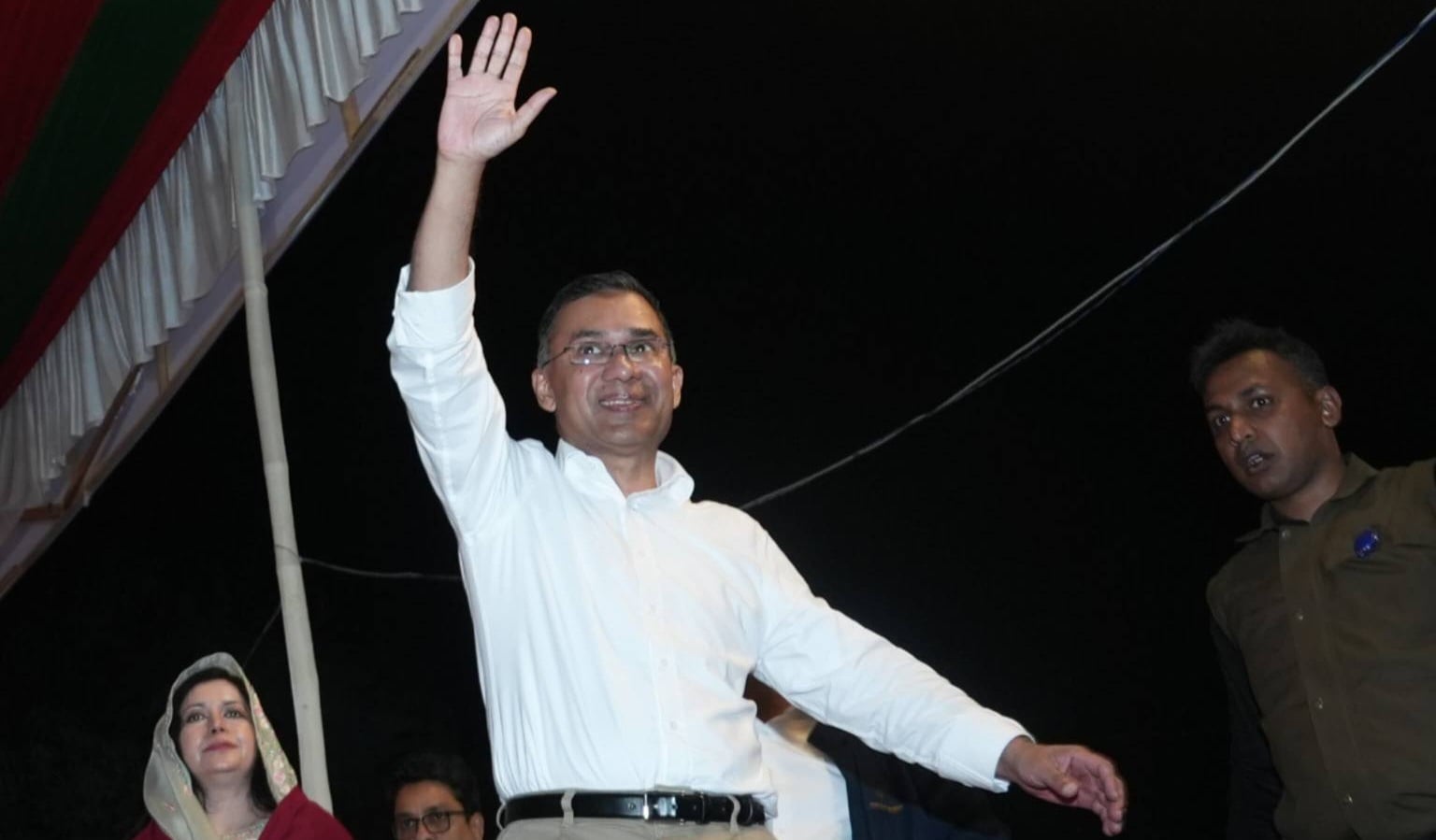
BNP Chairperson Tarique Rahman is set to visit Rangpur on Friday, marking his first trip to the region in 20 years. According to the party’s schedule, he will pay respects at the grave of Shaheed Abu Sayeed, a Begum Rokeya University student killed in the July Movement, in Pirganj. Following the visit and a meeting with Sayeed’s family, Rahman will address an election rally at the Collectorate Eidgah field in Rangpur city. The event has created a festive atmosphere across the district, with extensive preparations underway. At a press conference held at the Rangpur Chamber of Commerce and Industry, BNP’s Organizing Secretary for Rangpur Division, Asadul Habib Dulu, said enthusiasm among voters and residents is high ahead of the rally. He emphasized Rangpur’s long-standing deprivation and expressed hope that BNP leadership would bring sustainable development to the region. Several proposals have been submitted to Rahman, including the Teesta Master Plan, reopening of airports, industrial expansion, and modernization of education and healthcare. Police have inspected the rally venue, and multiple teams are working to ensure law and order during the event.
The Election Commission (EC) of Bangladesh has come under scrutiny after approving nominations of candidates in four parliamentary constituencies in Chattogram who admitted exceeding the legally prescribed election spending limits. Despite the Representation of the People Order (RPO) 2025 amendment empowering the EC to act against such violations, returning officer Mohammad Zahidul Islam Miah declared the nominations valid. The law allows a maximum expenditure of 10 taka per voter, but candidates in constituencies including Chattogram-6, 7, 13, and 15 reported higher amounts in their affidavits. Legal experts stated that exceeding the spending limit renders an affidavit defective and should not be accepted without EC approval. Chittagong University’s Professor Dr. Md. Shafiqul Islam said the incident shows the EC failed its first major test under the revised RPO, reflecting administrative weakness and lack of discipline. EC Senior Secretary Akhtar Ahmed acknowledged that overspending clearly violates the RPO and that verifying expense reports was the responsibility of returning officers. Analysts warned that ignoring such admissions of legal breaches could set a dangerous precedent, undermining financial fairness, transparency, and public trust in future elections.
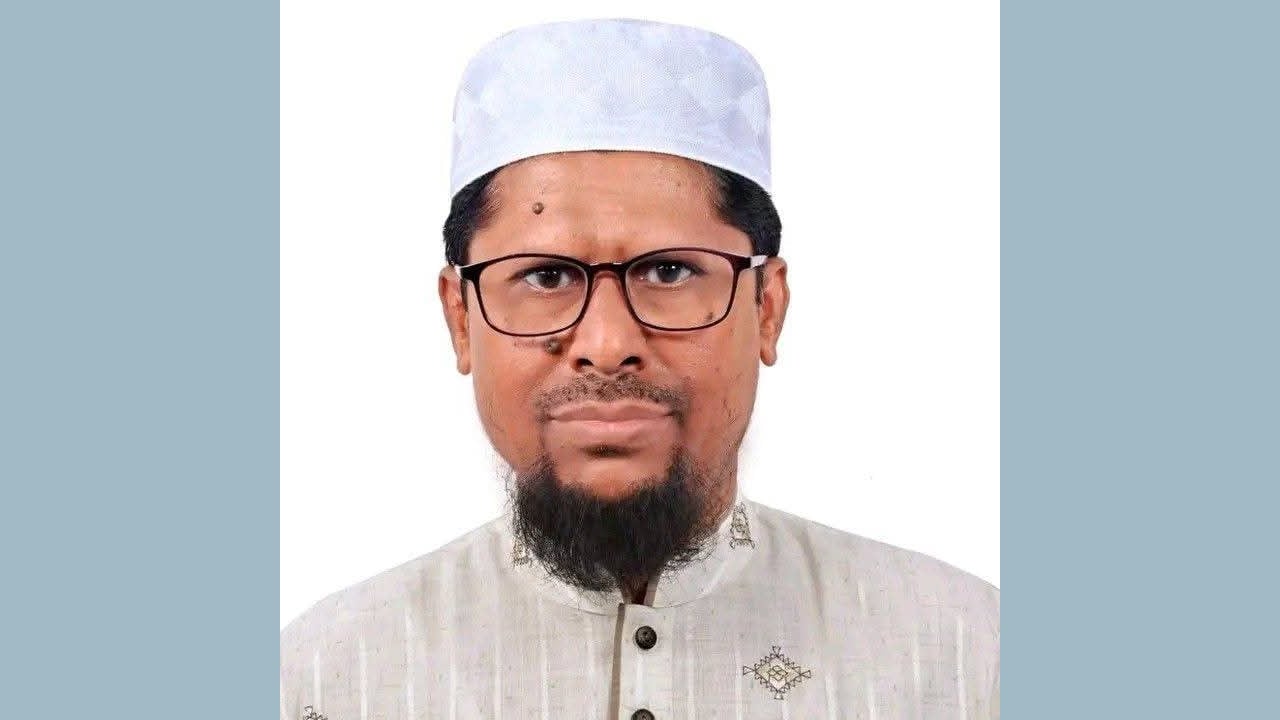
Bangladesh Khelafat Majlis has expelled Maulana Khairul Islam Thakur, its initially nominated candidate for the Kishoreganj-4 constituency, on allegations of violating party discipline. The decision was announced on Thursday by the party’s Secretary General, Maulana Jalaluddin Ahmad, under Article 30 of the party constitution. Thakur has been temporarily removed from his primary membership and all organizational responsibilities. The party also issued strict instructions to all leaders and activists at every level to refrain from maintaining any electoral or organizational contact with Thakur. According to a press release, the directive takes immediate effect to uphold party discipline, ideology, and central decisions. The statement further clarified that Bangladesh Khelafat Majlis currently has no recognized candidate for the Kishoreganj-4 (Austagram–Itna–Mithamain) constituency. Under the mutual understanding of the 11-party electoral alliance, this seat has been allocated to Jamaat-e-Islami.
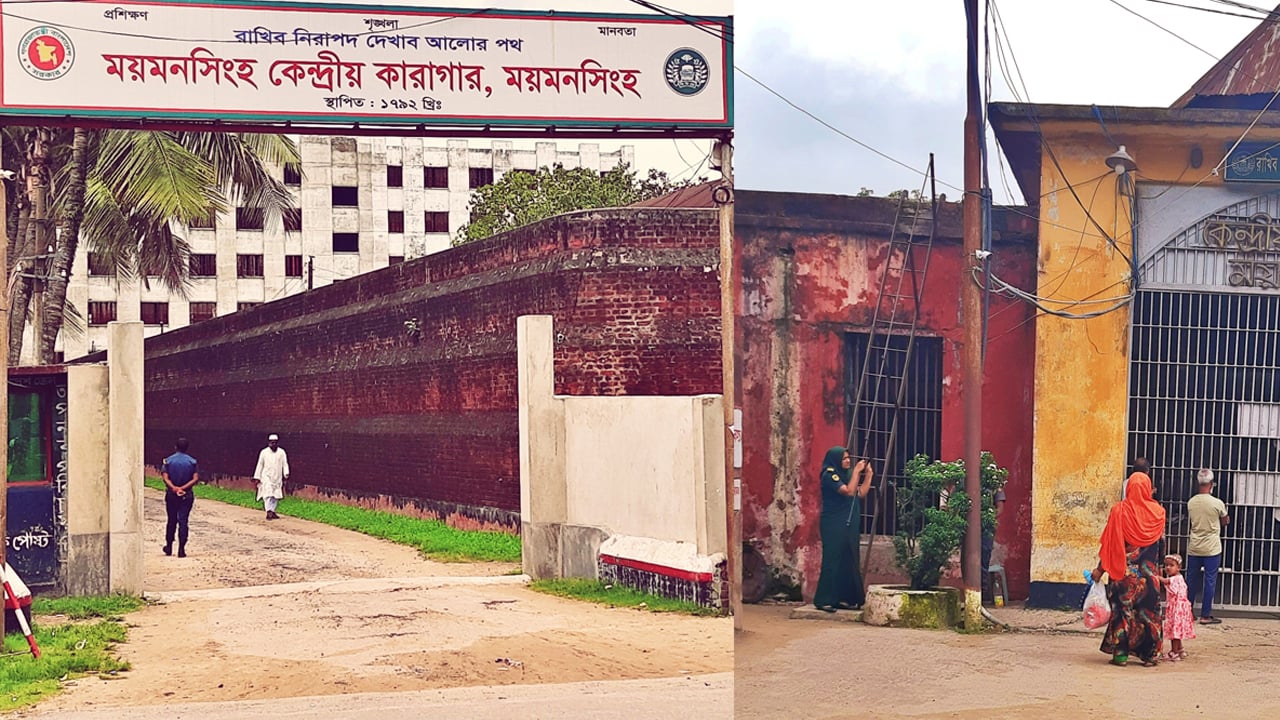
Three murder suspects were mistakenly released from Mymensingh Central Jail on Tuesday, January 27, without any bail documents. The incident was not immediately reported to the district administration or police and became public only after confirmation on Thursday, January 29. Following the revelation, Deputy Jailer Zakaria Imtiaz was temporarily suspended for negligence, and a three-member committee was formed to investigate the matter. Prisons DIG Mohammad Touhidul Islam stated that the release occurred because a production warrant was mistakenly treated as a bail order. Senior Jail Superintendent Aminul Islam described the incident as an “accidental release,” saying the responsible officer freed the inmates by mistake. The released individuals—Anis Mia, Rashedul Islam, and Jakirul Islam—were all residents of Tarati in Tarakanda and accused in a murder case. Police officials said they were not informed in time, which hindered efforts to re-arrest the suspects. Authorities have pledged strict legal action if further involvement or intent is found during the investigation.
The interim government of Bangladesh has made a policy decision to divide the Civil Aviation Authority of Bangladesh (CAAB) into two distinct entities—a regulatory body and an operational organization. The decision was communicated to CAAB through an official letter from the Ministry of Civil Aviation and Tourism on January 28, and confirmed by the ministry’s Public Relations Department on January 29. According to the ministry, CAAB currently performs dual roles: as a regulator overseeing aviation safety and security, and as an operator managing air navigation services and airports. This dual function has created conflicts of interest in decision-making. An audit by the International Civil Aviation Organization (ICAO) and a government investigation into the October 18 fire at Hazrat Shahjalal International Airport’s import cargo complex both recommended separating CAAB’s regulatory and operational functions. To meet these requirements, the government will soon enact or amend necessary laws to establish a separate operator organization responsible for air navigation and airport management. The move aims to fulfill international obligations and improve the quality of civil aviation services in Bangladesh.
The women’s wing of Jamaat-e-Islami has postponed its planned rally at Suhrawardy Udyan in Dhaka. The event was originally scheduled for January 31, 2026, to protest alleged attacks, harassment, and intimidation during the recent election campaign. The announcement of the postponement came three days after the rally was first declared, with the party’s central women’s division citing unavoidable reasons for the decision. The update was shared through the party’s official Facebook page. Earlier, Jamaat’s Nayebe Ameer, Dr. Syed Abdullah Mohammad Taher, had announced the rally during a press conference held at the party’s central office. It was to be the first women’s rally organized by the party at Suhrawardy Udyan. The postponement marks a change in the party’s recent mobilization plans. No new date for the rescheduled rally has been announced, and the reasons behind the postponement were not detailed in the party’s statement.
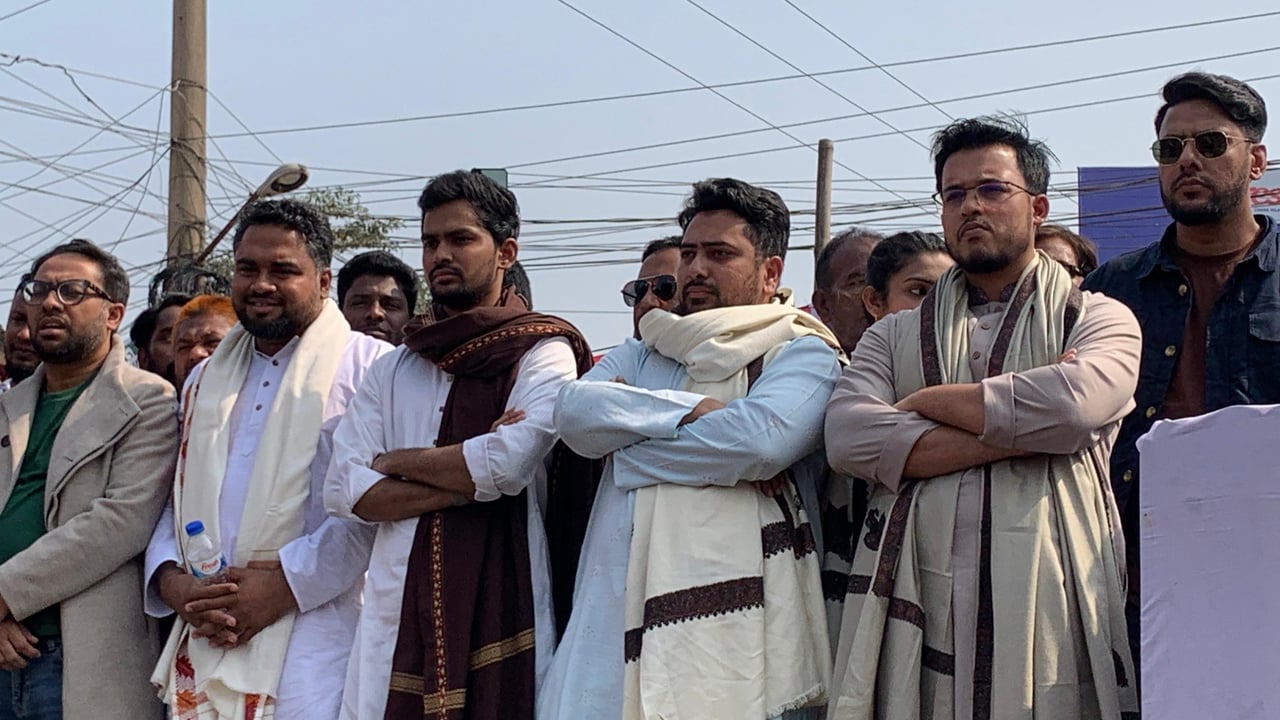
National Citizen Party (NCP) convener Nahid Islam on Thursday, January 29, 2026, called on citizens to vote 'Yes' in the upcoming referendum to prevent the return of what he described as fascist or autocratic governance in Bangladesh. Speaking at an NCP election march held at the petrol pump area in Sreemangal, Moulvibazar, he urged voters to reject those seeking to reestablish the defeated Awami League forces in the February 12 election. He said the NCP emerged from the August 5 movement and aims to eliminate corruption, misrule, and family-based leadership. Without naming any party, Nahid Islam alleged that a major political group filed mass cases nationwide after August 5 and is now using those cases for political bargaining. He called on voters to resist such attempts by supporting the NCP’s Shapla Koli symbol. NCP spokesperson Asif Mahmud Sajib Bhuiyan highlighted the struggles of party candidate Pritam Das, who was jailed for 132 days for labor rights activism. He pledged wage increases and infrastructure improvements if elected. Pritam Das also urged voters to support the 11-party alliance’s Shapla Koli symbol in the February 12 election for Sreemangal’s development.
The Election Commission has withdrawn the Upazila Nirbahi Officer (UNO) and Officer-in-Charge (OC) of Jhenaigati in Sherpur following the killing of Bangladesh Jamaat-e-Islami leader Maulana Rezaul Karim. Senior Secretary of the Election Commission Akhtar Ahmed confirmed the decision to journalists on Thursday, January 29, 2026. He said the commission will take further action after receiving the judicial inquiry committee’s report on the candidates involved. Ahmed also noted that if any candidate regains eligibility by court order after February 8, their name and symbol will not appear on postal ballots. Earlier, Jamaat-e-Islami held a press conference alleging that the killing occurred under the instigation of BNP candidate Mahmudul Haque Rubel and that local administration officials remained inactive during the incident. The party demanded immediate arrests and legal action against those responsible, warning that administrative bias could undermine a fair election. Meanwhile, the Bangladesh Nationalist Party (BNP) called for a proper investigation to determine whether the Sherpur clash could have been avoided. The Election Commission’s withdrawal of the two officials marks an initial administrative response as inquiries continue into the politically charged incident.

A Dhaka court has again postponed the submission date for the further investigation report in the murder case of Inqilab Moncho spokesperson Shahid Sharif Osman Bin Hadi. On Thursday, January 29, 2026, Additional Chief Metropolitan Magistrate Awlad Hossain Muhammad Jonaid set February 3 as the new date after the investigating officer, CID Assistant Superintendent of Police Abdul Kadir Bhuiyan, failed to submit the report. According to court sources, Hadi was shot by assailants on a motorcycle in the Box Culvert area of Paltan on December 12, 2025, while traveling to Suhrawardy Udyan after Friday prayers and election campaigning in Motijheel. He was first treated at Dhaka Medical College Hospital, then transferred to Evercare Hospital, and later sent to Singapore for advanced treatment, where he died on December 18. The case was subsequently reclassified as a murder case. Earlier, on January 6, detectives filed charges against 17 people, including former ward councilor Taizul Islam Chowdhury Bappi and Faisal Karim Masud. Following dissatisfaction with that report, the court ordered the CID to conduct further investigation on January 15.
The ‘1 Nojor’ media platform is now live in beta, inviting users to explore and provide feedback as we continue to refine the experience.