

The ‘1 Nojor’ media platform is now live in beta, inviting users to explore and provide feedback as we continue to refine the experience.
BNP Chairperson Khaleda Zia’s planned transfer abroad for advanced medical treatment has been delayed due to her current health condition, according to her personal physician and party standing committee member Dr. A.Z.M. Zahid Hossain. He stated that while an air ambulance remains on standby, the medical board has advised against immediate travel, emphasizing that her physical stability will determine the timing of her transfer. Dr. Zahid added that Khaleda Zia’s family, including her son Tarique Rahman and daughter-in-law Zubaida Rahman, are closely coordinating with the medical team. He urged the public not to spread misinformation on social media, assuring that both the interim government and the Qatari authorities are providing full cooperation for her potential overseas treatment. Khaleda Zia has been under treatment at Evercare Hospital in Dhaka for 13 days due to stomach complications. A recent endoscopy revealed minor bleeding, which was later controlled. The medical board, comprising local and foreign specialists, continues to monitor her condition and will decide on her travel when deemed safe.
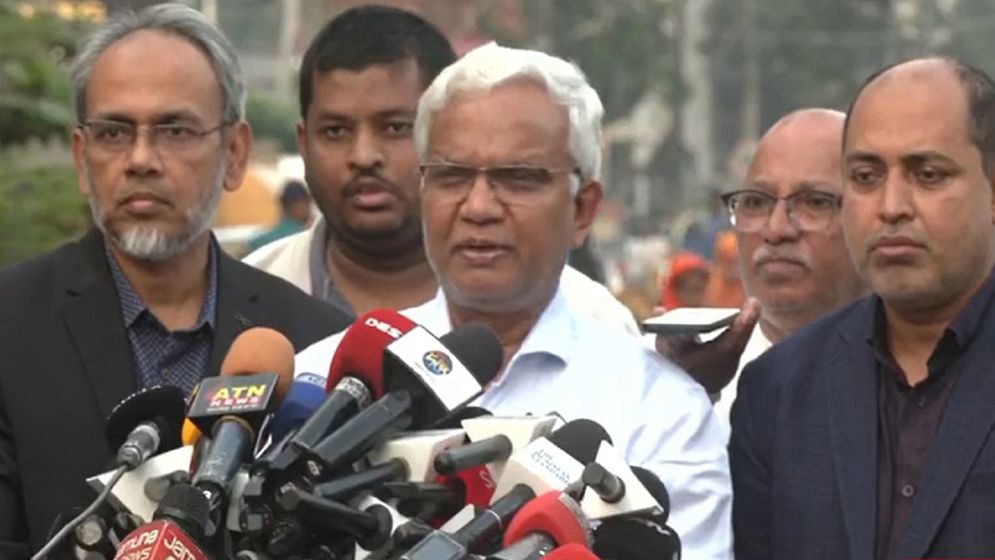
Jatiya Samajtantrik Dal (JSD) President ASM Abdur Rob has called for the immediate withdrawal of the recently issued 'Police Commission Ordinance 2025' by Bangladesh’s interim government. In a statement released on December 6, Rob argued that the ordinance undermines the long-standing public demand for an independent and accountable police force grounded in democracy, human dignity, and the rule of law. He criticized the ordinance as a politically motivated move that contradicts the reform pledges made after the July uprising, claiming it renews a system of repression that uses the police to protect power rather than citizens’ rights. Rob outlined five key demands: replacing the colonial-era Police Act of 1861, redefining police as guardians of constitutional rights, prioritizing human dignity in training, shifting from command-control to service-accountability, and ensuring a fully independent, politically neutral police commission with authority over recruitment, discipline, and citizen complaints. Rob urged the government to repeal the ordinance and implement a humane, democratic, and constitutionally guided police reform framework.
The Chattogram Metropolitan Police (CMP) has announced a major reshuffle involving officers-in-charge (OCs) across all 16 police stations in the city ahead of the upcoming national parliamentary elections. According to an official order signed by CMP Commissioner Hasib Aziz on December 6, the transfers were conducted internally among existing OCs through a lottery-based process. Under the new arrangement, several key postings have been exchanged, including Abdul Karim from Kotwali to Panchlaish, Aftab Uddin from Bakalia to Kotwali, and Abdur Rahim from Sadarghat to Bandar. Other notable changes include Shahinur Alam moving from Khulshi to Karnaphuli and Babul Azad from Double Mooring to Chawkbazar. The reshuffle also affects stations such as Bayezid, Chandgaon, Halishahar, and Patenga. Police officials said the move aims to ensure neutrality, operational readiness, and effective law enforcement during the election period. One OC, Shafiqul Islam of Chawkbazar, has been reassigned to the Counter Terrorism and Intelligence Unit (CTSB). The EPZ police station is expected to receive a new OC soon, pending appointment.
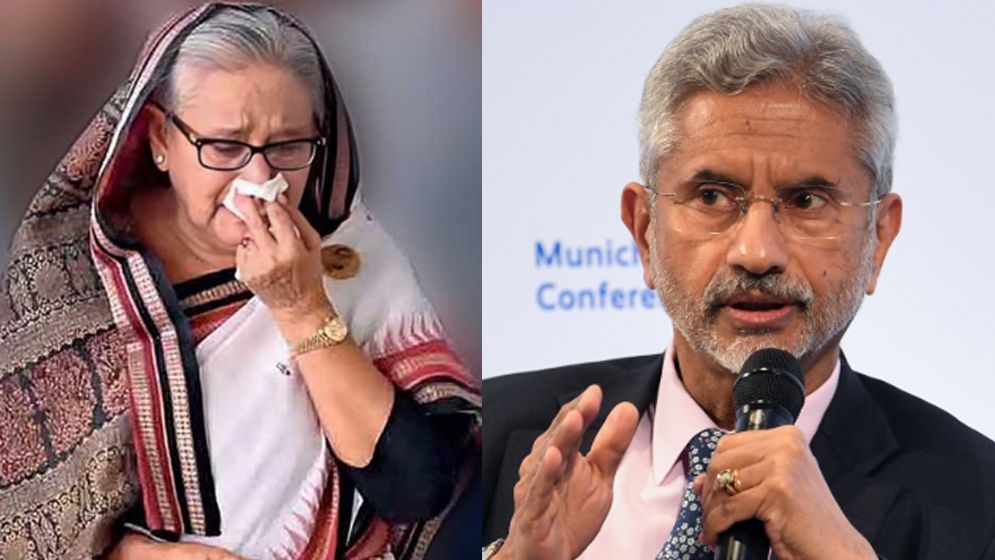
Indian External Affairs Minister S. Jaishankar stated that former Bangladeshi Prime Minister Sheikh Hasina’s continued stay in India is entirely her personal decision. Speaking at the HT Leadership Summit in New Delhi on December 6, Jaishankar emphasized that the circumstances under which Hasina arrived in India have influenced her current situation and will likely shape her future choices. Responding to a question on whether Hasina could remain in India as long as she wished, Jaishankar noted that such matters depend on the evolving realities surrounding her presence. He reiterated that the ultimate decision rests with Hasina herself, underscoring India’s position of non-interference in her personal choices. The remarks come amid ongoing speculation about Hasina’s political future and her possible next steps following her departure from Bangladesh. Observers view Jaishankar’s comments as a signal of India’s cautious diplomatic stance, balancing humanitarian considerations with regional political sensitivities.
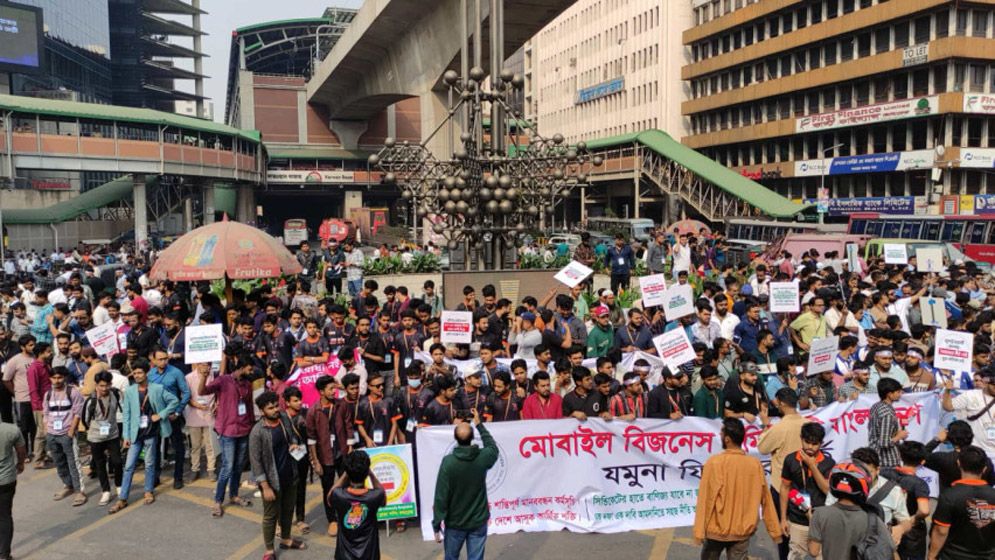
Bangladesh’s mobile phone traders have announced a blockade of the Bangladesh Telecommunication Regulatory Commission (BTRC) headquarters in Agargaon, Dhaka, starting Sunday morning. The protest follows earlier demonstrations demanding reforms to the National Equipment Identity Register (NEIR), the abolition of alleged syndicates, and the reopening of unrestricted mobile phone imports. Traders argue that the NEIR system, set to take effect on December 16, will severely harm small businesses and raise handset prices due to increased taxes and limited supply. They claim that only a select group of importers will benefit from the new regulation. The BTRC and government officials, however, assert that NEIR is essential for national security and to prevent the use of unregistered or stolen phones. The standoff highlights growing tension between regulators and small traders in Bangladesh’s telecom sector. If unresolved, the dispute could disrupt mobile phone distribution and raise consumer prices ahead of the NEIR rollout.
Archaeologists in Iran have discovered a prehistoric village estimated to be around 7,000 years old beneath the historic Belad Shapur area of Dehdasht city. The excavation, led by researcher Zabihollah Masoudinia, revealed settlement layers dating back to the 5th and 6th millennia BCE, marking the first formal archaeological exploration in the region. The find includes pottery fragments and cultural artifacts that suggest continuous habitation from the Neolithic to the Islamic periods. Masoudinia noted that the discovery could redefine Dehdasht’s historical significance. Beneath medieval and Islamic-era structures, researchers uncovered evidence of early human technology, including heated stone fragments used for warming liquids. The team also found remnants of an ancient qanat water system in the city’s northern area, indicating advanced water management practices. Experts believe the discovery will prompt further excavations and research into Iran’s early urban development. A small research center has been established at the site to study the deeper layers and preserve the artifacts for future analysis.
-6933fcc4119ab.jpg)
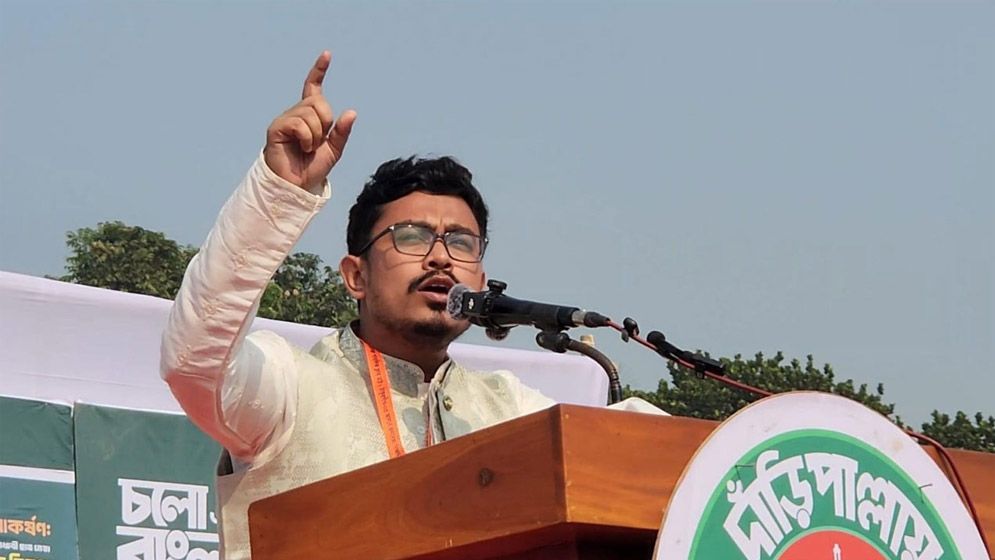
Dhaka University Central Students’ Union (DUCSU) Vice President Sadiq Kayem declared that politics in Bangladesh should no longer be directed from abroad, specifically citing London, Delhi, and Rawalpindi. Speaking at a youth festival and election rally organized by the local Jamaat-e-Islami chapter in Pirganj, Thakurgaon, he emphasized that young people must take a leading role in ensuring safe and fair elections, referencing the July Movement as an example of youth activism. Kayem criticized what he described as 16 years of authoritarian rule that, in his view, destroyed Bangladesh’s education, economic, and cultural systems. He urged voters to choose representatives of “Insaaf,” a platform he said stands for justice and integrity. He also accused India of long-term oppression in the region and called for local development, including reopening the Thakurgaon airport and improving education and healthcare services. Other speakers, including Jamaat leaders, echoed anti-corruption sentiments and pledged to select candidates free from extortion and terrorism, signaling a broader push for reform-minded local leadership.
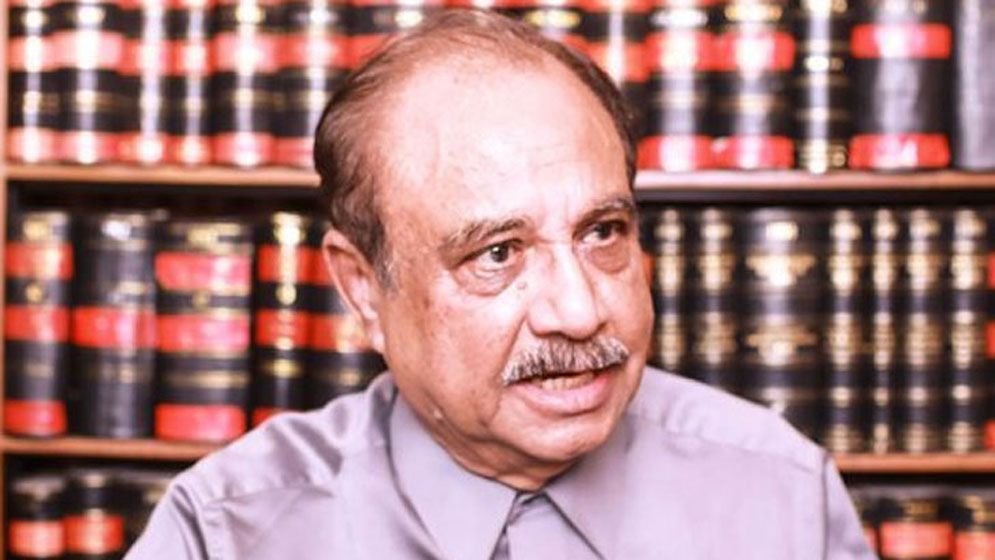
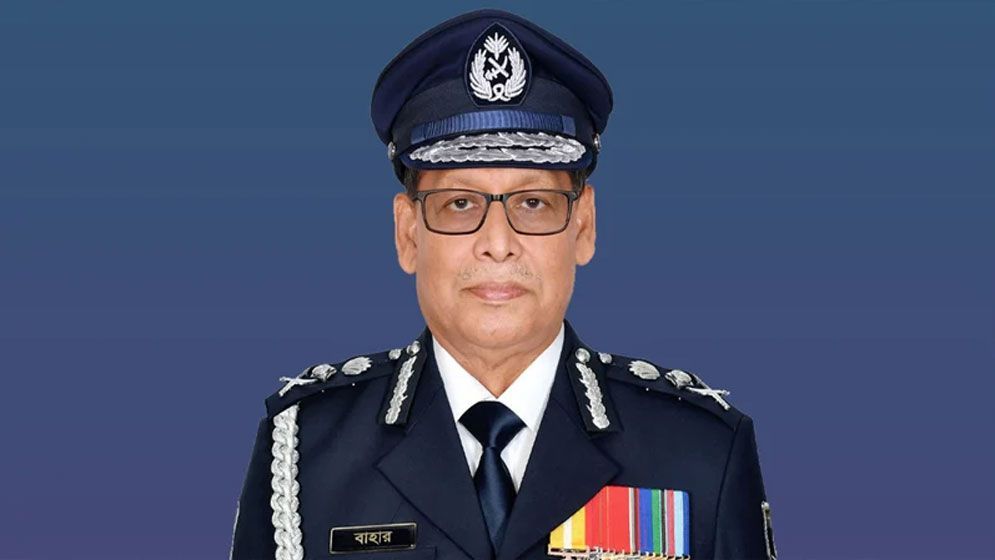
A formal petition has been submitted to Bangladesh’s Chief Adviser seeking the dismissal of Inspector General of Police (IGP) Md. Baharul Alam after his name appeared in the National Independent Investigation Commission’s report on the 2009 Bangladesh Rifles (BDR) massacre. The petition, sent by Supreme Court lawyer and National Lawyers Council chairman S.M. Zulfiqar Ali Junu, argues that the IGP’s continued service undermines public confidence and judicial transparency. The 2009 BDR mutiny, one of the deadliest episodes in Bangladesh’s history, claimed the lives of 57 army officers and many others. The commission’s recent report has reignited debate over accountability and justice. The petition emphasizes that a top law enforcement official’s alleged involvement or negligence in such a national tragedy could obstruct impartial investigation and erode trust in state institutions. Legal experts and civil society observers are urging the interim government to act on the commission’s recommendations to uphold rule of law and restore public confidence in the justice system.
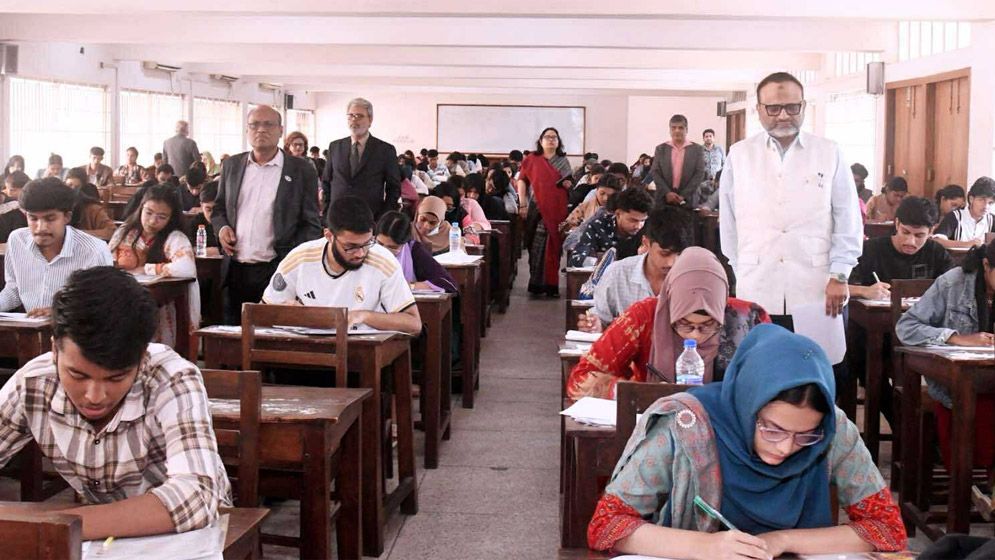
The University of Dhaka successfully conducted the 2025–2026 academic year admission test for its Faculty of Business Studies undergraduate program on Saturday, December 6. The exam took place from 11:00 a.m. to 12:30 p.m. across multiple centers in Dhaka and four other divisional cities—Chattogram, Rajshahi, Khulna, and Rangpur. A total of 34,062 candidates sat for the test, competing for 1,050 available seats. Vice-Chancellor Professor Dr. Niaz Ahmad Khan, accompanied by senior university officials, visited the examination centers and expressed satisfaction over the smooth and disciplined conduct of the test. He noted that the competition was intense, with roughly 33 candidates vying for each seat. The Vice-Chancellor urged parents not to exert undue psychological pressure on their children, emphasizing that admission success is not the sole measure of capability. Of the total seats, 930 were allocated for business studies students, 95 for science students, and 25 for humanities students. The results are expected to be announced after the evaluation process concludes.
Pakistan’s Deputy Prime Minister Ishaq Dar announced a proposal to form a trilateral alliance with Bangladesh and China, signaling Islamabad’s intent to create a new framework for regional cooperation outside the long-paralyzed South Asian Association for Regional Cooperation (SAARC). Speaking at the Islamabad Conclave Forum, Dar said the initiative could expand beyond the region and emphasized collaboration over conflict. The proposal comes as South Asia faces heightened political and diplomatic strains. India–Pakistan relations remain frozen after years of hostility, while Bangladesh–India ties have deteriorated following political upheaval in Dhaka. Analysts suggest Pakistan’s move reflects frustration with SAARC’s ineffectiveness and a desire to diversify regional partnerships. Academic Rabeya Akhtar called the plan ambitious, while others see it as a pragmatic response to shifting alliances. Experts warn that if realized, the alliance could deepen India’s isolation and intensify regional rivalries, particularly between New Delhi and Beijing. Observers will watch whether Dhaka formally engages with Islamabad’s initiative or maintains a cautious stance amid competing strategic pressures.
-6933f9fd5abd7.jpg)
Bangladesh Nationalist Party (BNP) leader Amir Khosru Mahmud Chowdhury announced that Tarique Rahman will soon return to Bangladesh and lead the party in the upcoming 13th national parliamentary election. Speaking to journalists in Dhaka on Saturday, he said preparations are underway for Rahman’s return and for the party’s participation under his leadership. Chowdhury also clarified that Dr. Zubaida Rahman’s political involvement remains her personal decision. Regarding BNP Chairperson Khaleda Zia’s possible travel abroad for medical treatment, he said the final decision depends on her medical board. Adviser Enamul Haque Chowdhury added that a royal air ambulance from Qatar is ready to transport her to London once doctors approve. Khaleda Zia has been receiving treatment at Evercare Hospital in Dhaka since November 23 under a medical board led by Professor Shahabuddin Talukder. The board includes Dr. Zubaida Rahman, who recently arrived in Dhaka to assist in her mother-in-law’s care and possible transfer abroad.
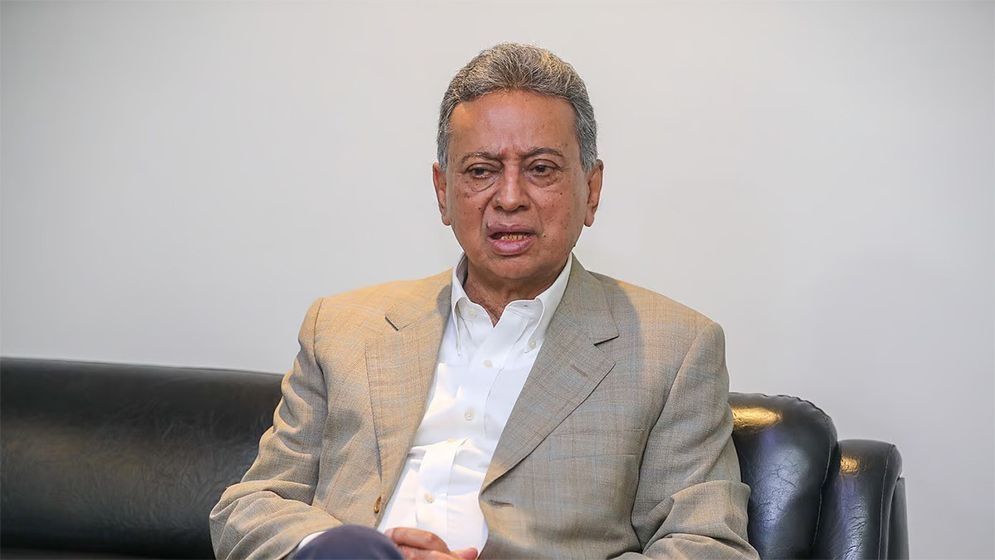
A massive crowd gathered in Rejinagar, Murshidabad, on December 6 to mark the foundation-laying ceremony for the reconstruction of the Babri Mosque, 33 years after its demolition in Ayodhya. The event, organized by suspended Trinamool Congress legislator Humayun Kabir, drew thousands of participants and religious leaders from across India and abroad, including Saudi Arabia. Kabir claimed that nearly 300,000 people would attend, with arrangements made for food and accommodation for tens of thousands. The initiative has triggered significant political controversy in West Bengal. The Trinamool Congress suspended Kabir a day before the event, citing disciplinary reasons, while police questioned him regarding the gathering’s security implications. Kabir emphasized that the mosque and associated facilities—including a hospital and university—would be built without government funding to preserve religious sanctity. Authorities have heightened security in the area amid concerns over communal sensitivity. Observers note that the ceremony’s timing, coinciding with the demolition anniversary, could influence regional political dynamics and interfaith relations in the state.
-6933f8a340b98.jpg)
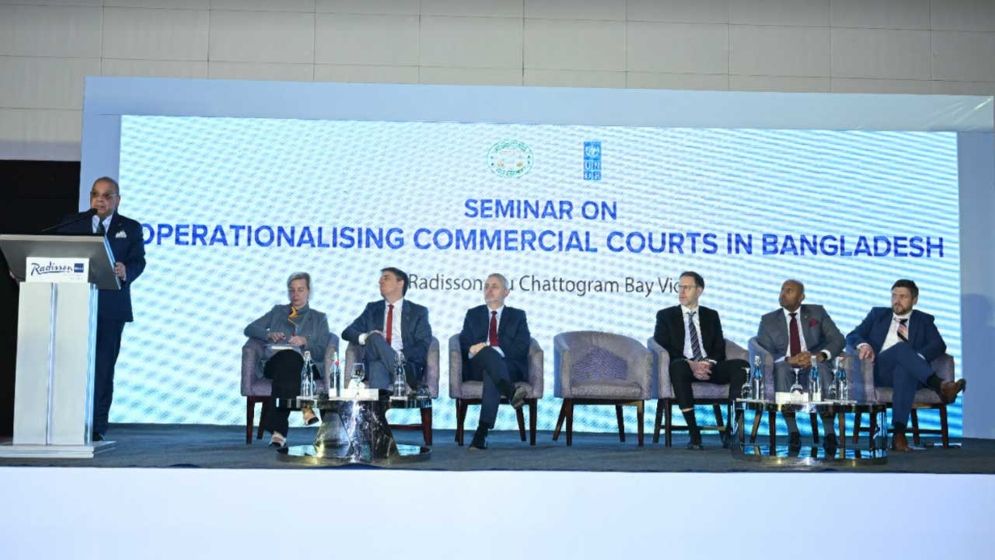
Bangladesh Chief Justice Dr. Syed Refaat Ahmed has said that the establishment of dedicated commercial courts will mark a new era for the country’s economy and judicial system. Speaking at a seminar in Chattogram organized by the Supreme Court and UNDP, he noted that the Supreme Court Secretariat Ordinance 2025 has granted the judiciary full administrative and financial autonomy for the first time, enabling long-term judicial reforms. The Chief Justice explained that the draft Commercial Courts Act—developed through consultations with BIDA, legal experts, and business stakeholders with EU technical support—has been approved in principle by the Cabinet. The law includes provisions for specialized courts, mandatory mediation, limited adjournments, transparent case statistics, and specialized training for judges and lawyers. These measures aim to ensure faster, more transparent commercial dispute resolution and enhance Bangladesh’s global competitiveness. He emphasized that effective implementation will require infrastructure, human resource development, and digital capacity building. The Supreme Court is preparing practice directions to ensure smooth operation of the new courts, reflecting a national consensus for an independent and efficient judiciary.
Michael Morrow, a 49-year-old swimmer from New York, has achieved an extraordinary feat by swimming 28.5 miles in open water while wearing handcuffs. Completing the route through the East River, Harlem River, and Hudson River in under ten hours, Morrow secured two Guinness World Records — for the longest open-water swim in handcuffs and for being the first and fastest to circle New York’s waterways under such conditions. Morrow’s teammate Capri Zatyasmoro described the experience as thrilling, comparing the post-swim feeling to flying a kite. Morrow said he was inspired by stories of people who never gave up on pushing their limits, which motivated him to take on the challenge. A former national champion swimmer, Morrow returned to the sport in his mid-forties after a two-decade break. His achievement highlights both physical endurance and mental resilience, adding a unique chapter to open-water swimming history. Morrow’s record may inspire others to redefine personal boundaries in endurance sports.
-6933f09317eff.jpg)
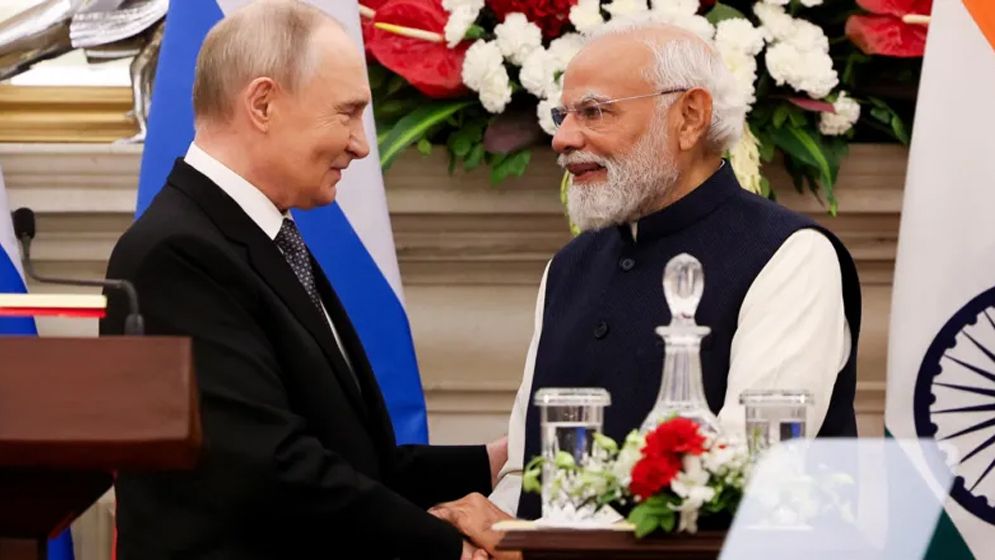
Russian President Vladimir Putin has assured India of a steady and uninterrupted energy supply, disregarding U.S. President Donald Trump’s tariff pressures. Speaking alongside Indian Prime Minister Narendra Modi in New Delhi, Putin criticized Washington’s stance, questioning the logic of restricting India’s energy imports from Russia while the U.S. itself continues to purchase Russian nuclear fuel. Putin highlighted the Kudankulam Nuclear Power Plant as a flagship project of Russia-India cooperation, noting that two of its six reactor units are already connected to the power grid. He expressed optimism that the plant, once fully operational, would significantly bolster India’s energy capacity and reduce its dependence on fossil fuels. The assurance comes amid heightened U.S.-India trade tensions, with Trump imposing 50% tariffs on most Indian goods and accusing New Delhi of indirectly funding the Ukraine war through Russian oil purchases—an allegation India firmly denies. Putin concluded his two-day visit to India on Friday, emphasizing long-term energy collaboration between Moscow and New Delhi.
The ‘1 Nojor’ media platform is now live in beta, inviting users to explore and provide feedback as we continue to refine the experience.