

The ‘1 Nojor’ media platform is now live in beta, inviting users to explore and provide feedback as we continue to refine the experience.
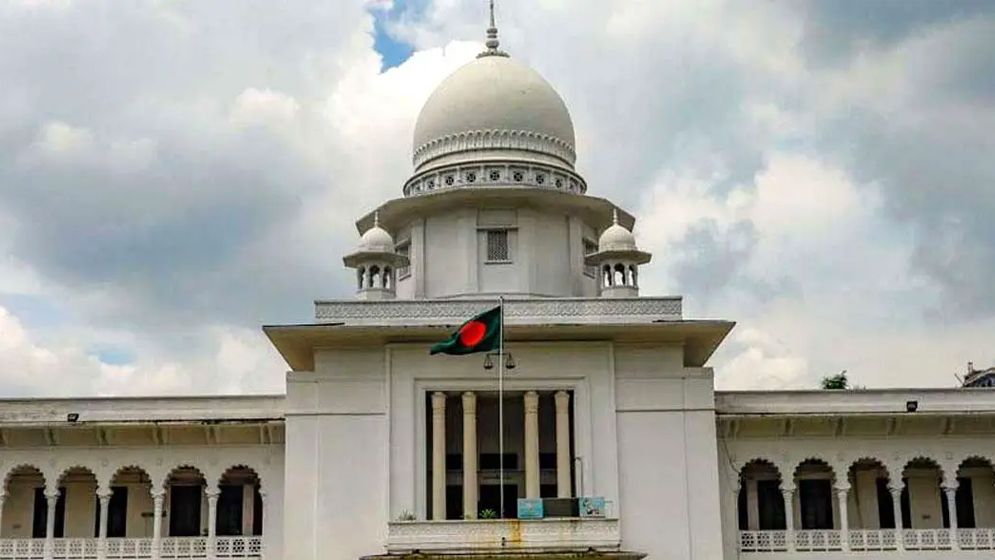
The High Court of Bangladesh has set December 4 as the date to deliver its verdict on the legality of an agreement between the Chattogram Port Authority and a foreign company regarding the operation of the New Mooring Container Terminal (NCT). The bench of Justice Fatema Najib and Justice Fatema Anwar made the announcement after concluding hearings on the rule issued earlier. The case originated from a writ petition filed by Mirza Walid Hossain, president of the Bangladesh Young Economists Forum, challenging the validity of the deal signed on July 30. During the hearing, the court had verbally instructed the government to suspend all activities related to the contract. The NCT, built in 2007 with an investment of about Tk 2,712 crore, handles a major portion of the country’s import and export containers, making the outcome of this ruling significant for Bangladesh’s port operations and trade management.
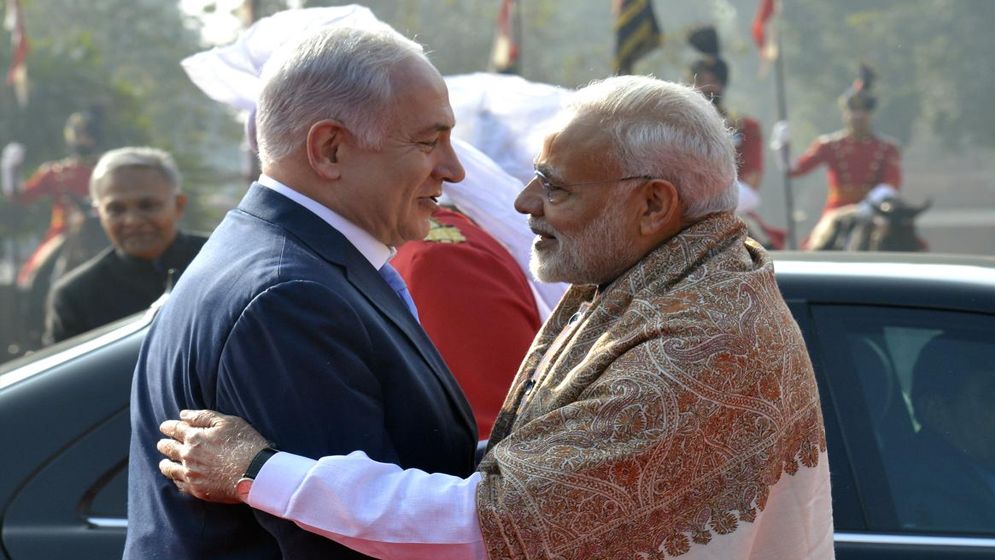
Israeli Prime Minister Benjamin Netanyahu has canceled his planned visit to India for the third time this year, citing heightened security concerns following a deadly terrorist attack in New Delhi. According to reports from Israeli outlet i24News, the attack two weeks ago was one of the deadliest in nearly a decade, killing at least 15 people and injuring many others. The visit, initially expected before the end of the year for talks with Indian Prime Minister Narendra Modi, has now been postponed, possibly to next year, pending a new security assessment. Netanyahu had previously canceled his India trips in April and September, first due to election preparations and later citing scheduling conflicts. Analysts view Netanyahu’s planned visit as part of his effort to project international legitimacy and strengthen ties with key global leaders, including Modi, Trump, and Putin. Netanyahu last visited India in January 2018, while Modi made a historic trip to Israel in 2017.
As Bangladesh approaches its 13th national election, political polarization is intensifying with multiple alliances forming around the two major opposition forces — the Bangladesh Nationalist Party (BNP) and Jamaat-e-Islami. BNP is working to build a broad coalition including centrist, leftist, and Islamist parties such as the National Citizen Party (NCP), Amar Bangladesh Party (AB Party), and others from the anti-government movement. Meanwhile, Jamaat is forming an eight-party electoral understanding with seven Islamist groups, focusing on a ‘one seat, one candidate’ strategy. Analysts suggest that these alliances could be decisive in determining election outcomes, as smaller parties’ votes may influence key constituencies. Discussions on seat-sharing are ongoing, with BNP’s acting chairman Tarique Rahman expected to finalize negotiations upon his return. Leftist and reformist groups are also exploring separate coalition possibilities. Overall, the pre-election period is marked by intense negotiations, strategic alignments, and uncertainty over final alliance structures.
-6925677eb807c.jpg)
A new United Nations report released on November 24, 2024, reveals that nearly 50,000 women and girls were killed globally last year by intimate partners or family members — averaging one death every 10 minutes. The study, jointly published by the UN Office on Drugs and Crime (UNODC) and UN Women, highlights that 60% of female homicide victims were murdered by someone close to them, compared to 11% among male victims. Africa recorded the highest number of such killings, with around 22,000 cases in 2024. The report stresses that homes remain the most dangerous places for women and girls, showing no significant improvement from previous years. UN Women’s policy director, Sarah Hendriks, emphasized that femicide is often part of a broader pattern of violence, including coercion, threats, and online harassment. The report also warns that technological advances have enabled new forms of gender-based violence, such as non-consensual image sharing, doxxing, and deepfake abuse, urging stronger laws to ensure accountability both online and offline.

The Election Commission (EC) of Bangladesh has announced that a mock voting exercise will be conducted on November 29 as part of preparations for the upcoming 13th National Parliamentary Election. According to EC Director (Public Relations and Information) Md. Ruhul Amin Mallik, the event will take place from 8 a.m. to 12 p.m. at Sher-e-Bangla Nagar Government High School in Dhaka. The mock voting aims to test the voting process and ensure readiness for the national polls. Media representatives have been invited to observe the exercise, which will involve participation from all types of voters. Election Commissioner Brigadier General (Retd.) Abul Fazal Md. Sanaullah and other senior EC officials are expected to attend the event. The initiative is part of the EC’s broader effort to enhance transparency and voter confidence ahead of the national election.

The highly anticipated India-Pakistan match in the 2026 ICC T20 World Cup is scheduled for February 15 in Colombo, according to ESPNcricinfo. Sri Lanka, a co-host of the tournament alongside India, will host the high-voltage encounter at a neutral venue agreed upon by both cricket boards. The World Cup is expected to take place between February and March 2026. India may open their campaign against the United States, though it is not confirmed as the opening match. The tournament’s opening and final matches are likely to be held at Ahmedabad’s Narendra Modi Stadium, but if Pakistan reaches the final, it will be shifted to Colombo. One semifinal is planned for Mumbai’s Wankhede Stadium, while the other venue remains undecided. Pakistan will play all its matches in Sri Lanka. The 2026 T20 World Cup will feature 20 teams, including Afghanistan, Australia, Bangladesh, England, South Africa, the USA, West Indies, New Zealand, Pakistan, and others.

Dhaka has emerged as the top region for antibiotic use in Bangladesh, accounting for 57% of the country’s total consumption, according to the latest National Antimicrobial Resistance (AMR) Surveillance report. The study, presented by IEDCR’s chief scientific officer Dr. Zakir Hossain Habib, revealed alarming levels of drug-resistant bacteria in hospitals, particularly in intensive care units (ICUs). About 41% of ICU samples were found to be pan-drug resistant, meaning no tested antibiotics were effective. Overall, 46% of hospital samples showed multidrug resistance, rising to 89% in ICUs. Experts cautioned that Bangladesh is approaching a dangerous “post-antibiotic era” where common infections could become life-threatening. The surveillance, conducted under WHO’s Global Action Plan, analyzed over 96,000 clinical samples from 2016 to 2024. The most prevalent bacteria identified were E. coli (35%) and Klebsiella pneumoniae (19.2%), with young adults aged 21–30 being the highest antibiotic users.

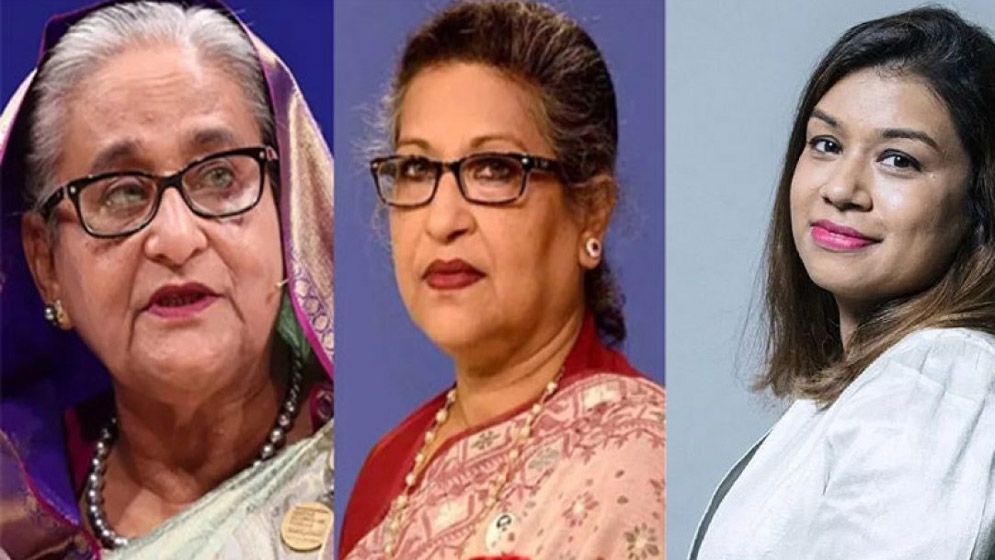
A Dhaka court has set December 1 for delivering the verdict in a graft case filed by the Anti-Corruption Commission (ACC) against former Prime Minister Sheikh Hasina, her sister Sheikh Rehana, and 15 others over alleged irregularities in the allocation of a 10-katha plot in the Purbachal New Town Project. The decision came after Judge Rabiul Alam of Dhaka Special Judge Court-4 concluded the arguments on Tuesday. The case, filed on January 13 this year by ACC Deputy Director Salahuddin, accuses the defendants of abusing power and committing forgery in the plot allocation process. Following investigation, ACC Assistant Director Afnan Jannat Keya submitted a charge sheet on March 10 against 17 individuals, including several former government officials and a former state minister. The court framed charges on July 31, and 32 witnesses testified during the trial. Among the accused, former RAJUK member Khurshid Alam remains in custody.
The National Citizens Party (NCP) has announced plans to form a new political alliance ahead of the upcoming national elections. Chief Coordinator Nasiruddin Patwari revealed the initiative during a press conference in Dhaka after a meeting with party nomination seekers. The proposed alliance, described as anti-extortion and anti-religious fascism, aims to field candidates in all 300 constituencies. Patwari stated that the coalition will operate independently of the BNP and Jamaat-e-Islami, focusing on fulfilling the aspirations of the July uprising and promoting reform, women’s rights, and opposition to corruption and terrorism. NCP’s southern region organizer Hasnat Abdullah accused India and the ruling Awami League of attempting to disrupt the election process through the Jatiya Party. The NCP leadership urged political parties to move beyond administrative power-sharing and focus on national stability and reform. The announcement follows a two-day consultation with nomination hopefuls.
The interim government of Bangladesh has categorized all public colleges into four groups—A, B, C, and D—for administrative purposes, according to a Ministry of Education circular issued on Monday, November 24. Colleges with more than 8,000 students and over 10 honors-level subjects have been placed in Category A. A total of 81 institutions across the country, including Dhaka College, Chittagong College, Eden Mohila College, Rajshahi College, and Government Brojomohun College, have received this top classification. The ministry stated that the new categorization aims to streamline administrative management and ensure better allocation of resources across higher education institutions. The classification covers colleges offering higher secondary, undergraduate (pass and subsidiary), honors, and postgraduate programs. This move is expected to help the government monitor academic performance and institutional capacity more effectively while promoting balanced development among public colleges nationwide.

Grassroots leaders of the Bangladesh Nationalist Party (BNP) in Chattogram-13 (Anwara–Karnaphuli) have written to the party’s acting chairman Tarique Rahman demanding the cancellation of nomination for former MP Sarwar Jamal Nizam. They accuse Nizam of neglecting activists during years of political persecution, spending much of the past 16 years abroad instead of supporting imprisoned or harassed party workers. The letter, signed by three local leaders—Ali Abbas, Lion Helal Uddin, and SM Mamun Mia—alleges that Nizam traveled abroad at least 25 times and was absent from key party activities. Protesting activists have held rallies, burned effigies, and demanded a review of his candidacy. Nizam, however, denies the allegations, claiming the party high command found him qualified. The dispute reflects growing discontent within BNP’s local ranks over candidate selection ahead of the upcoming national election, with many calling for more dedicated and grassroots-connected nominees.

A rare incident unfolded in the English Premier League as Everton midfielder Idrissa Gana Gueye received a red card for slapping his own teammate, defender Michael Keane, during a match against Manchester United at Old Trafford. The altercation occurred in the 13th minute following a defensive misunderstanding that nearly led to a goal for United. Referee Tony Harrington, witnessing the confrontation, immediately sent Gueye off. Despite being reduced to ten men early in the game, Everton managed to secure a 1-0 victory thanks to a powerful strike from Dewsbury-Hall in the 29th minute. Manchester United, despite having a numerical advantage, failed to capitalize on their chances. United coach Ruben Amorim expressed disappointment after the match, admitting that his team lacked intensity and that Everton deserved the win.

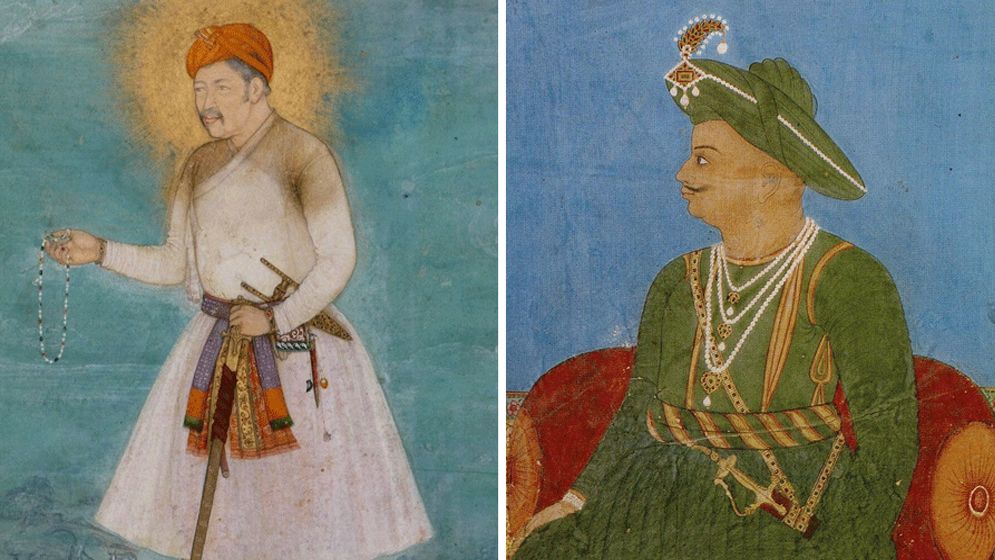
A new controversy has erupted in India after the National Council of Educational Research and Training (NCERT) removed the title 'Great' from the names of Mughal emperor Akbar and Mysore ruler Tipu Sultan in newly printed school textbooks. The Congress party accused the ruling Bharatiya Janata Party (BJP) of rewriting history to align with its ideological narrative and diminishing the contributions of Muslim rulers. BJP and its ideological ally, the Rashtriya Swayamsevak Sangh (RSS), defended the move, calling it a long-overdue correction. Congress leaders, including Imran Masood, K. Muraleedharan, and Harish Rawat, criticized the decision as politically motivated and warned of further historical distortions ahead of the 2029 national elections. RSS leader Sunil Ambekar stated that the leaders were not removed from textbooks but that students should also learn about their alleged misdeeds. The updated NCERT books have already been distributed to over 24,000 CBSE schools across India, fueling a broader debate over historical interpretation and political influence in education.
The Bangladesh government has finalized the appointment of police superintendents (SPs) for all 64 districts through a lottery system ahead of the 13th National Parliamentary Election. The selection took place on Monday, November 24, at the Chief Adviser’s residence, Jamuna, in the presence of Acting IGP Sheikh Md. Sajjat Ali, the DMP Commissioner, and senior officials from the Home Ministry and the Chief Adviser’s Office. According to official sources, officers from the 25th, 27th, and 28th batches of the police cadre were shortlisted after excluding those who had previously served as SPs. From this list, 64 officers were selected manually by lottery for district postings. The Home Ministry and Police Headquarters confirmed that the appointments will be implemented gradually through official notifications. The move aims to ensure neutrality and transparency in field-level law enforcement deployment ahead of the upcoming national election.
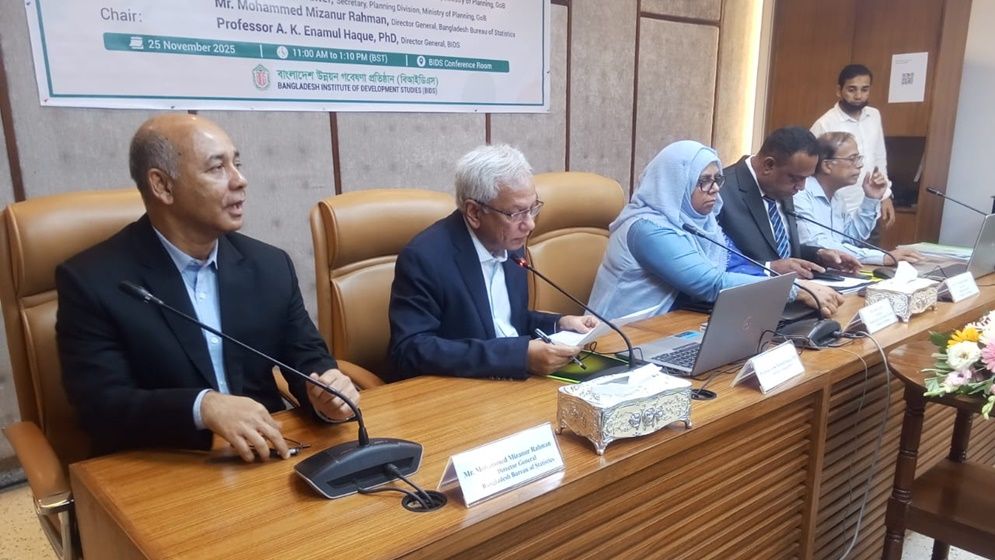
A post-enumeration check by the Bangladesh Institute of Development Studies (BIDS) has revealed that 365,472 financial institutions were omitted from the 2024 Economic Census conducted by the Bangladesh Bureau of Statistics (BBS). The initial census counted 11.88 million institutions, but later verification raised the figure to 12.24 million. The BIDS report, released in Dhaka, found an overall error rate of 2.95 percent—below the internationally acceptable 5 percent threshold. The highest omission rate was 5.99 percent in city corporation areas, attributed to non-cooperation from business owners. Rural areas showed a lower error rate of 2.55 percent. Dhaka Division recorded the highest number of missing institutions, while Sylhet had the fewest. Officials acknowledged challenges such as limited budgets and low enumerator honorariums but expressed satisfaction with the census quality. They emphasized the need for improved guidelines and better support for field workers in future censuses.
The ‘1 Nojor’ media platform is now live in beta, inviting users to explore and provide feedback as we continue to refine the experience.