

The ‘1 Nojor’ media platform is now live in beta, inviting users to explore and provide feedback as we continue to refine the experience.
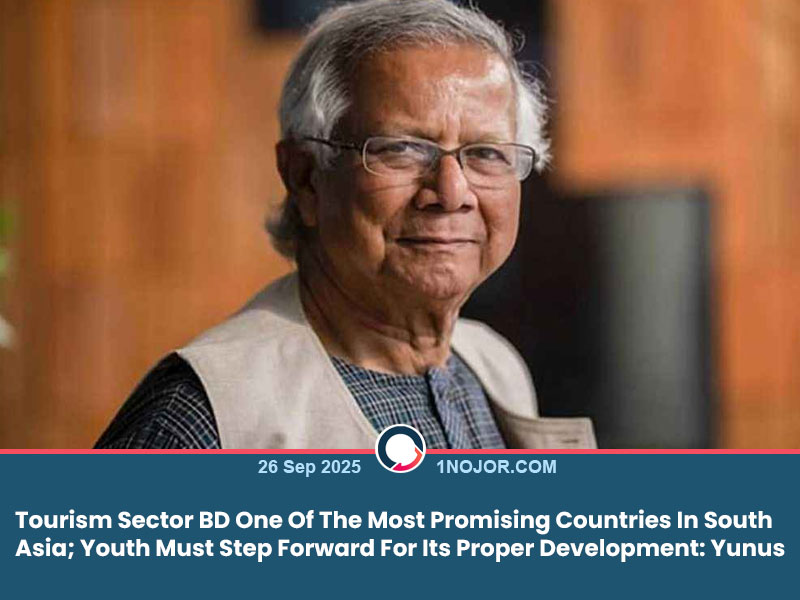
Chief Adviser Dr. Muhammad Yunus has highlighted tourism as one of Bangladesh’s most promising sectors in South Asia, calling on the younger generation to drive its growth. “Tourism can play a pivotal role in tackling unemployment and poverty while also helping to prevent environmental degradation,” Dr. Yunus said. “In building a new Bangladesh, I expect everyone to contribute responsibly from their respective positions.” He noted that tourism not only accelerates development in travel hubs but also fosters awareness about preserving local traditions, culture, and the environment. “Our rich history and heritage, natural beauty, architectural landmarks, diverse ethnic lifestyles, traditional cuisine, and genuine hospitality can attract visitors from all over the world,” Yunus emphasized. The interim government, he added, is working to harness this potential for sustainable development by implementing measures to protect biodiversity, preserve cultural heritage, and promote economic growth in tourism-rich areas.
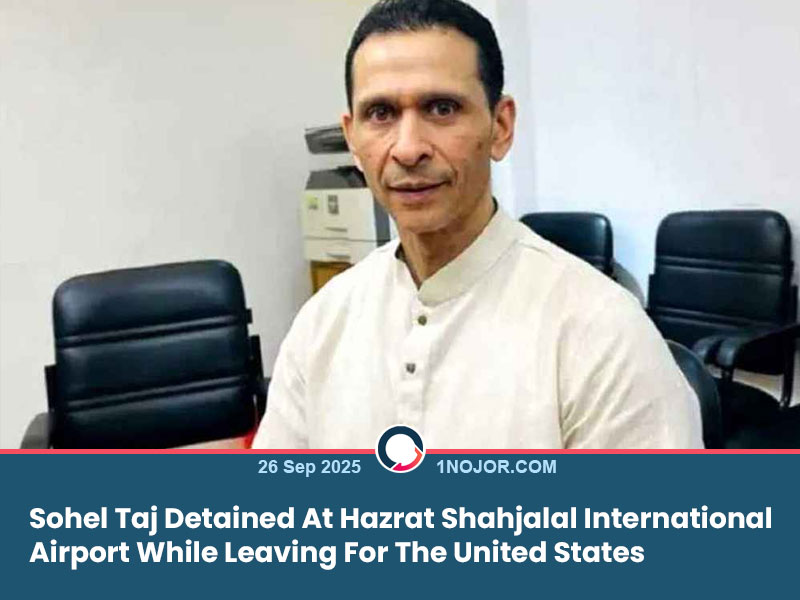
Former State Minister for Home Affairs Sohel Taj was stopped from traveling abroad at Hazrat Shahjalal International Airport in Dhaka while en route to the United States. His sister, Mahjabin Ahmed Mimi, confirmed the incident, saying authorities prevented his departure on Wednesday. She declined to explain further, suggesting reporters “ask them directly” why he was stopped. Airport security authorities confirmed that Taj was under a “travel restriction,” which barred him from leaving the country.
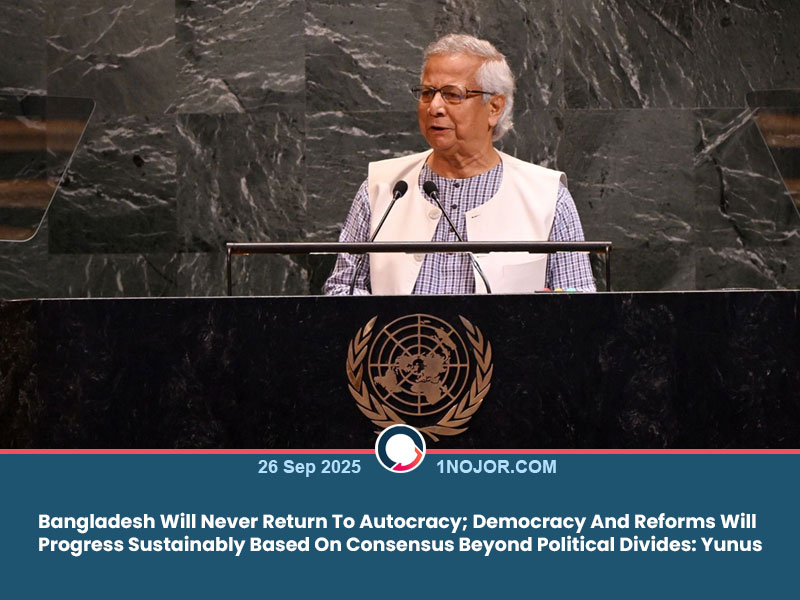
Chief Adviser Dr. Muhammad Yunus has assured the world that Bangladesh will never again revert to autocratic rule. Addressing the UN General Assembly, he said that democracy and reforms in Bangladesh will move forward sustainably through consensus across political lines. “No force can now obstruct the reconstruction of a just state structure, earned through the people’s sacrifices,” he stated. Yunus also revealed that preparations are underway to hold national elections in February next year. Alongside this, the interim government will continue reforms to strengthen transparency, accountability, and the rule of law. He affirmed that whichever party secures public support in the election, there will be no uncertainty in implementing reforms. “Democracy in Bangladesh will never again be at risk,” Yunus emphasized.
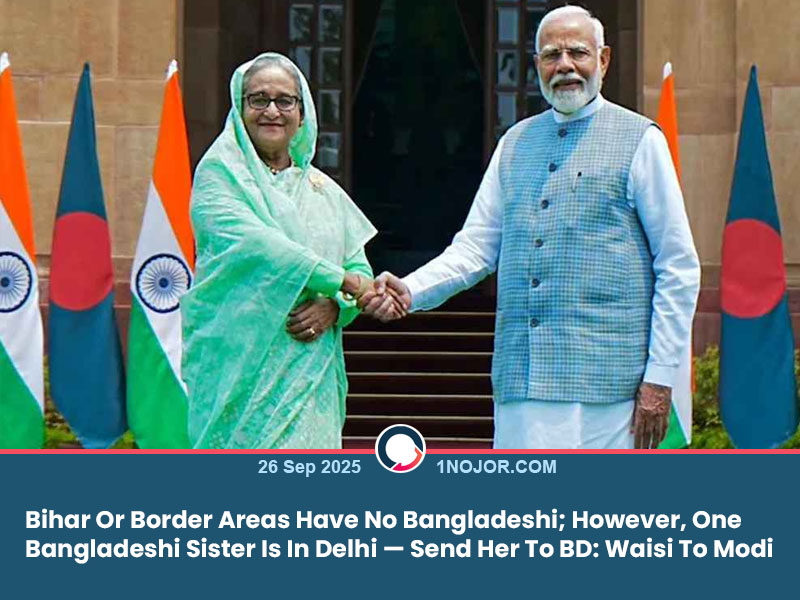
Political tensions in Bihar are heating up ahead of the upcoming state election, with immigration becoming a flashpoint. Prime Minister Narendra Modi recently accused Congress and the RJD of sheltering illegal migrants, warning that such infiltration posed a “demographic crisis” and threatened women’s safety. In a sharp rebuttal, AIMIM chief Asaduddin Owaisi dismissed Modi’s claims, declaring: “Modiji says there are Bangladeshis in Bihar. I say there are none in Bihar or in the border regions. But you do have a Bangladeshi sister in Delhi—send her back, and we’ll ensure the borders are secure.” Owaisi’s pointed remark was a direct reference to fugitive former Bangladesh Prime Minister Sheikh Hasina, who is believed to be in India. Meanwhile, the controversy has intensified over the revision of Bihar’s voter rolls. The Election Commission admitted to detecting some Nepali, Bangladeshi, and Myanmar nationals registered as voters. Opposition parties, however, argue this is a ploy to disenfranchise legitimate voters. RJD leader Tejashwi Yadav slammed the ruling BJP, saying: “Even if we assume there are infiltrators, what have you done all these years? You’ve been in power at the Center for 11 years and have ruled Bihar for two decades. Why raise the alarm now?”
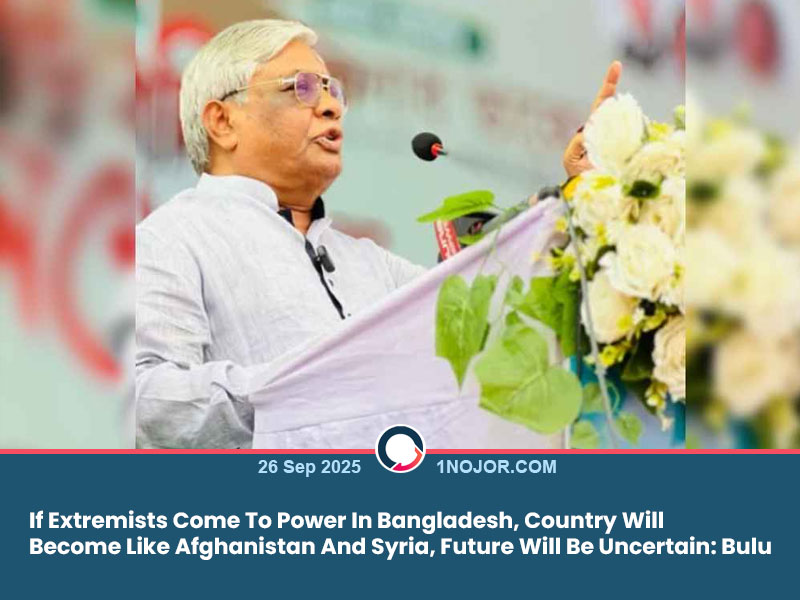
BNP leader Barkatullah Bulu has warned that if religious fundamentalists come to power in Bangladesh, the country could descend into a state similar to Afghanistan or Syria, leaving its future deeply uncertain. Speaking at an event in Begumganj Upazila and Chaumuhani Municipality, where financial aid and food were distributed to 26 Durga Puja pavilions, Bulu urged citizens to safeguard the spirit of secularism and honor the sacrifices of freedom fighters. “The upcoming national election is a crucial moment,” he said. “To protect our future and build a non-communal Bangladesh, people must cast their votes wisely.”
Jamaat-e-Islami chief Dr. Shafiqur Rahman has extended greetings to the Hindu community on the occasion of Durga Puja and called on authorities to ensure adequate security. He highlighted Bangladesh’s reputation as a global model for communal harmony, recalling international recognition, including praise from the Australian High Commissioner. “Durga Puja should further strengthen our bonds of tolerance and harmony,” he said, wishing peace and prosperity for all communities.

Amid escalating global tensions, Iran has unveiled plans for a new nuclear power plant in Hormozgan province. The “Iran Hormoz” facility, with a projected capacity of 5,000 megawatts, will soon enter its design and equipment phase, according to Mohammad Eslami, head of Iran’s Atomic Energy Organization. Officials say the project is a significant step toward fulfilling strategic objectives outlined in Iran’s nuclear industry roadmap, reinforcing the country’s long-term energy and technological ambitions.
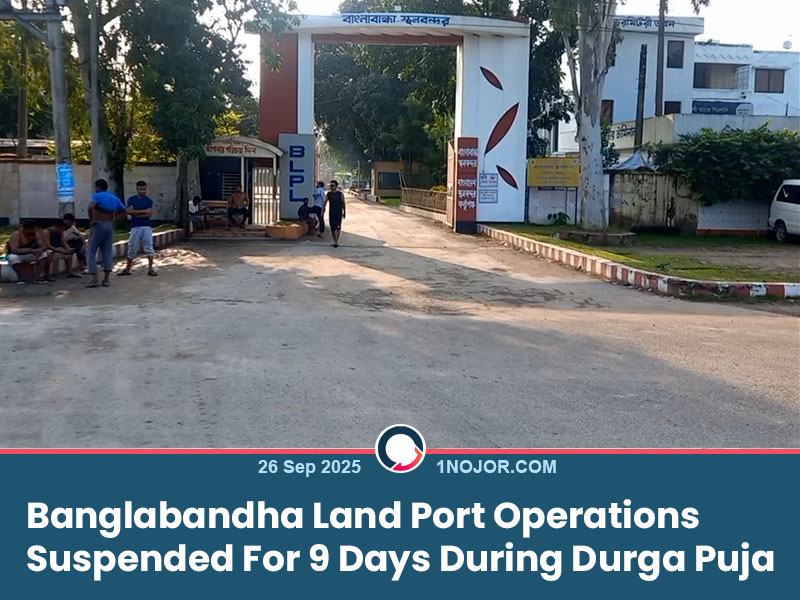
Trade through Panchagarh’s Banglabandha land port has been suspended for nine consecutive days, including weekends, in observance of Durga Puja. The closure began Friday and will continue until October 4. However, cross-border travel for passport holders remains open. Port manager Abul Kalam Azad said Indian traders and transporters from Fulbari agreed to halt import-export operations during the period.
Yemen’s Houthi-controlled military responded decisively to Israeli airstrikes on Sana’a, killing at least 8 and injuring 142. Using hypersonic “Palestine-2” ballistic missiles, Yemeni forces targeted sensitive sites in the Israeli-occupied Jaffa region. The operation, launched in response to ongoing Israeli aggression in Gaza, signals Yemen’s commitment to defending Gaza and its own territory. Authorities warned that civilian and military vessels in the Red and Arabian Seas must identify themselves, or risk becoming targets as Yemen continues its military campaigns.
U.S. President Donald Trump met Turkish President Recep Tayyip Erdoğan at the White House to discuss four key issues: the Gaza conflict, the Ukraine war, Syria, and F-35 fighter jet sales. Trump indicated a potential “big announcement” on Syria and hinted at lifting sanctions on Turkey if it stops buying Russian oil. Both leaders agreed on supporting the Syrian central government, reflecting improved relations compared to past tensions. The talks also focused on hostages and bilateral defense cooperation.
Saudi Foreign Minister Prince Faisal bin Farhan stated that the Israel-Palestine conflict is resolvable through dialogue if there is genuine political will. Speaking at the UN General Assembly, he expressed hope for the near-term implementation of a two-state solution. He emphasized that a sustainable Palestinian state within the 1967 borders, coupled with reconstruction in Gaza, is essential for lasting peace. Arab and Muslim nations have consistently highlighted the risks of West Bank occupation, and constructive negotiations remain key to regional stability.
Israeli Prime Minister Benjamin Netanyahu flew an unusual route to New York for the UN General Assembly, bypassing common European airways. His official plane, Wings of Zion, traveled over the Mediterranean, Greece, and Italy, entering the Atlantic via Gibraltar, adding nearly 600 km to the journey. Analysts say this detour helps him avoid the ICC arrest warrant issued last year for alleged war crimes in Gaza. France permitted his airspace use, but Netanyahu opted for a different path. He will address the UN and meet U.S. President Trump next week.
Syria recently announced the dismantling of a cell linked to Lebanon’s Iran-backed Hezbollah, seizing rockets, missiles, and arresting five suspects. Hezbollah denied any presence in Syria, but analysts note Iran continues to use the group as part of its regional strategy. Recent Israeli strikes and internal pressures in Lebanon have weakened Hezbollah’s military capabilities, limiting its influence in Syria. While still part of Iran’s plans, the group struggles to project the same strength, signaling a new reality for regional dynamics.
The United States has announced a 100% tariff on all branded and patented pharmaceutical imports from October 1, 2025, unless companies establish production facilities in the country. President Trump stated this move aims to boost domestic manufacturing and reduce the budget deficit. India, whose pharmaceutical exports to the U.S. reached $8.7 billion in 2023–24, could face significant costs and negative impacts on its drug exports. Analysts warn the policy may severely strain India’s pharmaceutical industry.
Yemen’s air defense system has successfully intercepted multiple Israeli air raids over the capital, Sana’a, preventing significant damage and civilian casualties. Local sources report that Israel used 20 fighter jets and naval missiles, targeting power plants and residential areas. The Yemeni defense forces forced enemy aircraft to retreat before completing bombing missions. Hospitals confirm at least eight civilian deaths and 48 injuries, while eyewitnesses describe widespread panic and property damage. Israel admits Yemen’s resistance has proven difficult to overcome.
The ‘1 Nojor’ media platform is now live in beta, inviting users to explore and provide feedback as we continue to refine the experience.