

The ‘1 Nojor’ media platform is now live in beta, inviting users to explore and provide feedback as we continue to refine the experience.
Hefazat-e-Islam Bangladesh Ameer, Allama Shah Muhibbullah Babunagari, has strongly opposed the establishment of a United Nations Human Rights office in the country. Speaking at a prayer gathering organized by Hefazat in Baridhara, Dhaka, on Saturday, he accused international organizations of using the banner of "human rights" to interfere in Islamic Shariah, family laws, and religious values — actions he described as threats to national sovereignty and the sentiments of the Muslim majority. "Bangladesh is a Muslim-majority country, and it is everyone's duty to protect its religious and social fabric," he emphasized.

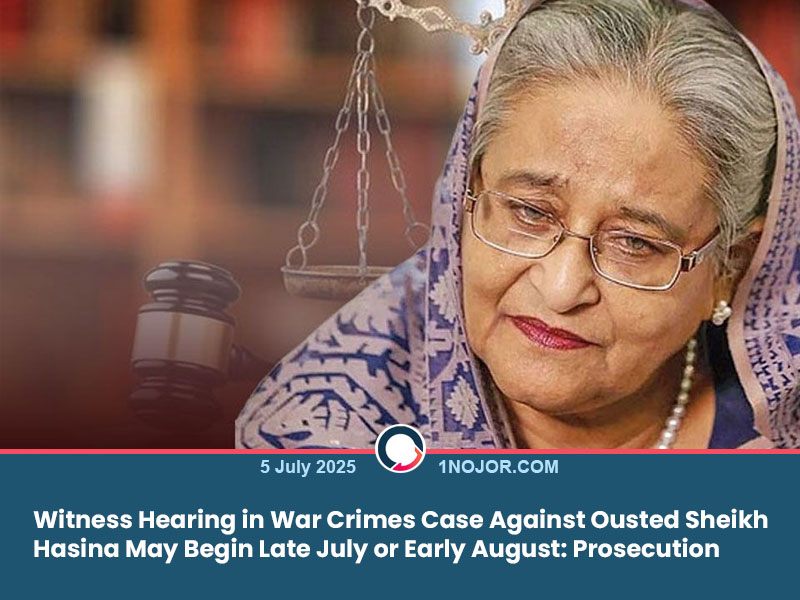
Testimonies in the war crimes case against ousted former Prime Minister Sheikh Hasina may begin by late July or early August, according to prosecution sources. The case, linked to crimes against humanity during the July uprising, also names Asaduzzaman Khan Kamal and Chowdhury Abdullah Al-Mamun as co-accused. Chief Prosecutor told the tribunal that the crimes followed a systematic chain of command across all 56,000 square miles of the country. Public notices have been issued as Hasina and Kamal remain fugitives. This case is one of several against Hasina, including enforced disappearances, extrajudicial killings, and the 2013 Shapla Chattar crackdown.
India’s Deputy Army Chief Lt. Gen. Rahul R. Singh stated that India fought not just Pakistan but also faced covert support from China and Turkey during a recent border clash. He revealed that China provided Pakistan with military equipment and real-time intelligence, using the conflict as a testing ground. Singh also criticized delays in military supply chains, citing foreign dependency. Experts warn India must strengthen its defenses and reduce reliance on external suppliers to prepare for future conflicts.
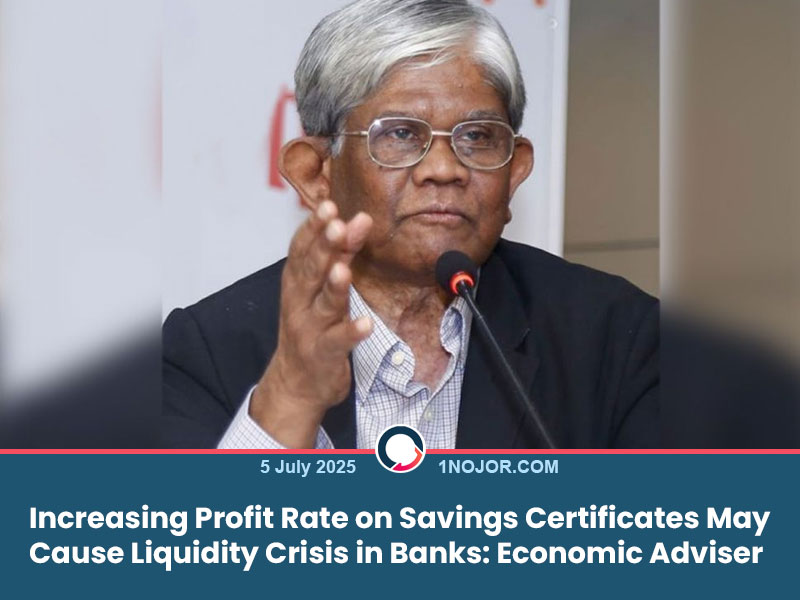
Dr. Salehuddin Ahmed, Economic Adviser to the interim government, cautioned that increasing interest rates on savings certificates could lead to a liquidity crisis in the banking sector. “Higher returns will drive people away from banks and toward savings instruments,” he warned during a meeting with government officials in Nabinagar. He emphasized the need for balanced policymaking and noted that steps are being taken to rehabilitate struggling banks. He also confirmed the formulation of a “Bank Resolution Act” to protect customer deposits and address instability within the National Board of Revenue (NBR).
Chief Adviser Dr. Muhammad Yunus said Ashura serves as a timeless reminder of the struggle for truth and justice. He urged people to honor the day with good deeds and devotion. Paying tribute to Imam Hussain (RA) and the martyrs of Karbala, he said their sacrifice is a lasting example of preserving Islamic ideals. “Ashura is not only a day of mourning but also a day filled with historical significance,” he said, calling for unity, peace, and justice within the Muslim Ummah.

Indian Border Security Force (BSF) pushed 15 Bangladeshi nationals—including men, women, and children—across two border points in Panchagarh Sadar upazila on Friday night. The group, detained by Border Guard Bangladesh (BGB) within Bangladeshi territory, included residents from Khulna, Bagerhat, Jashore, and Narail districts who had been working in India. After filing a General Diary, the BGB handed them over to local police. They will remain under upazila administration supervision until family contacts are made and legal procedures are completed.
President Donald Trump has signed letters to impose new tariffs on 12 countries, with details on affected goods and rates to be revealed on July 7. Trump hinted some tariffs could reach up to 70%, effective from August 1. Negotiations with countries like Japan and the EU failed, prompting this decisive move. The 90-day suspension period for higher tariffs ends July 9. These letters carry significant economic and diplomatic implications, with global responses now under watch.
The National Board of Revenue (NBR) has introduced an online system enabling importers and exporters to pay customs duties through automated challans from home. This initiative, integrated with internet banking and mobile financial services, allows goods to be cleared from ports faster and more efficiently. Already active in several customs houses, the system will be rolled out nationwide from July 7. The move is expected to boost transparency, improve government revenue collection, and ensure immediate deposit of funds into the state treasury.
Zohran Mamdani’s primary victory in the New York City mayoral race has sparked both celebration and outrage. As the first South Asian, Muslim, and Indian-origin candidate likely to become mayor, his stance on human rights and criticism of Prime Minister Modi has angered Hindu nationalist groups and some in the Indian diaspora. Accusations of anti-Hindu bias and links to “anti-India” organizations have emerged. Yet, Mamdani remains firm, symbolizing resistance against religious intolerance and rising global Islamophobia.
Nagorik Oikya President Mahmudur Rahman Manna condemned recent mob violence, particularly the forced eviction of former Chief Election Commissioner Nurul Huda from his home. “This is not justice—it’s chaos,” he said. Manna emphasized that legal accountability, not mob action, should prevail. He also raised concerns about Section 35 of the Cyber Security Ordinance, which allows warrantless arrests, and criticized the increasing trend of political vandalism, including attacks on former MP AK Azad’s residence. “If this culture of destruction continues, how will democracy return?” he asked.

The UN World Food Programme (WFP) reports that one in three people in Gaza is going hungry due to extreme food shortages. Although limited aid has entered the region since May, it remains insufficient for the over 2 million residents. WFP warns of a high risk of famine if the conflict continues and aid access remains restricted. Food prices have skyrocketed, with flour costing 3,000 times more than before the war, and cooking oil nearly unavailable. Around 470,000 people may face extreme hunger by September.
BNP Standing Committee Member Nazrul Islam Khan criticized ambiguities in the new Cyber Security Ordinance, warning that they open the door for state repression. “Anyone misusing the law to oppress the public must be punished and held accountable,” he said. He noted the ordinance failed to address key reform needs and allows multiple penalties for a single offense, undermining legal integrity. Stressing that laws must serve the people, he called for active roles from political parties and civil society in raising awareness.

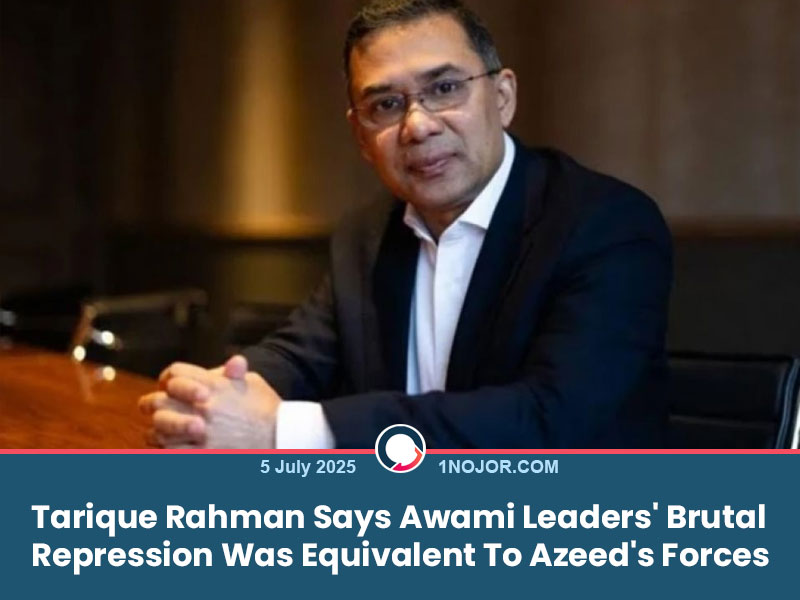
In a statement marking Ashura, BNP acting chairman Tarique Rahman drew a parallel between the ruling Awami League’s 16-year governance and the tyrannical regime of Yazid. Citing enforced disappearances, extrajudicial killings, state-sponsored terror, and widespread corruption, he described the period as one of “unspeakable oppression.” Honoring the martyrdom of Imam Hussain (RA) at Karbala as a symbol of resistance against injustice, Tarique vowed to continue the struggle for truth and justice until victory is achieved. He also condemned the treatment of BNP Chairperson Khaleda Zia, alleging she was sentenced in false cases and left to die.
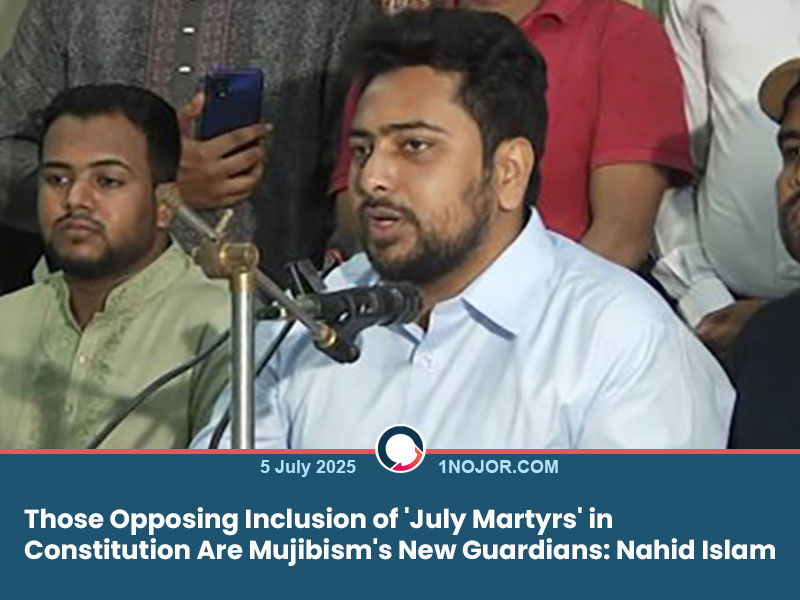
At a rally in Bogura during the “July March,” NCP Convenor Nahid Islam declared that “July” is not just emotional—it is a political destination and must be included in the new constitution. He accused opponents of this inclusion of becoming “new gatekeepers of Mujibism” and warned there would be no place for them in the political future. Emphasizing the need for judicial and administrative neutrality post-uprising, he said those clinging to the old system will meet the same fate as previous regimes. NCP leaders stressed that the newly emerged Bangladesh must not fall into the hands of extortionists.
BNP Standing Committee Member Salahuddin Ahmed criticized individuals now speaking of political reform, saying they were formerly aligned with the ruling Awami League under the 14-party coalition. Speaking at a Keraniganj rally, he described them as a “team of opportunists” advocating proportional representation at Suhrawardy Udyan. He called for swift reforms followed by elections, pledging that a BNP government would implement comprehensive constitutional changes. While acknowledging the organizational efforts of NCP-affiliated student leaders, he questioned their electoral intentions. Despite differences, he urged all forces behind the July uprising to remain united.

The ‘1 Nojor’ media platform is now live in beta, inviting users to explore and provide feedback as we continue to refine the experience.