

The ‘1 Nojor’ media platform is now live in beta, inviting users to explore and provide feedback as we continue to refine the experience.
Bangladesh experiences around 3.36 million lightning strikes annually, causing approximately 350 deaths each year, according to RIMES meteorologist Khan Mohammad Golam Rabbani. At a seminar marking International Lightning Safety Day, he highlighted rising lightning incidents—up by 10% recently—and identified Sunamganj, Netrokona, and Sylhet as high-risk districts. April and May are peak months. Disaster management officials aim to expand the Cyclone Preparedness Programme into a full disaster response agency. Safety guidelines during lightning and recommendations for public awareness were also shared at the event.
As part of a central program by the BNP-affiliated Krishak Dal, over 500 farmers in Monohardi, Narsingdi received free seeds and fertilizer. The initiative, directed by acting BNP chairman Tarique Rahman, took place at Arjunchor High School field. Leaders emphasized supporting farmers to strengthen the economy, following the vision of former President Ziaur Rahman. Each farmer received 20 kg of fertilizer and 5 kg of high-yield seeds. Local BNP and affiliated leaders were present during the distribution ceremony.
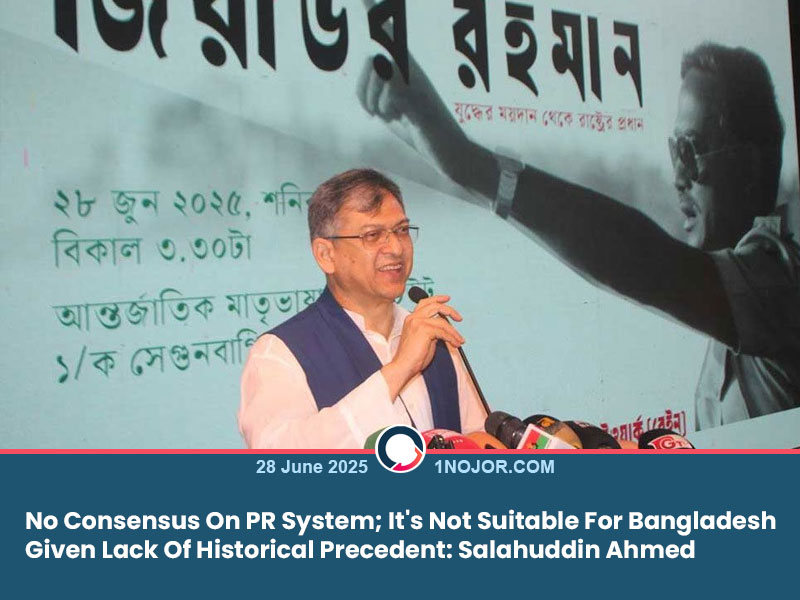
BNP leader Salahuddin Ahmed remarked that while political parties may wish for proportional representation (PR) elections from their respective positions, there has been no consensus on the PR system within Bangladesh’s context. “Based on our past discussions with the Reform Commission, we have found no agreement on implementing PR elections here. It is not applicable to this country,” he said. Salahuddin emphasized, “The people of Bangladesh are united, and all democracy-loving citizens have struggled not just for local government elections but for broader democratic reforms.” Addressing the Reform Advisor, he humorously suggested, “You might as well write a poem: ‘O Reform, how long will you talk and dine without taking action?’” He further added that everyone must be willing to accept the National Consensus Commission’s proposals. “If the intent is genuine, consensus can be achieved. We are in dialogue and moving closer to what benefits the nation,” he concluded. He also highlighted that reform is not a rigid manual but an ongoing transformative process.
A violent clash erupted between BNP and Gazipur Metropolitan Volunteer Group members over a jute business dispute in Tongi, Gazipur, turning the Dhaka-Mymensingh highway into a battleground. The incident involved chases, fights, and cocktail bomb explosions near Saturn Garments, leaving at least 10 people injured, including bystanders. The highway was temporarily closed due to panic and smoke. Law enforcement restored order after two hours. This conflict follows a similar violent episode in May, with both sides blaming each other for the unrest.
At Jahangirnagar University, three Awami League-aligned Senate members—two professors and one faculty dean—left the annual Senate meeting following strong protests from students. The students opposed the presence of members accused of supporting attacks on students and anti-uprising stances in July. Chanting anti-fascist slogans, the students demanded their removal, forcing the members to exit under university supervision. Student groups vowed to block any fascist collaborators from future meetings and hold them accountable for their actions.
Iran’s Foreign Minister Abbas Araghchi shared photos from the funeral of IRGC Chief Hossein Salami, killed recently, expressing pride in his nation’s resilience. He praised Iranians for bravely defending themselves against two nuclear-armed states, preserving their honor and dignity. The funeral also commemorated military commanders, nuclear scientists, and civilians killed in Israeli attacks since June 13. Araghchi highlighted that the pride of a nation is its most valuable asset, inspiring hope and determination for Iran’s future.
Researchers in China’s Yunnan Province have identified 20 new viruses in bats, including two genetically similar to deadly Hendra and Nipah viruses. The study, published in PLOS Pathogens, analyzed kidney samples from 142 bats collected between 2017 and 2021. Finding viruses in bat kidneys raises concerns about contamination of nearby fruit and water sources through bat urine. Scientists stress the importance of vaccine development and ongoing research to prevent future outbreaks, although no immediate threat is currently expected.
Customs officers and staff at Hili Land Port in Dinajpur have launched a complete shutdown demanding the removal of the National Board of Revenue (NBR) chairman. The shutdown began on the morning of June 28, disrupting import and export activities. Although the customs office remains open, no work is being done, causing delays in submitting bills of entry and inspection processes. Businesses face significant losses and urge the government to intervene and end the shutdown promptly.
Thousands gathered in Bangkok demanding the resignation of Prime Minister Pita Tangtarn Sinawatra after a leaked phone conversation revealed controversial remarks about Cambodia and the Thai military. The scandal led to a key coalition party withdrawing support, weakening the government’s majority. Protesters, including many senior citizens and former Yellow Shirt activists, accused the PM of betraying national sovereignty. The political divide between pro-Thaksin Red Shirts and monarchy-backed Yellow Shirts deepens amid growing unrest.
Gaza’s media office claims that opioid drugs were discovered inside flour bags distributed as aid from a U.S.-Israeli center. The drug, Oxycodone, is highly addictive and potentially lethal. Officials warn that some flour bags had the drug mixed in powdered form. Locals and medical professionals condemned the act as a calculated attempt to harm Gaza's population from within. Images circulating online show the pills inside the aid. Gaza authorities have blamed Israel for using humanitarian aid as a cover for poisoning civilians.
Amid easing Iran-Israel tensions, new focus has shifted to Iran’s secret nuclear facility in Isfahan, buried deep underground and holding about 60% of the country’s enriched uranium. US officials admit their bunker-buster bombs cannot reach the site, making it almost immune to attack. The site was targeted only by submarine-launched Tomahawk missiles. While the US claimed Iran's facilities were destroyed, intelligence reports and experts suggest Iran may have moved uranium beforehand, keeping its nuclear capability intact and secure underground.
Planning Adviser Wahiduddin Mahmud has called on government officials and employees to start preparing immediately for a credible national election. Speaking at a meeting in Chattogram, he emphasized the need to maintain law and order and recover illegal arms ahead of the polls. Drawing from his experience in the 1996 caretaker government, he noted that good governance takes time but urged that steps now can ensure progress. He also stressed that legally held weapons should be secured during the election period.
Protesters in Khulna have demanded the resignation of KMP Commissioner Md. Zulfikar Ali, accusing him of political bias. They approached the Press Secretary to the Chief Adviser, Md. Shafiqul Alam, during his visit to the Khulna Press Club, seeking his assistance. The demonstration follows the release of Sub-Inspector Sukanta, who allegedly assaulted students during July protests. Demonstrators gathered in front of the press club, calling for justice and urging the Press Secretary to inform Chief Adviser Dr. Yunus of their demands.
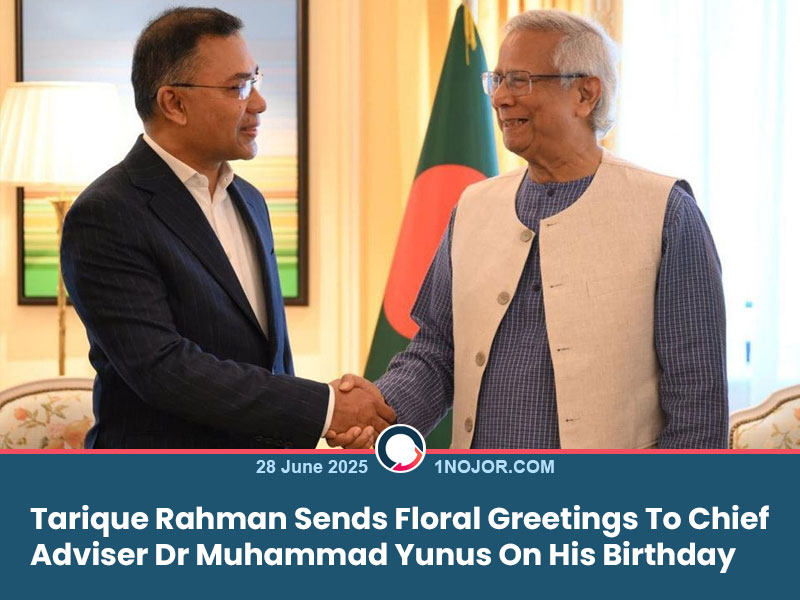
On the occasion of the birthday of Chief Advisor Dr. Muhammad Yunus, BNP’s Acting Chairman Tarek Rahman extended floral congratulations. On Saturday evening around 6 PM, ABM Abdus Sattar, representing Tarek Rahman, visited the Chief Advisor’s office bearing a bouquet of flowers and a cake. Major General Ferdous Hasan Selim, the military secretary to the Chief Advisor, received the gifts. Shairul Kabir, a member of BNP’s media cell, stated that the Chief Advisor expressed heartfelt gratitude to Acting Chairman Tarek Rahman upon receiving the floral greetings.
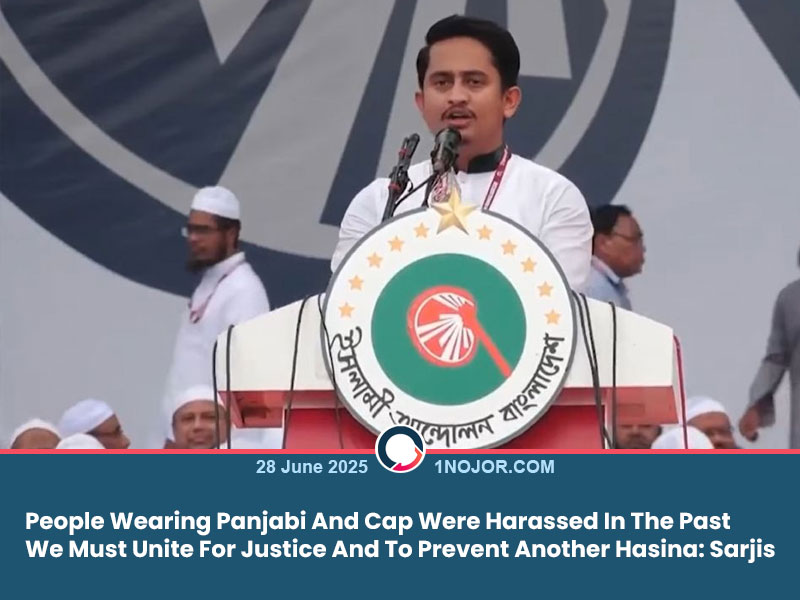
Speaking at a rally organized by the Islamic Movement, NCP leader Sarjis Alam alleged that people wearing traditional Islamic attire have long faced harassment. He called for unity in the pursuit of justice for the people and victims of past violence. “If we stay united, no one like Hasina will ever return to power,” he said. Sarjis dismissed propaganda against religious groups and emphasized that post-2024 Bangladesh will be based on collective will, not individual leaders. He also endorsed proportional representation in the electoral system.
The ‘1 Nojor’ media platform is now live in beta, inviting users to explore and provide feedback as we continue to refine the experience.